


Whole Life Carbon Assessment: Turning Carbon Data into Better Design Decisions

WWith growing pressure to reduce carbon across the full lifecyle of buildings, Whole Life Carbon Assessments (WLCA) have shifted from being a post-design specialist add-on exercise to a fundamental design tool which directly informs design decisions, material choices and construction strategies. We spoke to Collin Campbell, Senior Sustainability Consultant, about some of the barriers holding back the adoption of WLCA.
As the built environment comes under increasing pressure to meet ambitious net-zero targets, understanding the full carbon impact of buildings and their construction is essential. Whilst much of the industry has traditionally focused on operational emissions, attention and concern is shifting towards the carbon associated with materials, construction, maintenance and the end-of-life. This is where Whole Life Carbon Assessments play a critical role.
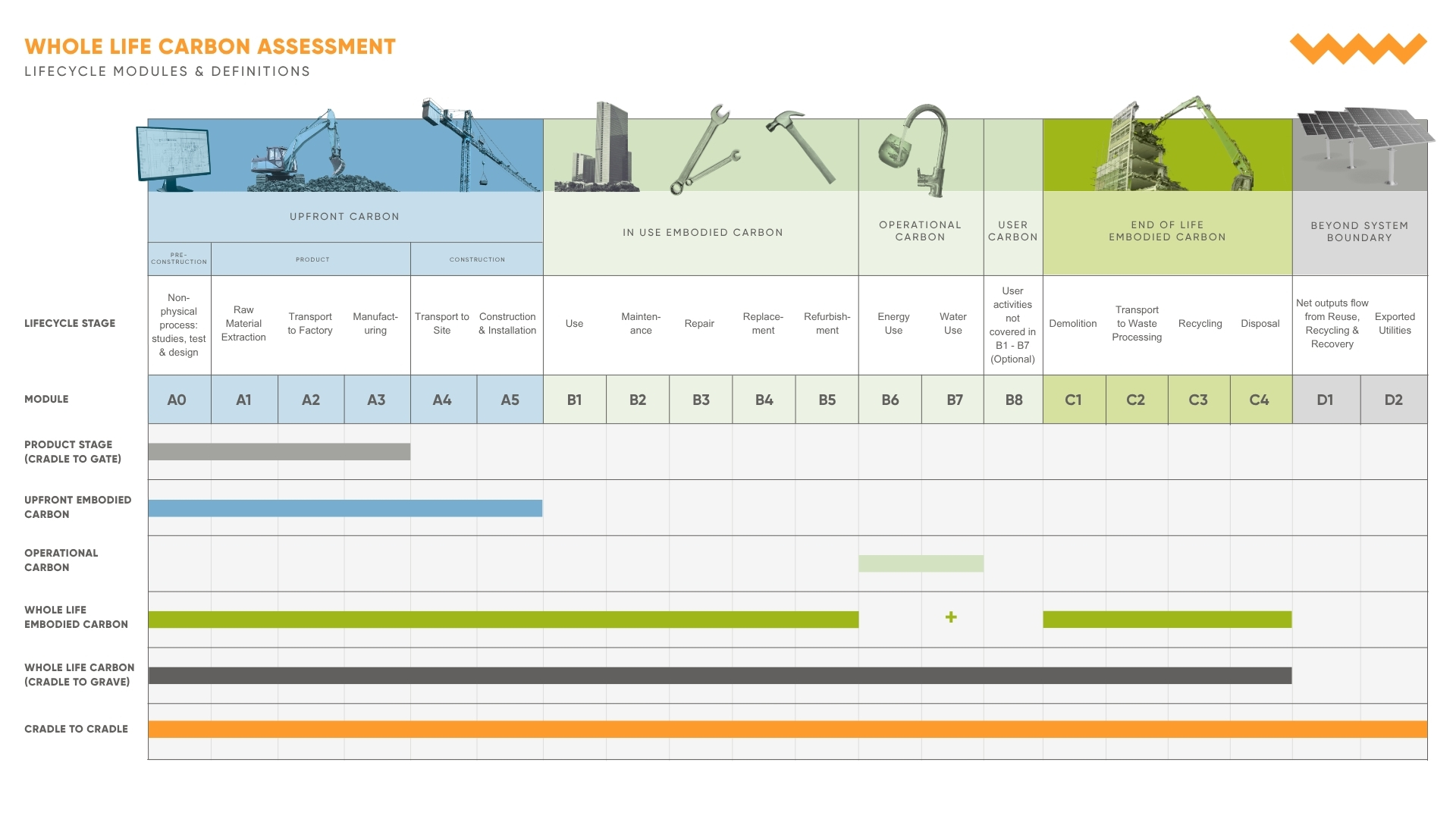
WLCA is a methodology used to measure the total carbon emissions of a building across its entire Lifecycle, from the extraction and manufacturing of materials, through to the construction and operation, to the eventual demolition and disposal.
“As Sustainability Consultants, we’re experts at assessing carbon and driving evidence-based decision making. We’ve undertaken Whole Life Carbon Assessments for complex residential, commercial, education and healthcare projects, supporting engineers and design teams to achieve measurable, long‑term carbon reductions.” Collin shared.
Why WLC Matters Now
While awareness of carbon in the built environment has grown significantly, the scale of the challenge is still often underestimated. The sector is responsible for approximately 25% of the UK’s total greenhouse gas emissions (UKGBC), making it critical that we tackle this and focus on the transition to net zero. Addressing both operational and embodied carbon, is essential in meeting the UK’s climate targets, including those set out in the Climate Change Act, and the 2050 net-zero commitment.
In response, government and industry have made it clear that partial approaches to carbon are no longer sufficient, and reducing carbon across the full lifecycle of buildings is critical to credible net zero delivery. Initiatives such as the Construction 2025 strategy have highlighted the need to tackle emissions across the construction sector, while organisations including RIBA and the UK Green Building Council continue to emphasise the importance of embodied carbon within a building’s overall impact.
Despite this, embodied carbon is still often less understood, less prioritised, and less consistently measured than operational emissions. WLCA is still inconsistently applied across projects and treated as more of a compliance exercise rather than a design benefit. As a result, key opportunities to reduce carbon can be missed, especially when decisions are made later in the design process. This is where Whole Life Carbon Assessments become increasingly important, as they provide insight needed to understand where emissions occur and enable more proactive and informed decisions from the get-go.
WLCA at WW
Wallace Whittle supported Royal London in the transformation of its Edinburgh headquarters at 1 Thistle Street, delivering a robust RIBA Stage 3 and 4 embodied carbon assessment to inform an ambitious sustainability strategy. The scheme sensitively combines refurbishment with new-build elements to create a high-quality, future-ready workplace, while reducing overall environmental impact.
Through detailed carbon modelling and close collaboration with the wider design team, the development is on track to achieve a low upfront embodied carbon figure, demonstrating that strong sustainability outcomes can be delivered alongside commercial and operational performance.
How WLCA Works in Practice
While Whole Life Carbon Assessment provides a picture of a building’s carbon impact, its real value lies in how it is applied throughout the design process. Rather than acting as a retrospective calculation, WLCA is most effective when embedded early, ideally at concept stage, as this is where it can meaningfully influence decisions.
At its core, WLCA brings together data from across a building’s lifecycle, allowing the carbon impact of different materials, systems and construction approaches to be assessed. Applied with the same rigour as any other engineering discipline, it provides robust, data-driven insights to guide design decisions. This enables meaningful comparisons between design options, helping to identify where emissions are highest and where reductions can be made. This allows for comparisons between design options and identifies where emissions are highest and where reductions can be made.
In practice, this is often realised through a hierarchy of design decisions; prioritising the reuse of existing assets where possible, optimising structural design, selecting lower carbon materials, and improving construction efficiency. These decisions, again, are most impactful when made early, where there is greater flexibility to shape the design without significant cost or programme implications.
WLCA can also help to highlight trade-offs. For example, the lowest embodied carbon option is not always the most effective over the full lifecycle of a building, and a whole life approach ensures that decisions are balanced across both embodied and operational performance.
What’s Holding WLCA Back?
The adoption of Whole Life Carbon Assessments across the industry has been relatively slow. While awareness is increasing, there continues to be several barriers that limit its widespread application.
“One of the most significant challenges is the mindset, particularly the industry’s continued focus on short-term costs over long-term value. Whole life carbon considers the performance of a building over its entire lifecycle, often spanning 60 years or more. While this approach can deliver both carbon and cost savings over time, decisions are still frequently driven by upfront capital expenditure, making it more difficult to prioritise longer-term outcomes.”
There is also the challenge of navigating an increasingly complex and crowded sustainability landscape. With a growing volume of guidance, tools, and competing narratives, it can be difficult for clients and design teams to identify clear, reliable approaches. This is further complicated by the presence of greenwashing, which can undermine confidence and make it harder to distinguish between meaningful carbon reduction strategies and those that offer limited real impact.
“Focusing solely on reducing embodied carbon does not always lead to the best overall outcome, and without a whole life perspective, there is a risk of overlooking important trade-offs across a building’s lifecycle.” Collin shared.
Together, these challenges highlight that while the industry is moving in the right direction, there is still work to be done to embed Whole Life Carbon Assessment as a standard part of the design and decision-making process.

As the industry continues to navigate the transition to net zero, a more holistic approach to carbon assessment is no longer optional. Whole Life Carbon Assessment provides the insight needed to move beyond isolated decisions and instead consider the full impact of a building across its entire lifecycle.
However, the value of WLCA is only fully visible when it is embedded early in the design process. By considering carbon from the outset, project teams are better positioned to influence key decisions around materials, systems, and construction methods.
At Wallace Whittle, whole life carbon thinking is becoming an integral part of how we approach projects, from PBSA developments to residential schemes. By engaging early, we support clients and design teams to make informed, balanced decisions that reduce carbon. Early sustainability engagement can also have benefits for cost and performance. Through a collaborative and practical approach, we aim to simplify complexity and turn carbon ambition into tangible, measurable outcomes.
If you’d like to learn more about Whole Life Carbon Assessment or explore how our sustainability team can support your project, we’d be happy to hear from you. Get in touch at [email protected]
BSI. (2023). PAS 2080:2023 Carbon Management in Infrastructure. [online] Available at: https://www.bsigroup.com/en-GB/insights-and-media/insights/brochures/carbon-management-in-buildings-and-infrastructure/.
RICS (2024). Unlocking sustainability: exploring RICS’ whole life carbon assessment (WLCA) standard. [online] Available at: https://www.rics.org/profession-standards/rics-standards-and-guidance/sector-standards/construction-standards/whole-life-carbon-assessment/unlocking-sustainability-exploring-rics-whole-life-carbon-assessment-wlca-standard.
UKGBC (2023). Climate Change Mitigation. [online] UKGBC. Available at: https://ukgbc.org/our-work/climate-change-mitigation/
UK Net Zero Carbon Building Standard. (2026). [online] nzcbuildings.co.uk. Available at: https://8f2d86b0-7c72-4129-a02b-72f5adfae419.filesusr.com/ugd/790941_f53e6b4b6dc04fd3aeb4b122a1b95b15.pdf.
Whole life carbon assessment for the built environment. (2024). [online] RICS Professional Standard. Available at: https://www.rics.org/profession-standards/rics-standards-and-guidance/sector-standards/construction-standards/whole-life-carbon-assessment.
Whole Life Carbon Management Handbook for the Built Environment. (2026). [online] National Infrastructure & Service Transformation Authority. Available at: https://assets.publishing.service.gov.uk/media/69a81a47b9bd90e63a252292/NISTA_WLC_Management_Handbook_2026.pdf.

Collin Campbell
Senior Sustainability Consultant
Related Articles


Data Centre Cooling in the Age of AI and High-Density Computing
WWith the UK Government’s latest initiative to expand the nation’s data centre capacity, aiming to compete with superpowers like the US and Germany, the number of facilities is set to grow significantly in the coming years. At the same time, the rapid adoption of generative AI and cloud computing is driving an urgent need for data centres that are not only efficient but also resilient and future-proof.
But with this growth comes a major challenge: heat. High-density computing generates enormous amounts of it, demanding sophisticated cooling strategies. These solutions must balance technical performance with sustainability, cost, and long-term planning, making cooling one of the most critical aspects of modern data centre design.
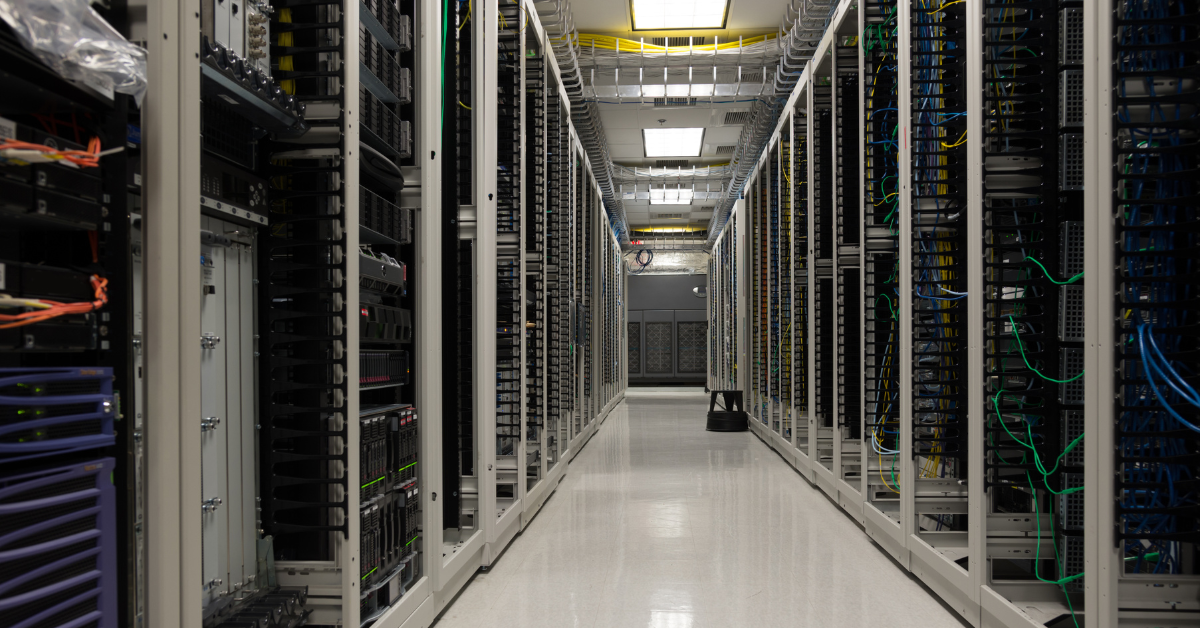
With the rise of AI and high-performance computing, data centres are facing much higher heat densities than ever before. Traditional air cooling alone can no longer cope, which is why we’re seeing a growing shift towards liquid cooling. This trend is also reflected in the market, with more manufacturers introducing Cooling Distribution Units (CDUs) as standard solutions.
The choice of cooling system ultimately depends on the technology within each data centre. The AI boom, in particular, has accelerated the move towards liquid cooling and immersion cooling. Whilst immersion cooling has its benefits and is anticipated to see an upscale in its use going forward, concerns around cost, familiarity and limited manufacturer support have restricted its use.
Direct-to-chip liquid cooling on the other hand has seen a significant uplift in its use, particularly due to the capability of retrofitting into existing facilities, and this shift is already changing how we approach data centre design, ensuring that infrastructure is both resilient and future-ready. You can read more about the wider influence of AI on data centre design in our article The Influence of AI on Data Centre Design
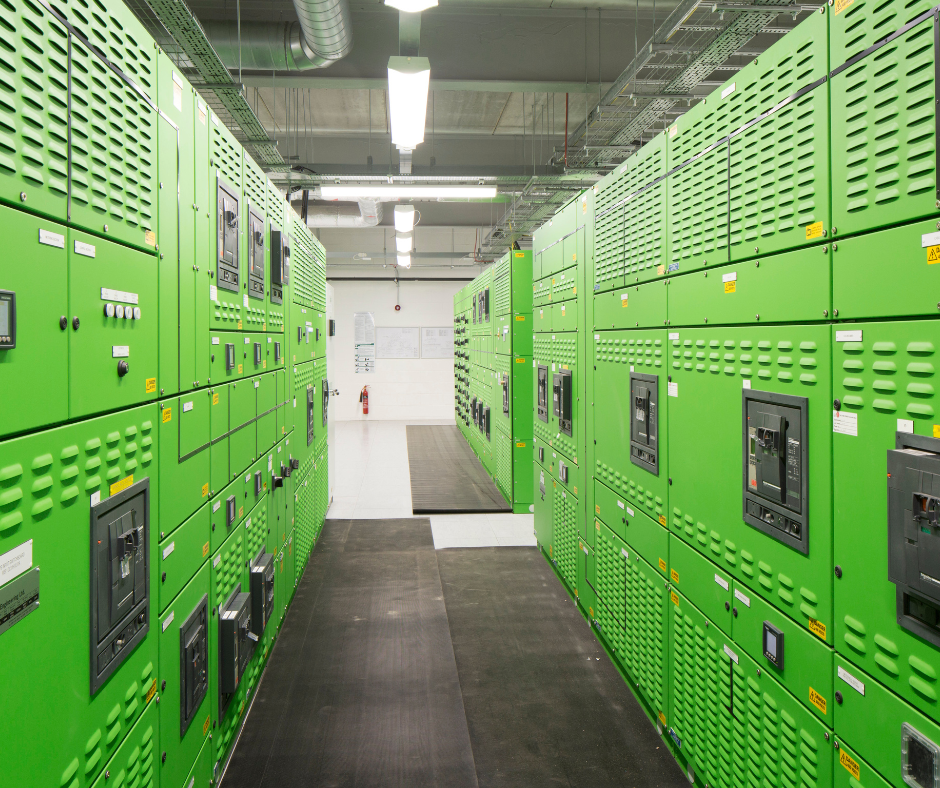
Sustainability is a justified concern in data centre design, particularly given the significant energy required to operate and cool these facilities. Cooling systems alone account for a large proportion of overall consumption, which makes selecting the most efficient approach, and identifying opportunities to minimise energy use, critical for both performance and environmental impact.
Globally, there is a growing shift toward waste heat recovery. While the UK currently has no legislative requirements, the EU’s Energy Efficiency Directive (EED) already mandates that data centres over 1MW must either reuse waste heat or prove that it is not technically or economically feasible. It seems likely that similar measures will eventually be introduced in the UK. Implementing such systems will typically require additional plant to uplift temperatures to usable levels and, crucially, local heat demand, meaning not every site will be suitable.
Powering data centres is another challenge. While renewable integration is possible, a single renewable solution alone cannot realistically meet the demand of high-density facilities, particularly AI-focused ones. More promising are direct links to multiple sources of renewable generation, such as connections between data centres and nearby wind farms, helping to ensure energy use is closely matched with green generation. In Scotland, this presents a major opportunity given the country’s extensive renewable energy resources.
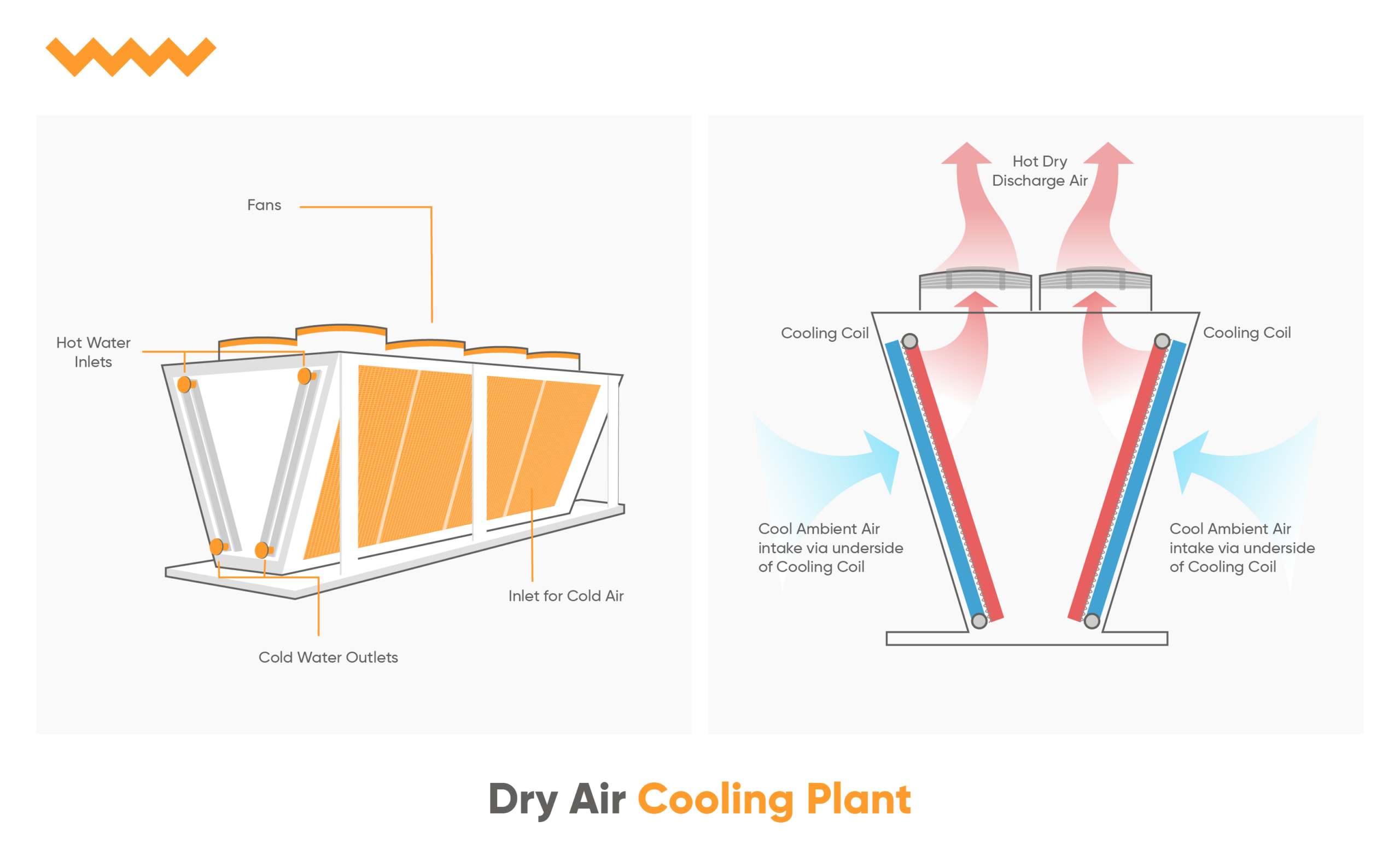
Scotland also offers a natural advantage in cooling. Its consistently low ambient temperatures, and designing to higher facility water temperatures available via liquid cooling, allow for extensive use of ‘free cooling’, using outside air to significantly offset or replace mechanical cooling. This can be applied directly, by filtering and circulating outdoor air into the data hall, or indirectly, by transferring heat through an exchanger. In either case, it significantly reduces energy consumption while maintaining optimal operating conditions.

Practical Considerations
Designing or upgrading data centres to ensure adequate cooling brings a number of complex challenges. One of the most significant is striking the right balance between minimising plant provision, and the associated capital costs, while still satisfying both client requirements and the accreditation standards often sought in the industry, such as Uptime Institute Tier Certification, or the CEEDA Award for energy efficiency.
Acoustics can also be a major issue, particularly when sites are close to residential or commercial properties. Cooling plant and supporting infrastructure such as generators and cooling plant can generate substantial noise, often requiring careful screening, attenuation, or alternative design solutions to comply with planning constraints.
Another critical factor is heat load testing. As data centres move towards higher capacities, the industry is shifting from small-scale load banks and towards larger-scale solutions, such as boilers, to more accurately simulate operational conditions.
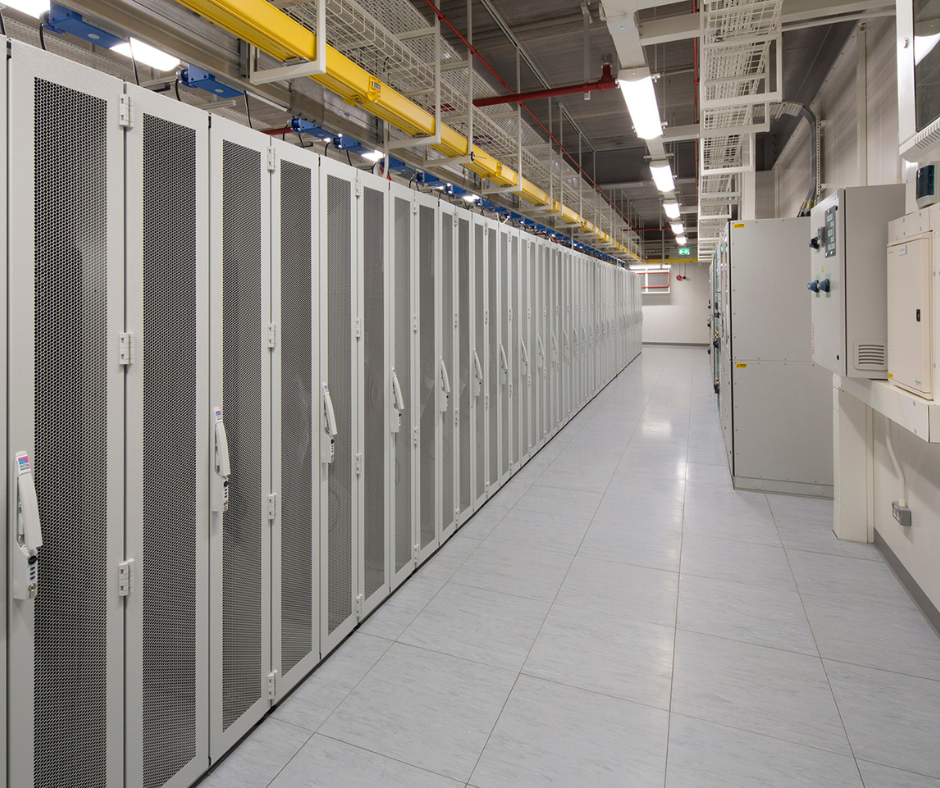
Where clients plan for future growth and modular expansion this must be carefully planned from the outset. For example, integrating additional cooling plant into a live environment requires careful sequencing and, where possible, planning for downtime during system modifications, commissioning, or top-ups. This becomes especially challenging in facilities that operate 24/7 and cannot afford service interruptions, making forward planning and resilient design strategies essential.
Future Considerations
Looking ahead, cooling strategies are set to evolve rapidly alongside the growth of high-density and AI-driven data centres. Liquid cooling and CDU solutions, which are already becoming widely available from multiple manufacturers, are expected to become commonplace over the next few years, particularly as demand for AI-ready facilities continues to grow.
The pace of technological development presents a unique challenge. IT hardware is advancing so quickly that by the time a data centre project completes design, planning, and construction, the equipment it houses may already be on the verge of being outdated. This underscores the importance of designing flexible and adaptable cooling strategies that can accommodate future innovations without requiring extensive retrofits.
For data centre designers, like ourselves, and even operators, this means planning not only for current requirements but also for scalability and future technological advancements, ensuring that these facilities remain efficient, resilient, and future-proof.
If you’re looking to design or upgrade a data centre with efficient, sustainable, and future-proof cooling solutions, get in touch with our team today, or contact John Moore at [email protected]
At Wallace Whittle, we combine MEP and sustainability expertise to deliver innovative designs tailored to your specific needs.
CEEDA (2025) Datacenterdynamics.com. Available at: https://www.datacenterdynamics.com/en/ceeda/.
Commission Recommendation (EU) 2024/2395 of 2 September 2024 setting out guidelines for the interpretation of Article 26 of Directive (EU) 2023/1791 as regards the heating and cooling supply. Official Journal of the European Union, L series, 9 September. [Online]. Available at: http://data.europa.eu/eli/reco/2024/2395/oj
Energy Efficiency Directive (2023) Energy. Available at: https://energy.ec.europa.eu/topics/energy-efficiency/energy-efficiency-targets-directive-and-rules/energy-efficiency-directive_en#energy-performance-of-data-centres.
Tier Certification Overview (2025) Uptime Institute. Available at: https://professionalservices.uptimeinstitute.com/tier-certification