


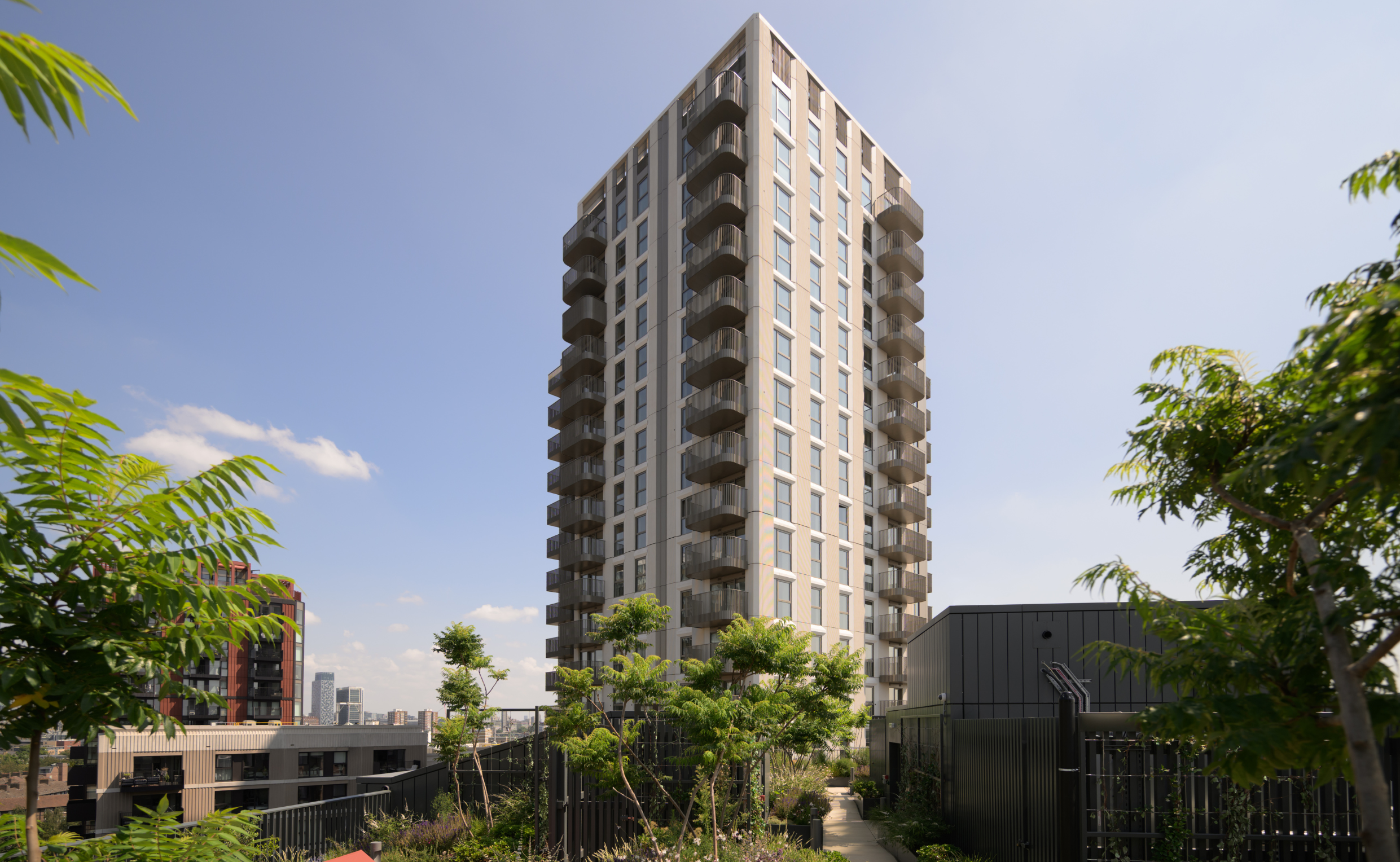
Elephant Park: 15 years of engineering a new London neighbourhood

The completion of The Wilderly marks the final residential phase of Elephant Park, ending more than 15 years of transformation at the heart of Elephant and Castle in South London.
WWe’ve been part of the masterplan team since 2011, working alongside Lendlease and MAKE Architects to help shape the engineering strategy behind one of central London’s most significant regeneration projects.
Over the course of the development, our teams have supported the delivery of more than 3,000 homes alongside hundreds of thousands of square feet of community and commercial space. Across seven major phases and a series of sub-phases, the project has evolved significantly, but a consistent approach to building services and sustainability has remained at its core.
Engineering a long-term masterplan
One of the defining challenges of Elephant Park has been its longevity. Over the past 15 years, building regulations, sustainability requirements, fire safety standards, construction methods, and energy strategies have all continued to evolve.
The engineering strategy therefore needed to provide a strong foundation while remaining adaptable enough to respond to these changes. Our continued involvement throughout the masterplan has allowed lessons from earlier phases to inform subsequent developments, creating consistency across the collection of buildings.
The project has included everything from technically complex high-rise developments to lower-rise mansion blocks and townhouses. Early phases also explored ambitious approaches to energy efficiency, including homes designed to rigorous Passivhaus standards.
Modern Methods of Construction (MMC) were championed throughout the development, alongside work to monitor and reduce thermal distribution losses across the wider energy system. This approach helped ensure that the infrastructure serving the neighbourhood could continue to deliver value as the masterplan developed.
A key element of the strategy has been Elephant Park’s energy network, which incorporates a net-zero-carbon-capable energy system anchored by an on-site energy centre. Its integration from the earlier stages of the masterplan provided a foundation for a more sustainable approach to energy across the emerging neighbourhood.
The development’s individual phases each brought their own engineering challenges and opportunities.
Trafalgar Place was one of the earliest phases and became a landmark for the wider regeneration, earning a nomination for the prestigious Stirling Prize. This was followed by One The Elephant, a highly visible 37-storey tower that has become a defining feature of the local skyline.
Subsequent masterplan phases, including South Gardens, West Grove, East Grove and Plot H7, continued the transformation of the site, with individual plots ranging from £90 million to £150 million in value.
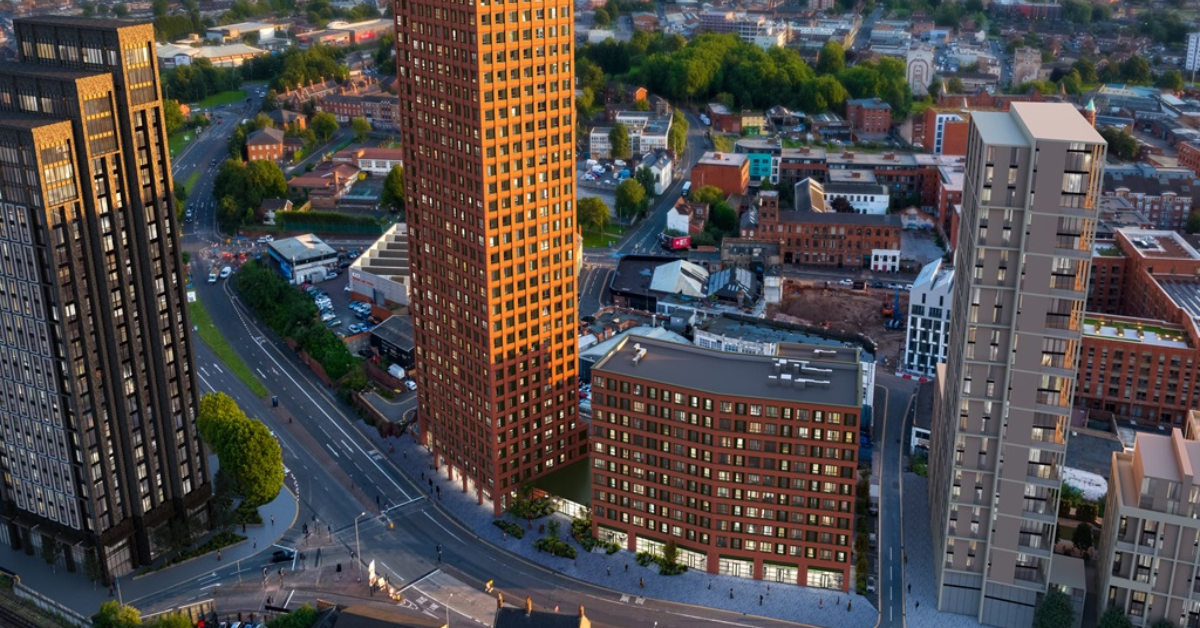
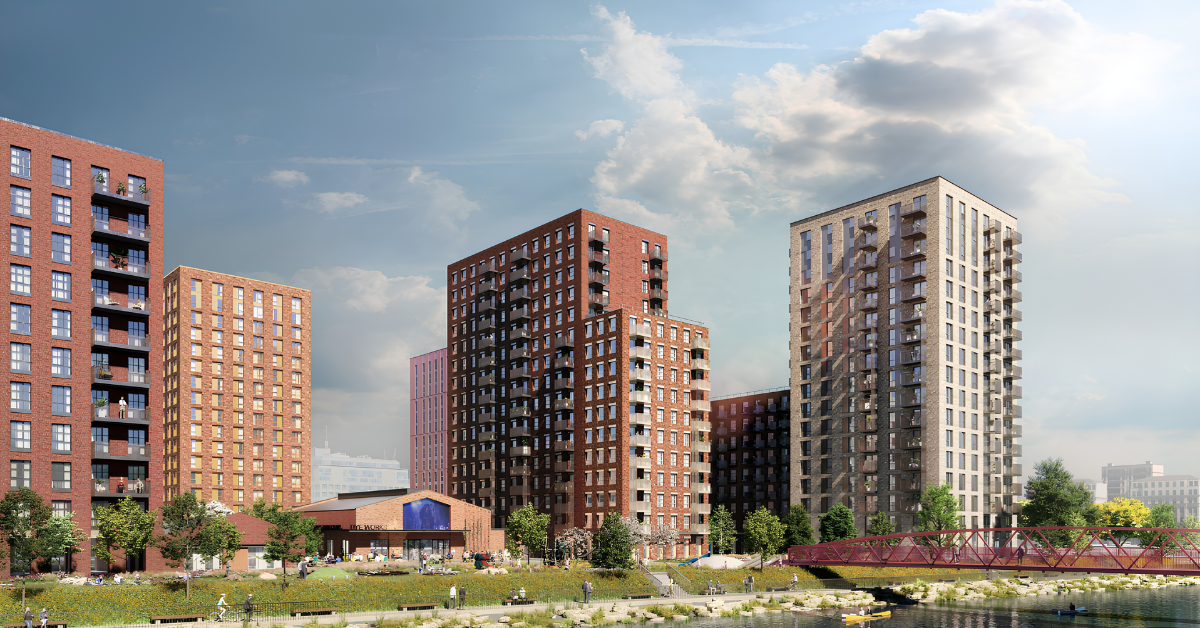
The final residential phase, The Wilderly, completes the delivery of homes within Elephant Park. The development comprises a standalone 25-storey tower alongside a mid-rise block, providing 259 residential units as the final homes are handed over to residents.
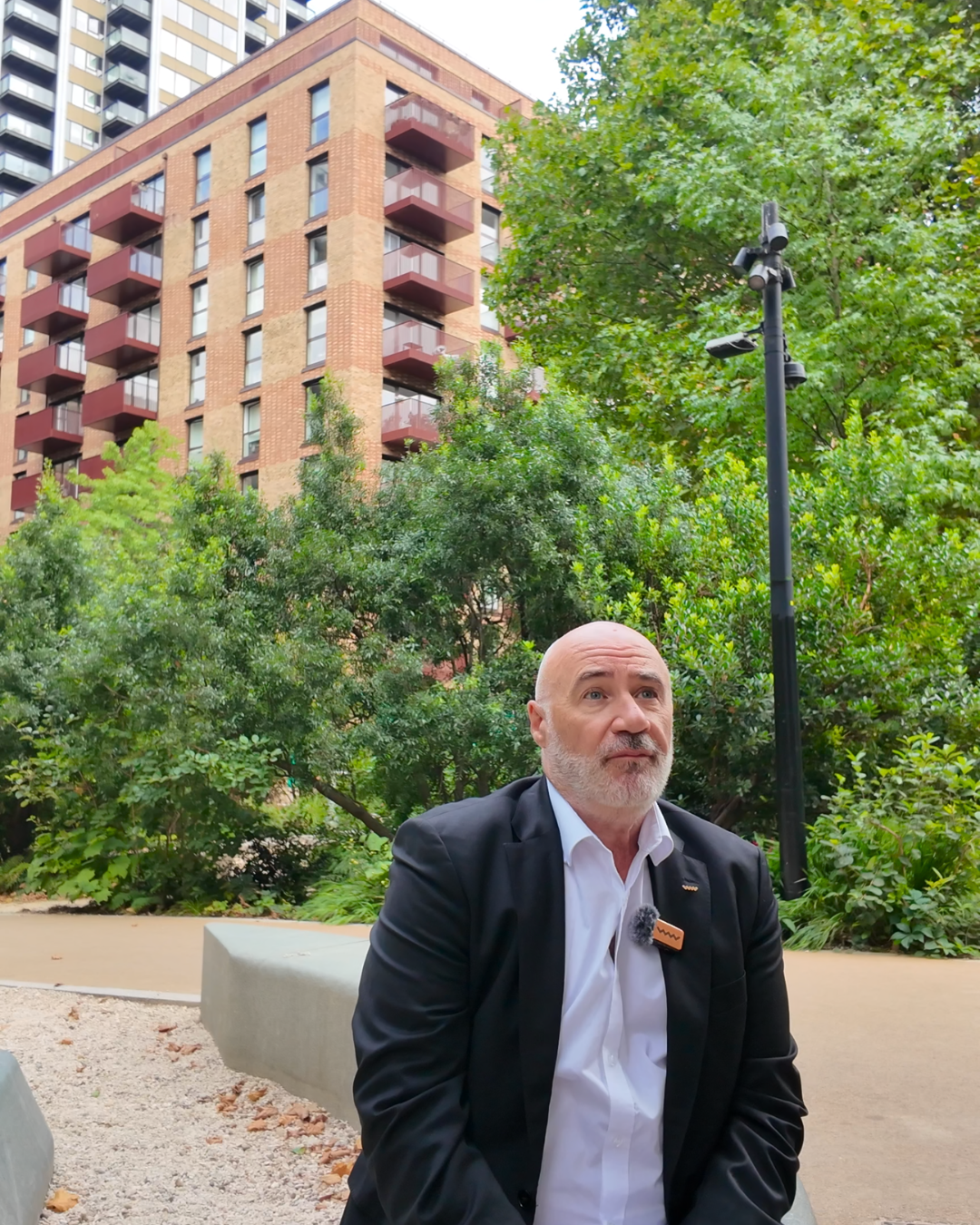
Craig Robertson, Regional Director for England, shared with us that the completion represents the culmination of a rare long-term partnership.
“It is incredibly rare for a building services and sustainability consultancy to remain consistently embedded on a single mega-project for 15 years.”
“Through industry changes and Wallace Whittle’s own company growth and evolution, our team provided absolute consistency. We set an incredibly high benchmark early on, ensuring the infrastructure could adapt to changing regulations and continue delivering long-term value to the people of Southwark. Seeing this final phase hand over brings immense pride.
From the outset, Elephant Park was more than a residential development. The wider masterplan has brought together homes, commercial and community spaces, public realm and green space to create a neighbourhood that is connected to the surrounding area.
As the final phase completes, the transformation is visible not only in the buildings themselves but in the community that has developed around them. New public spaces, independent shops, amenities and transport connections have helped establish Elephant Park as an established part of Elephant and Castle.
Reflecting on the project’s evolution, Craig shared:
“During those initial masterplan meetings in 2011, Lendlease’s vision was always about placemaking – creating a real community to live in, not just build houses.
Looking at it today, with its own London bus route, artisan shops and vibrant public spaces, we have jointly achieved that. It has a remarkably tranquil vibe for Zone 1 London”
While The Wilderly marks the completion of Wallace Whittle’s involvement in the Elephant Park masterplan, the experience gained over 15 years continues to inform the way our teams approach major developments.
The project has provided an opportunity to see a complex masterplan evolve across multiple market cycles and changing technical requirements, while maintaining a consistent engineering strategy throughout.
As residents move into the final homes, Elephant Park now stands as an established London neighbourhood. For us? The completion of The Wilderly provides an opportunity to reflect on a project that has shaped both the area and our own approach to delivering long-term, sustainable engineering solutions at scale.
Working on a major development or regeneration project? Our building services and sustainability teams can support projects from masterplanning through to delivery. Get in touch with us at [email protected]

Beyond the EPC: Preparing Buildings for the UK’s 2030 Standards
The UK‘s approach to building performance is changing. As new standards reshape how we measure energy efficiency, heating, ventilation and occupant wellbeing, what does this mean for projects being designed today?
The countdown to 2030 is already underway. Over the next five years, a series of regulatory changes will reshape how buildings across the UK are designed, assessed and operated. From the introduction of a new multi-metric approach to Energy Performance Certificates (EPCs) and the Future Homes Standard, to growing requirements around indoor air quality and occupant wellbeing, the focus is shifting beyond simply meeting minimum energy efficiency requirements.
For developers, architects, engineers, and building owners, this means decisions made today could have a significant impact on a building’s ability to meet tomorrow’s standards. The challenge is no longer simply how to achieve compliance, but how to deliver buildings that demonstrate better long-term performance.
So, what exactly is changing?
The road to 2030 isn’t defined by a single piece of legislation. Instead, the built environment is facing a period of significant regulatory change, with updates to building regulations, energy performance assessments, and minimum efficiency standards all expected over the coming years.
Among the changes published updates to Parts L and F of the Building Regulations, potential revisions to Part O, the planned transition from SAP to the Home Energy Model (HEM), and changes to the Minimum Energy Efficiency Standards (MEES).
“The scale of change makes it difficult to identify a single defining development. However, the proposed tightening of Minimum Energy Efficiency Standards for privately rented properties could have the most significant and widespread impact. The direction of travel is clear.” Steven Carroll, Senior Sustainability Consultant, shared with us.

Rethinking the EPC
One of the most visible changes will be the reform of EPCs. In England and Wales, the proposed introduction of the Home Energy Model will replace the current SAP methodology for domestic assessments, alongside a new multi-metric approach to EPCs.
Rather than reducing building performance to a single energy efficiency rating, the proposed EPC framework provides a more nuanced assessment by separately reporting fabric performance, heating system efficiency, smart readiness, and energy cost. This could provide developers, building owners, and project teams with a more balanced picture of where a building performs well and where improvements may be needed.
“The proposed multi-metric EPC framework should provide a more balanced assessment of building performance,considering fabric efficiency, energy costs and heating-system performance separately, while helping to highlight potential trade-offs that can exist between operational costs and decarbonisation objectives.” Steven shared.
However, it’s important to distinguish between improved modelling and actual building performance. As Steven notes, EPCs will remain modelled assessments rather than measurements of how a building performs in use.
“EPCs will remain modelled assessments rather than measures of actual building performance,” he explained.
The transition will not look identical across the UK, either. While England and Wales are proposing a shift towards an Energy Cost Metric based on annual fuel costs, the Scottish Government has indicated an intention to retain an A–G style rating alongside its equivalent energy cost metric. So, for organisations working across multiple UK markets, understanding these differences will be important when planning projects and assessing future compliance.
A fabric-first approach
The changes to EPCs are only one part of the picture. Meeting future performance standards will also require project teams to think differently about how buildings are designed from the outset.
A fabric-first approach — reducing energy demand through measures such as improved insulation, airtightness and thermal-bridge mitigation — will remain fundamental. But as buildings become more efficient, simply adding further fabric improvements can deliver diminishing returns.
“There are diminishing returns from fabric enhancements. Beyond a certain point, further improvement can become increasingly cost-ineffective.” shared Steven.
This makes the relationship between the building fabric and its services increasingly important. Rather than treating them as separate considerations, projects need to balance fabric performance with ventilation, heating, thermal comfort, and efficient operation.
The challenge for project teams is to find the right balance between reducing energy demand and designing building services that can operate efficiently, maintain comfortable internal conditions and support good indoor air quality.
This means MEP considerations need to be brought into the conversation early — rather than being treated as a solution to be added once the building fabric has already been defined.
Designing for low-carbon heating and effective ventilation
A fabric-first approach can reduce a building’s energy demand, but it is only part of the picture. As buildings become more airtight and heating systems move away from fossil fuels, the relationship between building fabric, heating and ventilation becomes increasingly important.
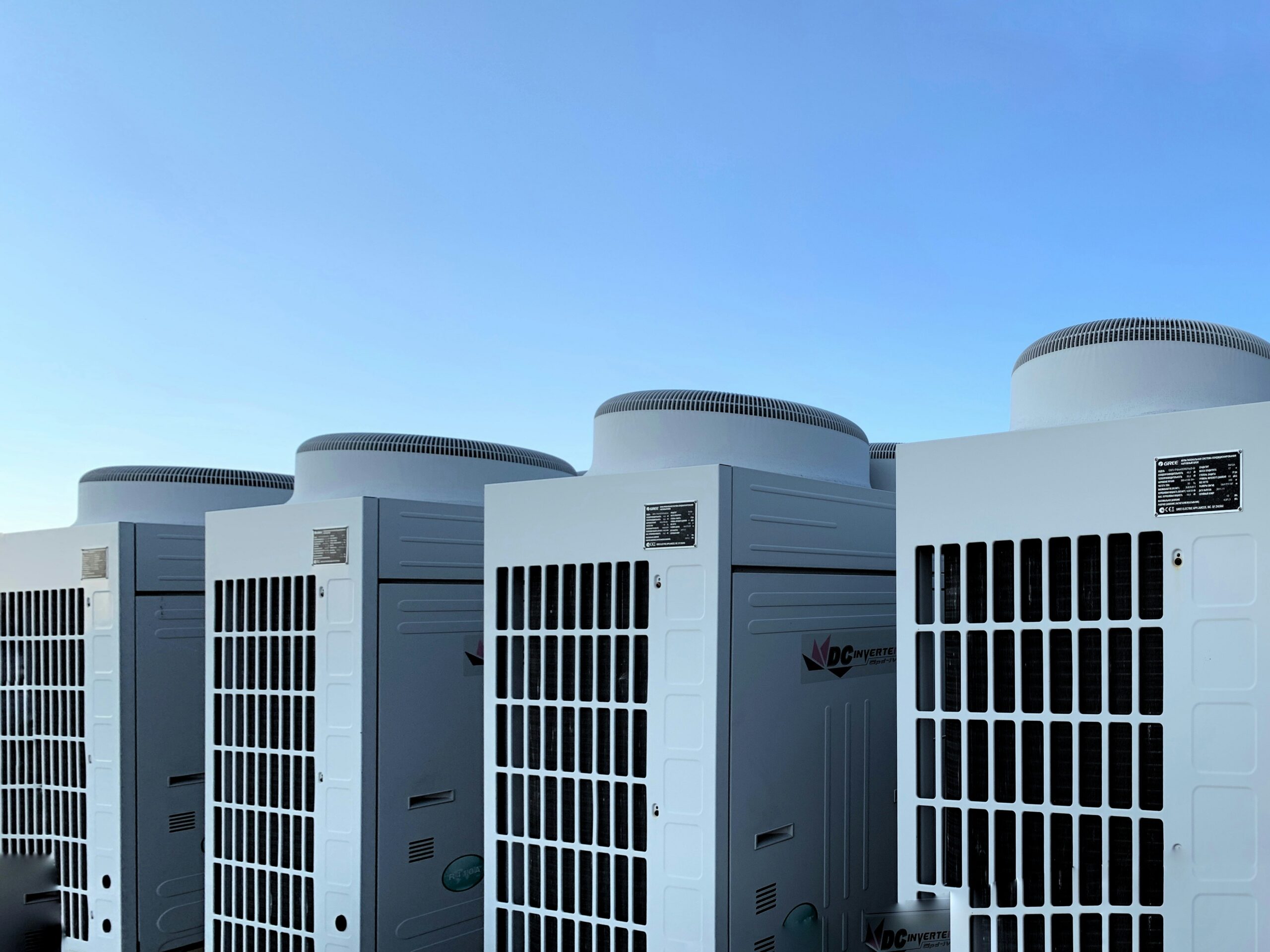
Heat pumps are expected to play a much greater role in meeting future heating requirements, making it increasingly important to minimise heat demand through effective insulation, airtightness, and thermal-bridge mitigation. At the same time, well-designed ventilation is essential to maintain good indoor air quality, manage moisture, and provide comfortable internal conditions.
Steven also shared that “as heat pumps become the norm, reducing heat demand becomes increasingly important.”
This is where the principle of “build tight, ventilate right” comes into play. Improving airtightness can reduce unwanted heat loss, but it needs to be supported by an effective ventilation strategy. For project teams, this reinforces the importance of considering fabric and MEP design together from the outset, rather than treating building services as a separate consideration.
Building performance and occupant wellbeing
Alongside energy performance, increasing emphasis is being placed on the health and wellbeing of building occupants. Issues such as damp, mould, overheating and indoor air quality are becoming increasingly prominent within policy, regulation and industry guidance.
The introduction of Awaab’s Law, together with a growing focus on healthy indoor environments, reinforces the importance of designing buildings that not only operate efficiently but also provide safe, comfortable and resilient places to live and work. As buildings become increasingly airtight and energy efficient, achieving appropriate levels of ventilation, moisture control and thermal comfort will be essential to balancing building performance with occupant wellbeing.
What should projects do now?
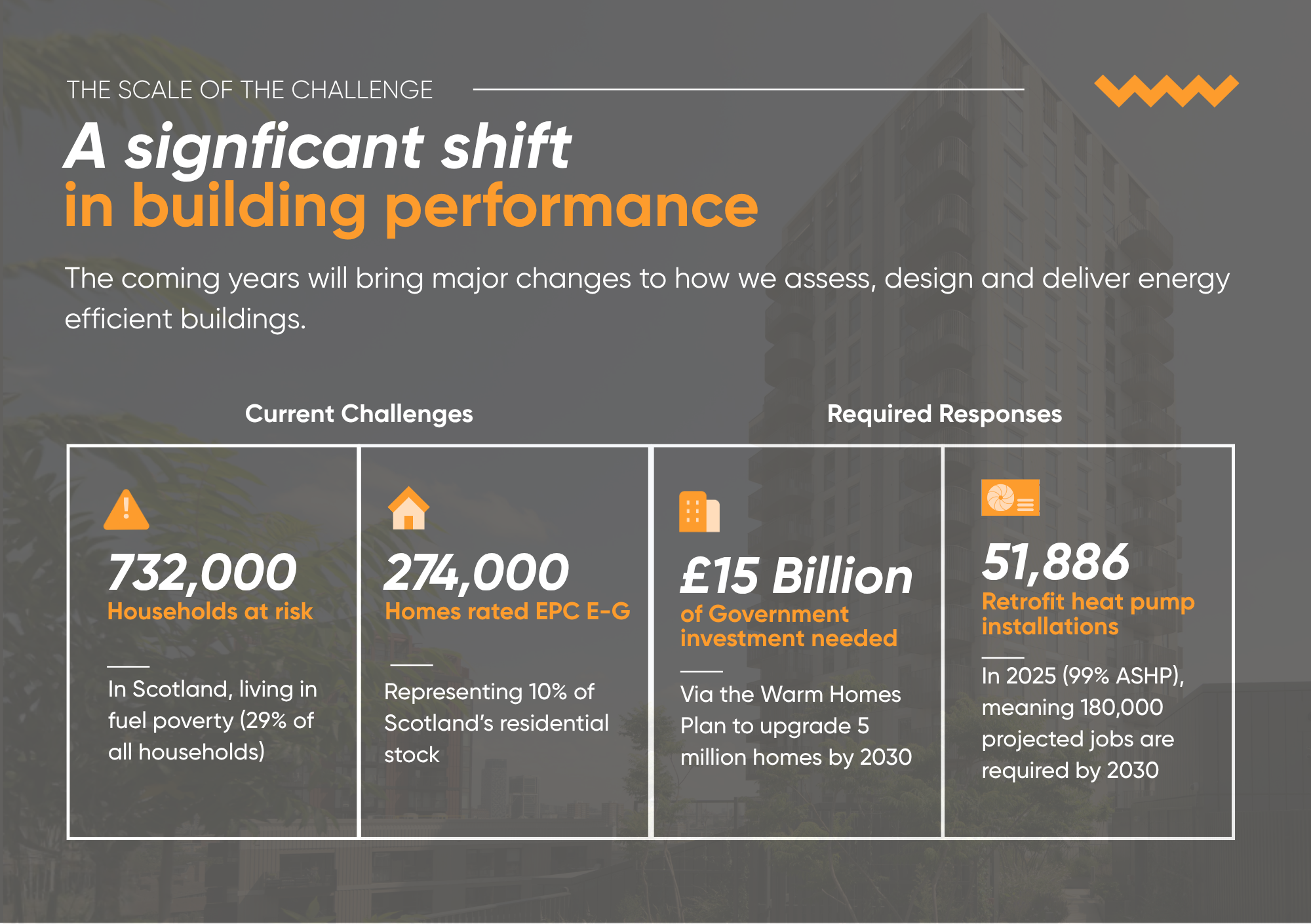
With many of these changes still developing, project teams do not need to wait for every detail to be finalised before taking action. The direction of travel is clear: buildings will need to be more energy efficient, better prepared for low-carbon heating and capable of delivering good performance in practice.
For projects being designed today, this means looking beyond current minimum standards and considering enhanced fabric performance, airtightness, overheating mitigation, robust ventilation, heat pump or heat network readiness, and viable opportunities for solar PV from the outset.
“The objective should be to deliver buildings that are resilient, cost-effective and future proof, rather than simply compliant with current requirements.”
The key milestones below highlight the pace of change and the deadlines project teams should have on their radar as we move towards 2030 and beyond.
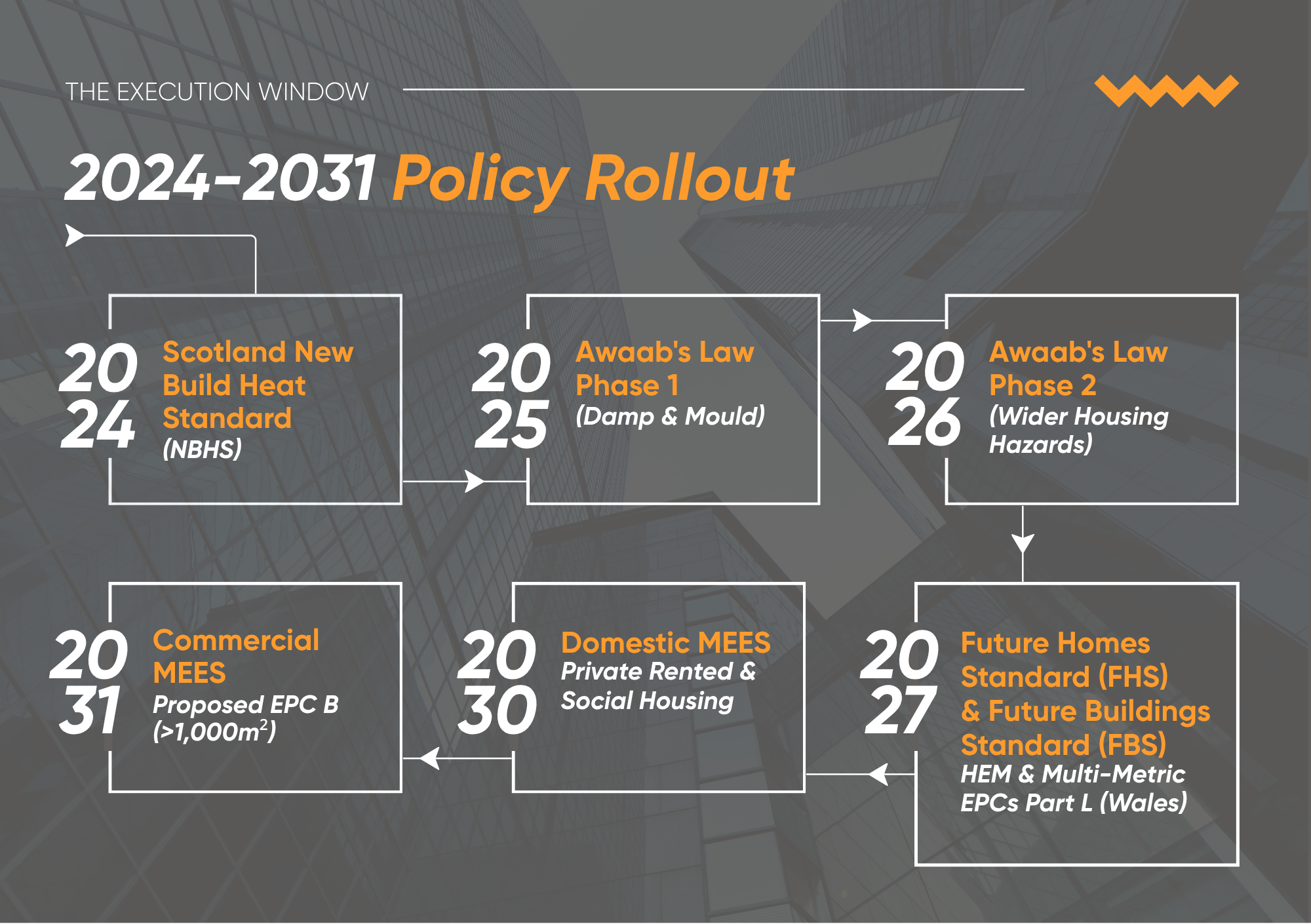
Preparing for these changes is ultimately about more than meeting the next regulatory requirement. By considering building performance holistically and making informed decisions early, project teams can create buildings that are better equipped to respond to changing regulations, energy costs and occupant needs over their lifetime.
The regulatory landscape is changing quickly, and understanding what these changes mean for individual projects will be key to making informed decisions today.
We can help you navigate the evolving requirements, identify opportunities to improve building performance and develop strategies that are designed to go beyond compliance.
Get in touch with our Sustainability team to discuss how we can help prepare your project for 2030 – [email protected]

Steven Carroll
Senior Sustainability Consultant
Related Articles
WWe're going to Healthcare Estates 2026!
WWe are heading to Manchester for the IHEEM 2026 Healthcare Estates Conference & Exhibition.
We’re looking forward to returning to the Institute of Healthcare Engineering & Estate Management (IHEEM) Healthcare Estates Conference, Exhibition and Awards on 13th and 14th October 2026 at Manchester Central. Bringing together thousands of professionals from across healthcare engineering, estates, facilities management and the wider supply chain, Healthcare Estates is a key event for those shaping the future of the UK’s healthcare environment.
This year’s event centres around the theme ‘Mind the Gap’, exploring the challenges created by differences in estate capability, digital maturity and investment across the healthcare sector. With a focus on sharing knowledge, addressing inequalities and identifying practical solutions, the theme reflects the need for collaboration and innovation to create a more resilient, sustainable and equitable healthcare estate.
For Wallace Whittle, this is a conversation we’re particularly keen to be part of. As our healthcare expertise and presence across the UK continue to grow, we’re looking forward to bringing together colleagues from across our regional teams to share our experience, showcase our latest projects and discuss the challenges and opportunities facing healthcare design and delivery.
Healthcare Estates 2026 will feature more than 250 exhibiting organisations, alongside keynote sessions, specialist theatres, workshops and networking opportunities covering everything from design and construction to energy and sustainability, water safety, engineering resilience and smart hospitals.
We’re proud to work with clients and collaborators across the UK on a diverse portfolio of healthcare projects, spanning primary, secondary and tertiary care, as well as major acute developments and replacement hospitals. Our teams provide expertise across MEP design, sustainability and technical advisory services, supporting the delivery of modern, efficient, resilient and patient-focused healthcare environments.
From developing low-carbon solutions and supporting Net Zero ambitions to navigating the technical complexities of large-scale healthcare facilities, we take a holistic approach to creating buildings that work for patients, staff and the communities they serve. To learn more about our healthcare expertise, visit our dedicated Healthcare Hub.
You’ll find us at Stand F9, where our team will be available to discuss our latest healthcare projects, share our expertise and explore how we can support the delivery of the healthcare estates of the future.
Whether you’re attending to discuss an upcoming project, explore our services, share ideas or simply catch up with the team, we’d love to see you at Healthcare Estates 2026.
If you’d like to arrange a meeting in advance, please reach out to one of our attendees below.





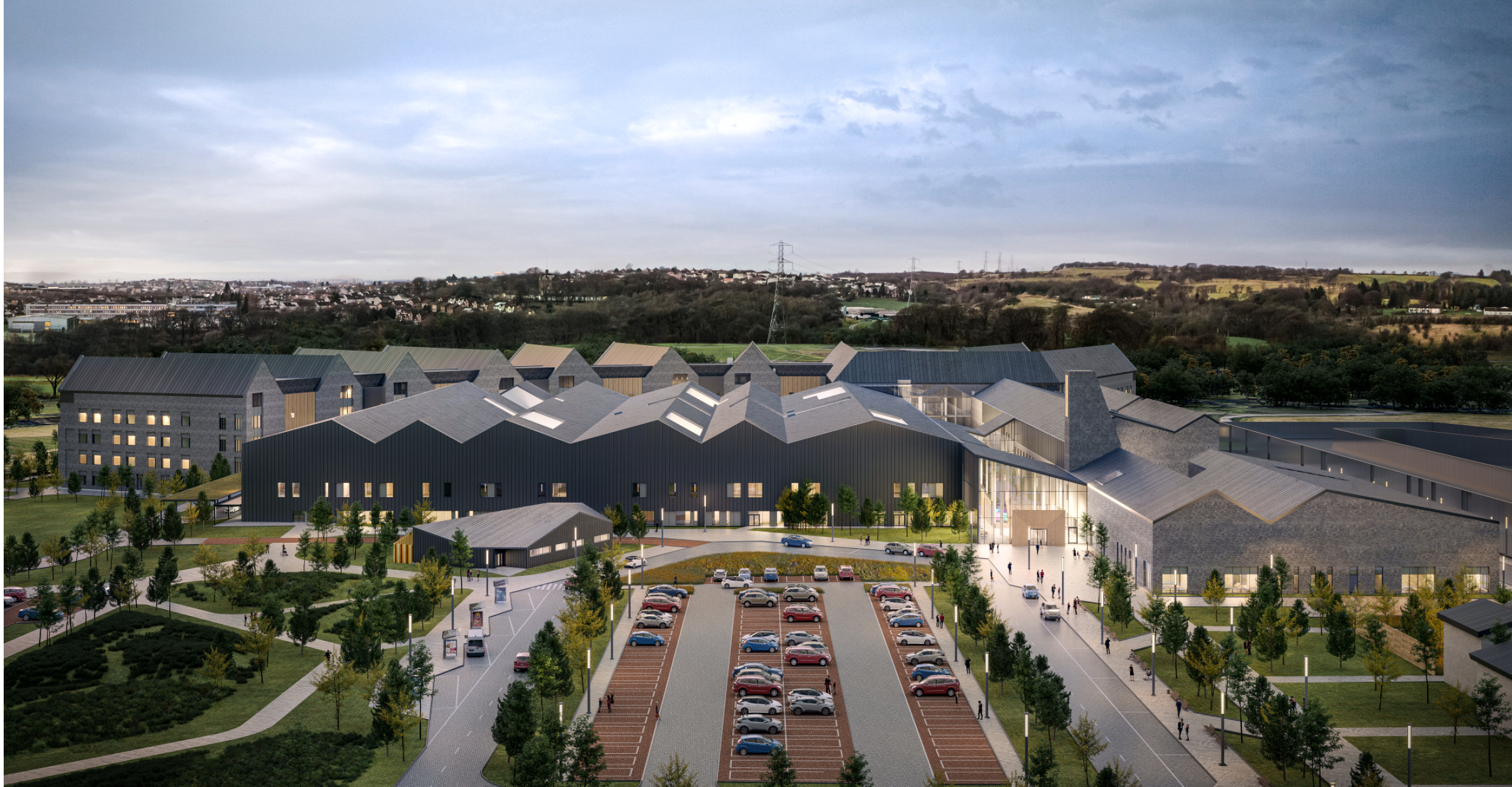

What The UK's Recent Heatwaves Tell Us About Thermal Balance in Buildings
With temperatures reaching 38.1°C in parts of the UK and London facing a rare risk-to-life heat alert, the country’s fifth heatwave of the year is putting building performance firmly back in focus.
For decades, the focus has rightly been on reducing heat loss, improving insulation, and lowering winter energy demand. Those priorities remain critical. But as hotter summers become more common and unpredictable, another challenge is becoming increasingly important: overheating.
This summer’s heatwaves are a reminder that many of the UK’s commercial buildings were designed for a different climate, whereas now we are faced with less predictable weather, and more frequent extremes.
When temperatures rise, it’s common to hear concerns about well-insulated buildings becoming “thermal traps”. In reality, overheating is rarely caused by insulation alone.
More often, it is the result of an imbalance in the overall design, where heat is allowed to enter the building or build up internally without an effective strategy to control or remove it.
High-performing building fabric remains a fundamental part of good building design. It helps reduce energy demand, improve comfort and stabilise internal temperatures throughout the year. The challenge comes when solar gains, internal heat loads, ventilation strategies, controls and cooling systems are not considered together as part of a holistic approach.

In many offices, overheating is driven by a combination of factors, including large areas of unshaded glazing, poor solar control, limited ventilation, significant internal heat gains from people and equipment, and building designs based on historic weather data rather than future climate projections.
The result can be uncomfortable working environments, reduced productivity and increasing cooling demands.
When temperatures rise, the immediate question is often whether a building needs more cooling. The best-performing buildings start by reducing overheating risk through good design.
This shift is already being reflected in planning policy. The Greater London Plan, for example, encourages designers to address overheating through a cooling hierarchy, prioritising measures such as orientation, shading and ventilation before relying on active cooling. It reflects a broader change in thinking across the industry: designing buildings that stay comfortable through good passive design first, with active cooling used only where necessary.
That means understanding the full thermal balance of a building. How much heat is entering through the façade? How effectively can excess heat be removed? How will the building perform not only today, but throughout the hotter summers expected over its lifespan?
When assessing future building performance, at Wallace Whittle we consider factors such as solar gain, ventilation strategy, building fabric, future climate modelling and, where necessary, the most efficient and sustainable approach to active cooling.
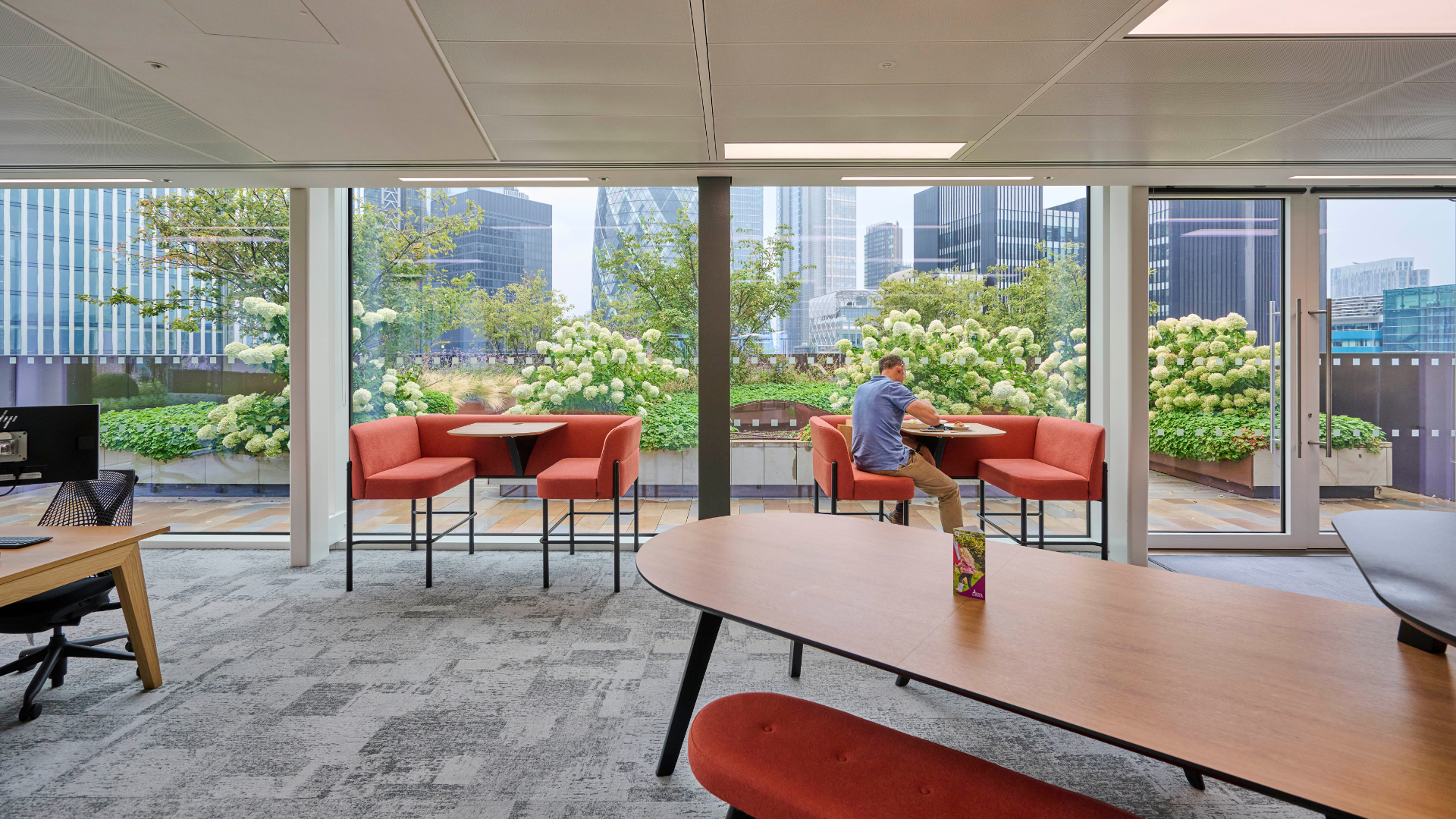
The most resilient buildings are not necessarily those with the largest air-conditioning systems. They are the ones where thermal comfort has been considered from the outset, creating buildings that retain heat when it is needed, keep unwanted heat out when temperatures rise, and remove excess heat efficiently when it builds up.
As periods of extreme summer temperatures become more common across the UK, designing for overheating is no longer a secondary consideration. It is becoming a fundamental part of delivering comfortable, healthy and energy-efficient buildings for the future.
Designing for a changing climate requires a balanced approach to building performance.
If you’re looking to better understand overheating risk, future climate resilience or cooling strategies for an existing building or new development, get in touch with our Sustainability team at [email protected]
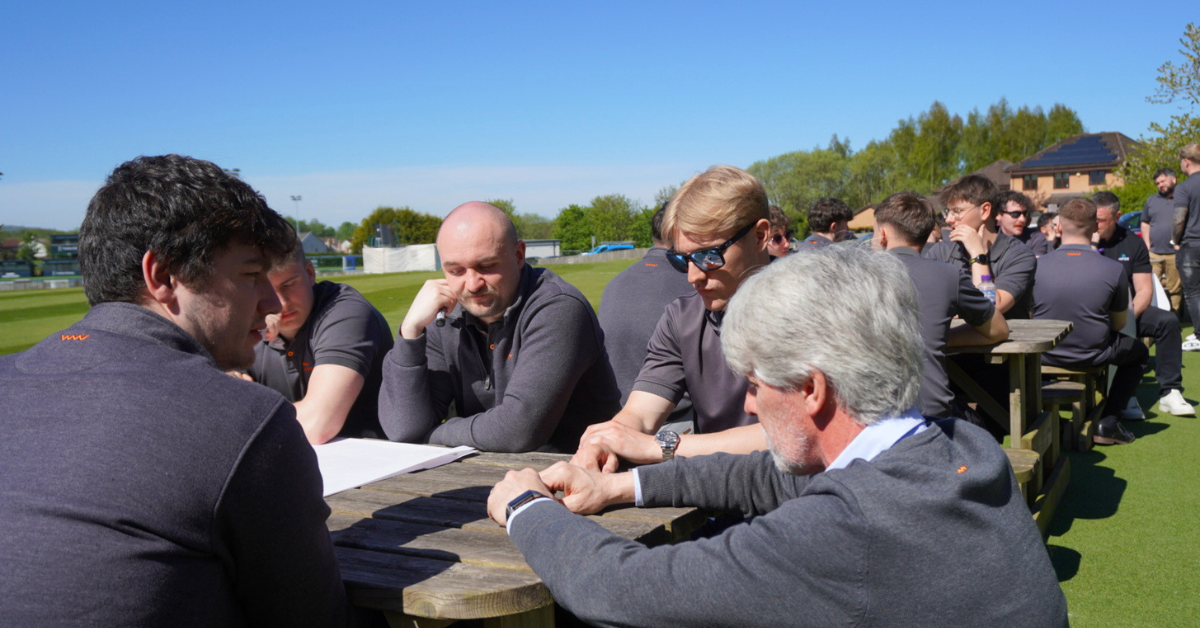
WW:Academy 2026. Investing in Our People at Every Level
As Wallace Whittle continues to grow, so too does our commitment to developing the people who drive our success.
The Wallace Whittle Academy remains a cornerstone of this approach; it brings together colleagues from across our offices to learn, collaborate and build upon the skills needed to support both their individual careers and the wider business.
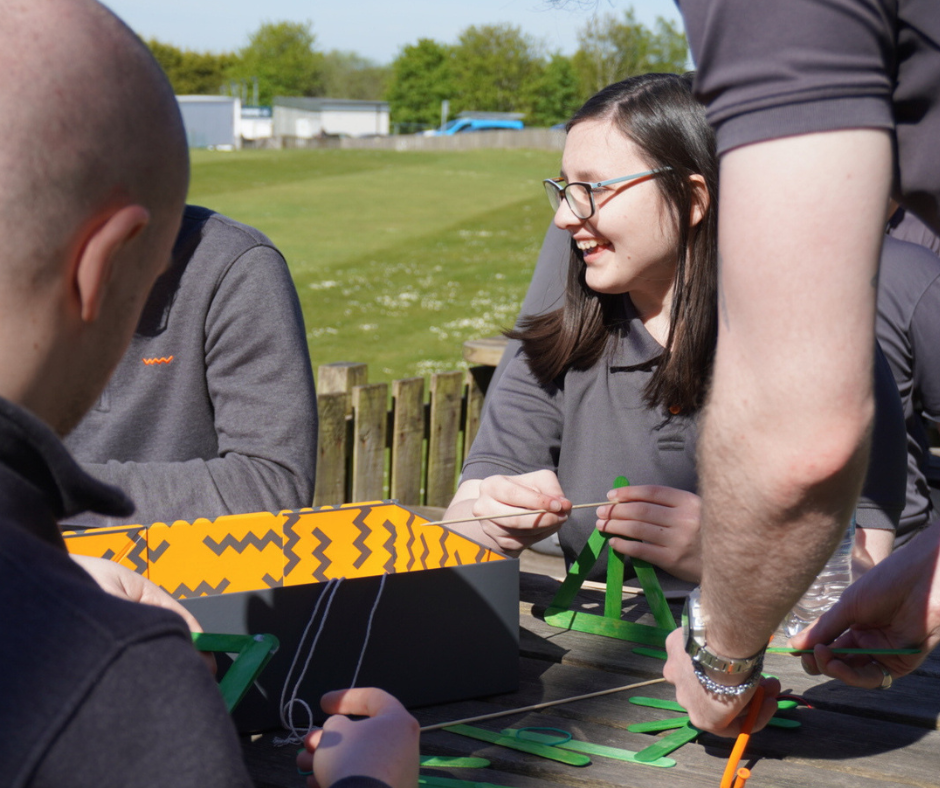
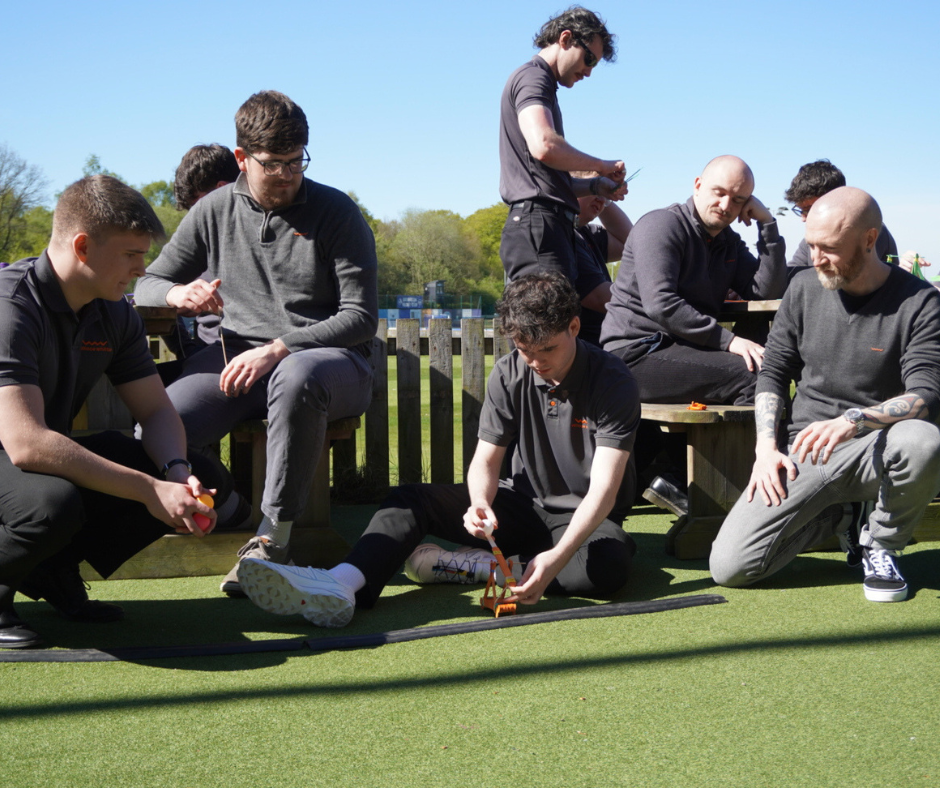
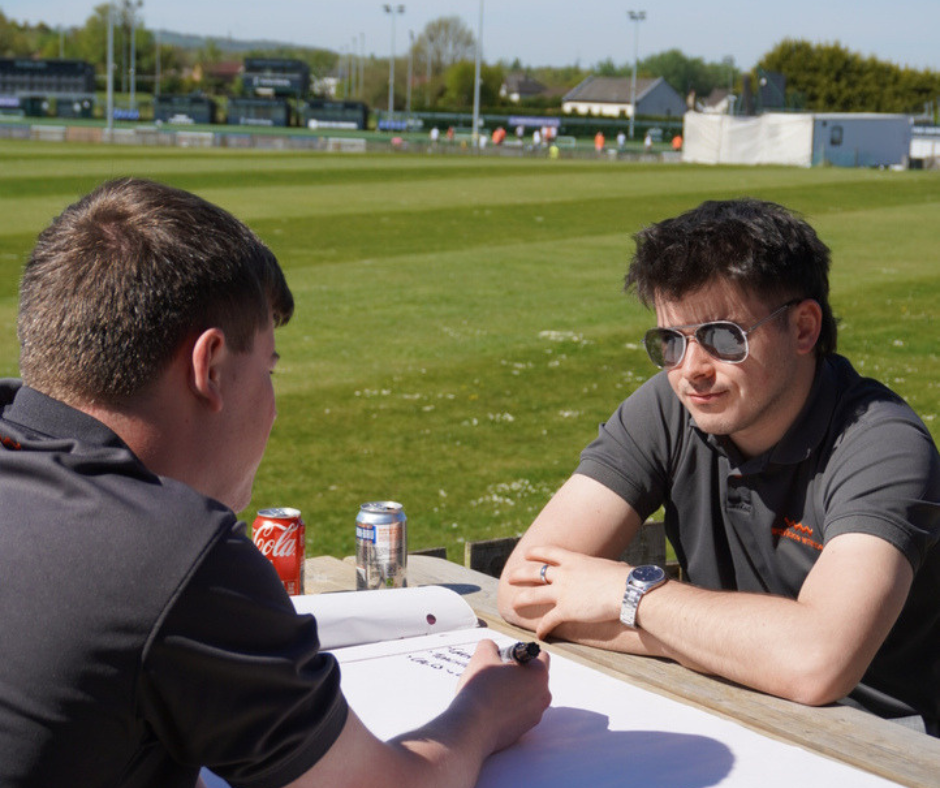
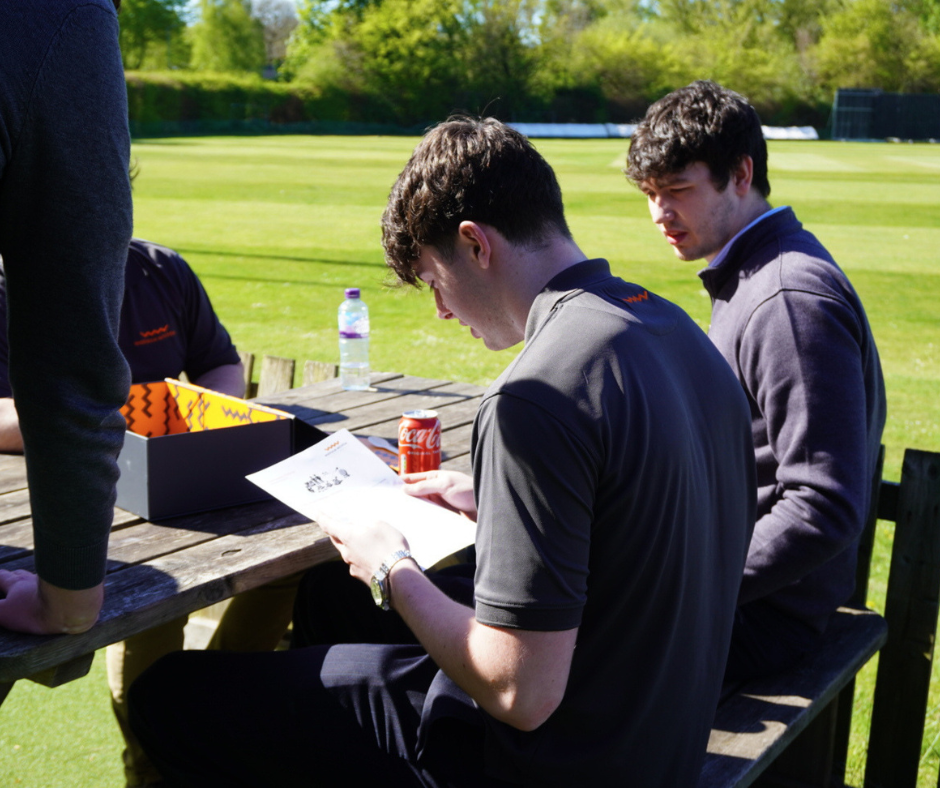
Kicking off the 2026 programme, our recent Level 2, 3 and 4 sessions welcomed staff at every stage of their journey, from apprentices to associates, graduates to directors. Across a series of tailored two-day sessions, attendees stepped away from their day-to-day roles to engage in discussions, share their perspectives, listen to seminars and explore new potential ways of working.
“The WW:Academy is a key part of how we invest in our people. It’s about creating the space for collaboration, sharing ideas, and developing the skills that go beyond day-to-day project delivery”
“As we continue to grow as a business, it’s vital that we develop our people alongside that growth. The Academy gives our teams the opportunity to step back, think strategically, and understand how they contribute to the wider success of the business, which quality of service and product at its core.”
Our MD, Allan McGill, shared with us.
We kicked off this year’s Academy programme with our Level 2 cohort, bringing together junior and graduate staff from across our offices for the two days. Designed to support those in the early stages of their careers, the level 2 sessions focus on building confidence, encouraging curiosity and providing a bit of exposure to the wider industry, beyond their day-to-day project work.
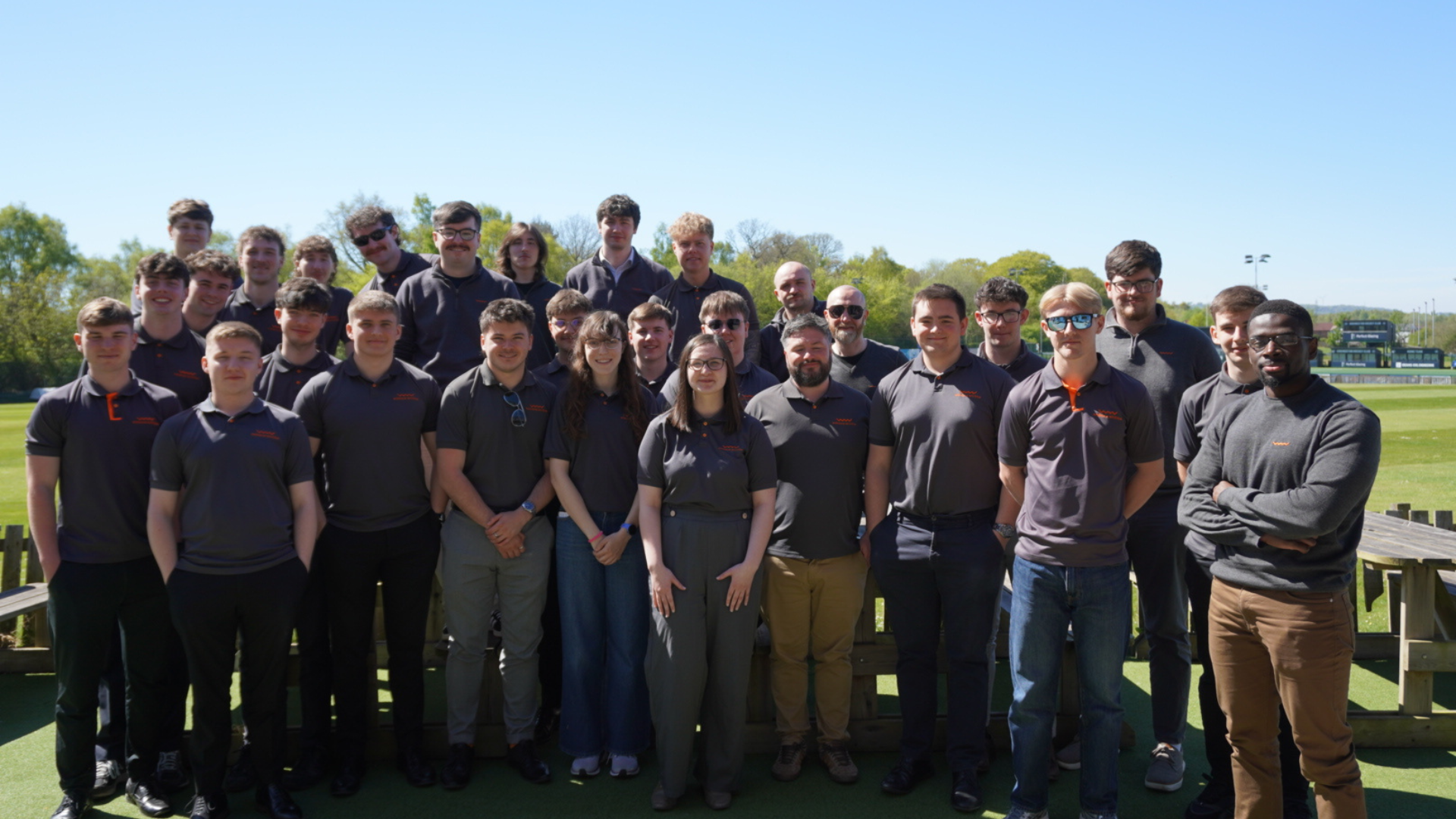
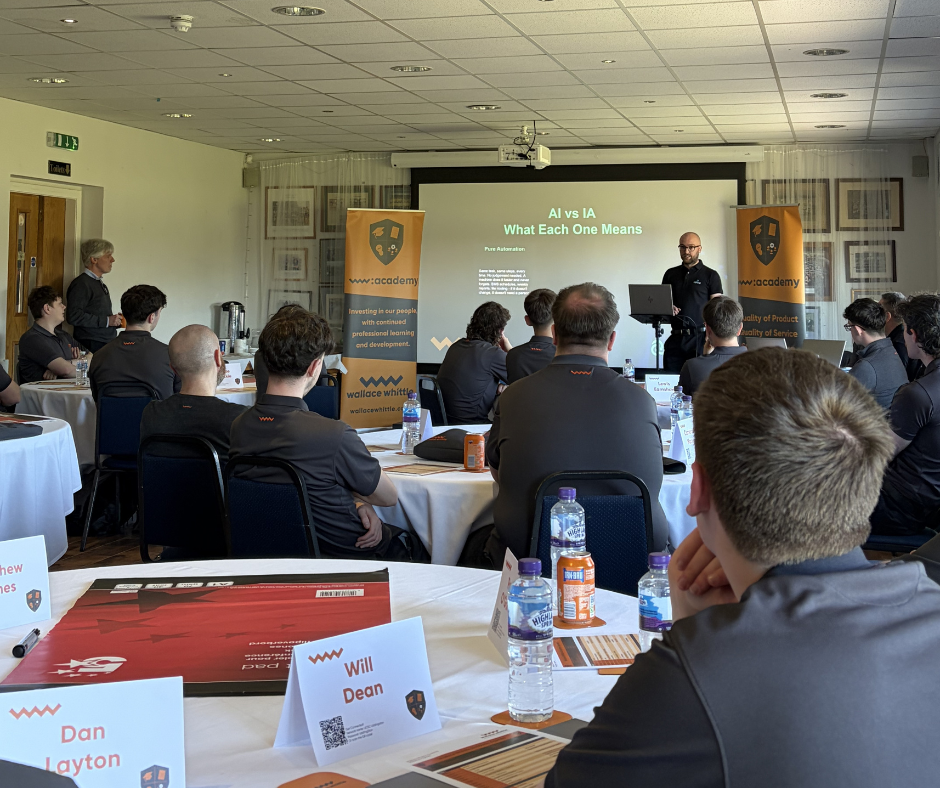
By connecting staff from different offices and disciplines, the academy helps establish strong working relationships early on and fosters a sense of belonging for our younger staff. Over the two days, attendees took part in a series of seminars and discussions led by both internal teams and external experts. Guest speakers from Doig + Smith shared insights into the importance of effective project management. At the same time, Hiper Technology Group delivered a thought-provoking session and task on AI and automations, exploring how emerging tech can support efficiency without compromising accuracy, quality or privacy.



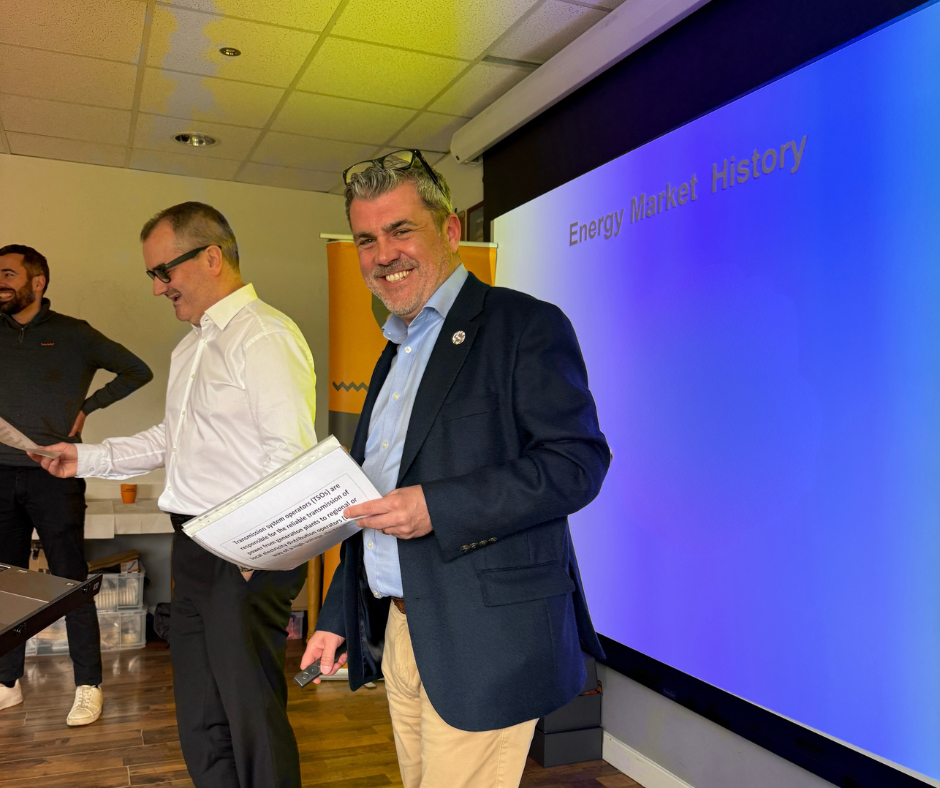
Building on this foundation, our level 3 sessions brought together mid to senior level staff for a more strategic programme focused on broadening perspectives and strengthening cross-disciplinary collaboration. At this stage, the academy shifts towards developing a deeper understanding of the wider business and industry, encouraging attendees to think beyond their immediate roles and consider how their work contributes to overall project success.

A key highlight of this session was the joint discussion led by our managing director, Allan McGill and John Petrie of Petrie Buchanan. Following the recent addition of Petrie Buchanan to the Wallace Whittle Group, this session offered valuable insight into the acquisition, alongside conversation around productivity, efficiency and the opportunities this brings for both our teams and our clients.
Alongside this, discussions continued to highlight innovation and technology, including the role of AI and Automation, encouraging staff to challenge their existing ways of working and explore how new approaches could enhance work efficiency and performance.

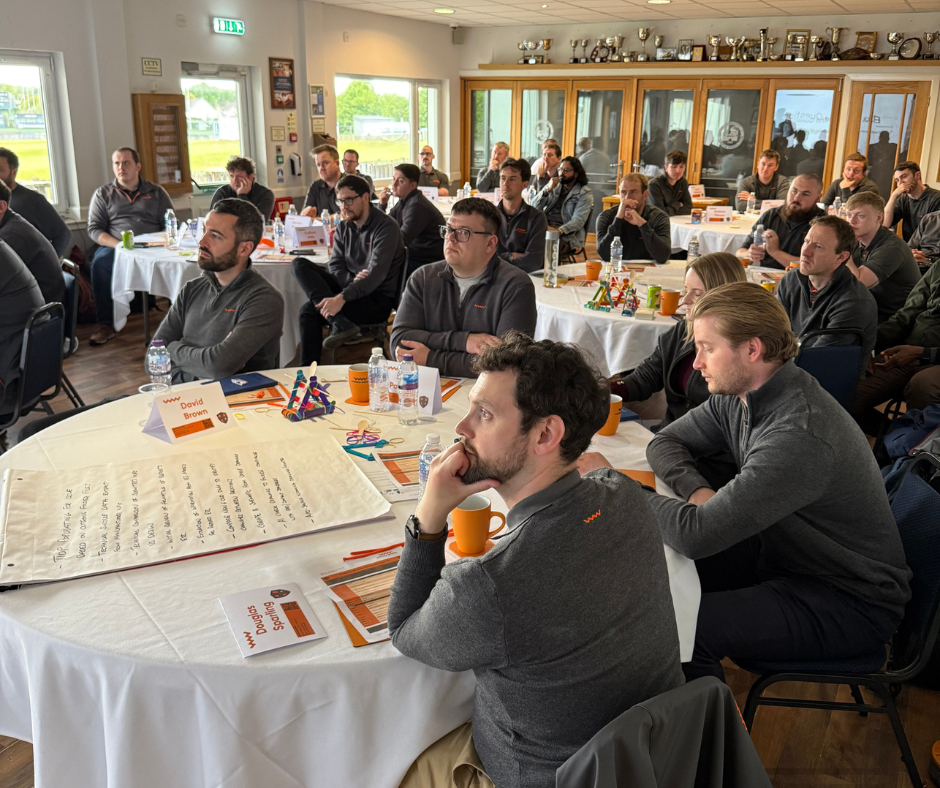
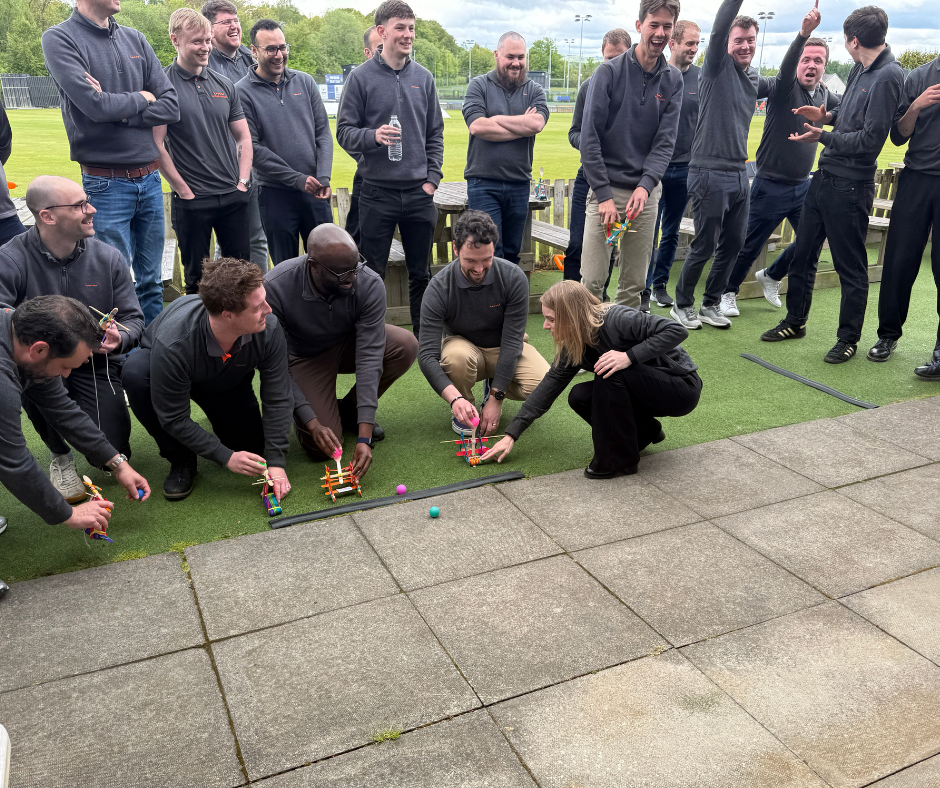

Lastly, our Level 4 session brough together senior staff from across the business, stepping away from the day-to-day management of project delivery. Designed to support leadership development, these sessions encourage open discussion around business strategy, performance and the future direction of Wallace Whittle. Our Level 4’s also explored how they can contribute to driving the business forward, whilst also sharing experiences and identifying potential opportunities to improve efficiency across teams.
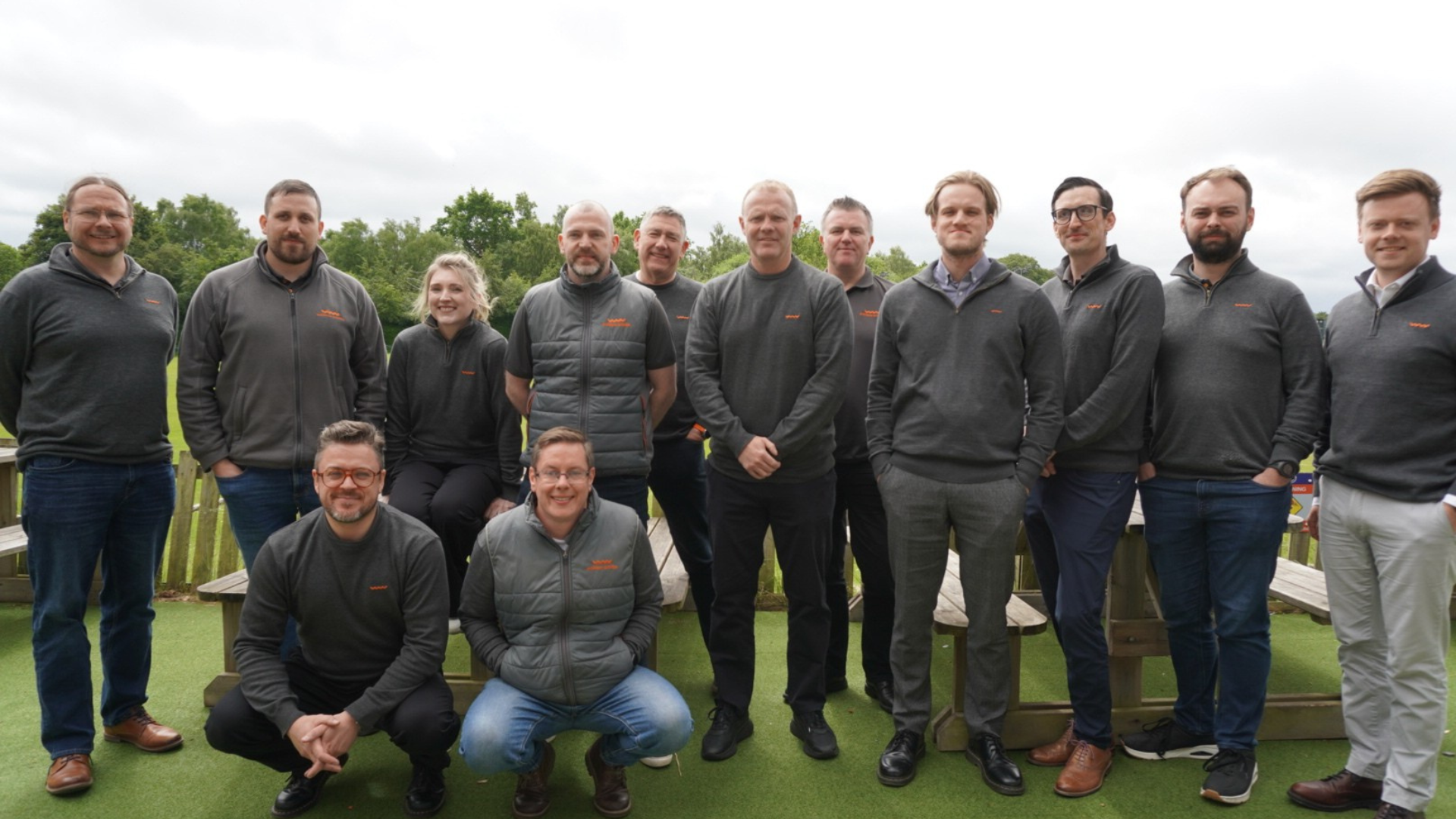
“It’s really important that the Academy workshops provide direct access to our Managing Director, who attends all sessions and encourages staff at all levels to engage with each other and with him from the very start. This empowers everyone to get involved and play a part in shaping and developing the business for the future,” said Paul Hargreaves, Academy Manager.
This level of access helps to build a broader understanding of the business beyond individual roles, strengthening confidence and encouraging more informed decision-making across all levels.
“Our Academy workshops are not focused on technical skills, but instead provide a platform for wider personal development. From soft skills to peer-to-peer engagement, they help strengthen the team ethos of the business through collaboration and shared experiences,” added Raymond Kelly, Quality & Standardisation Manager

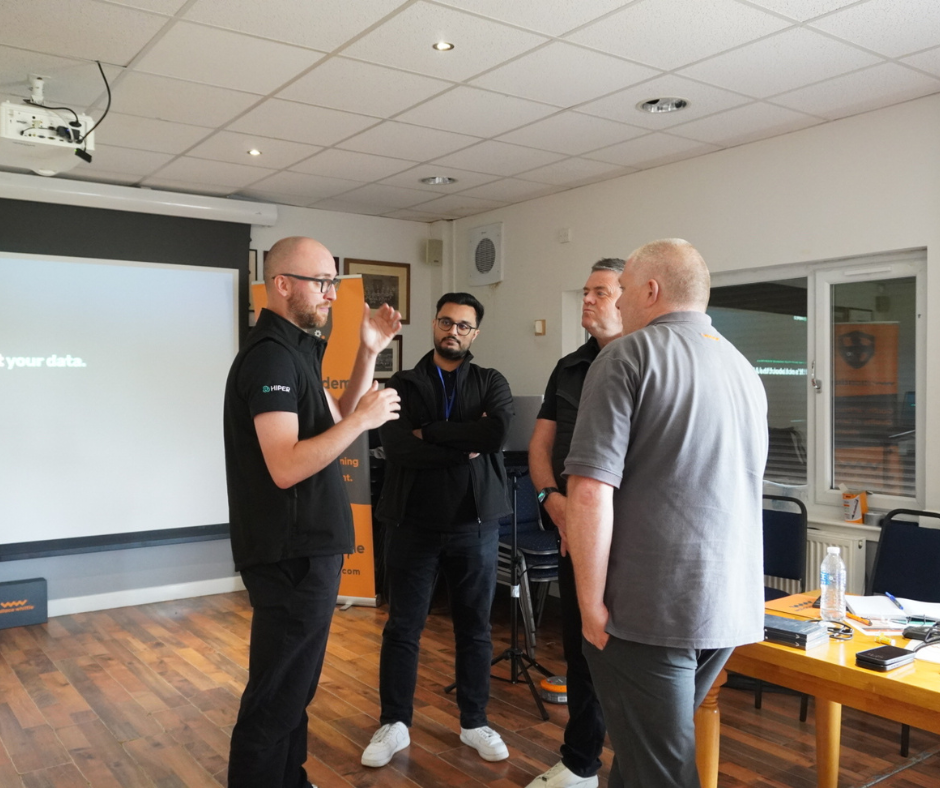
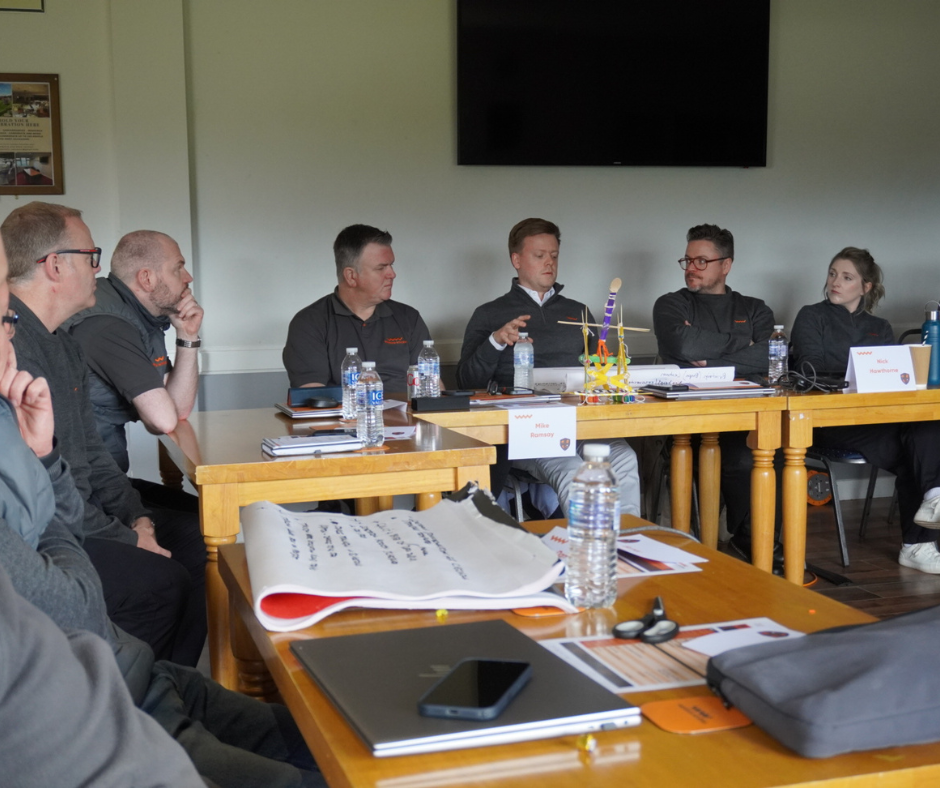
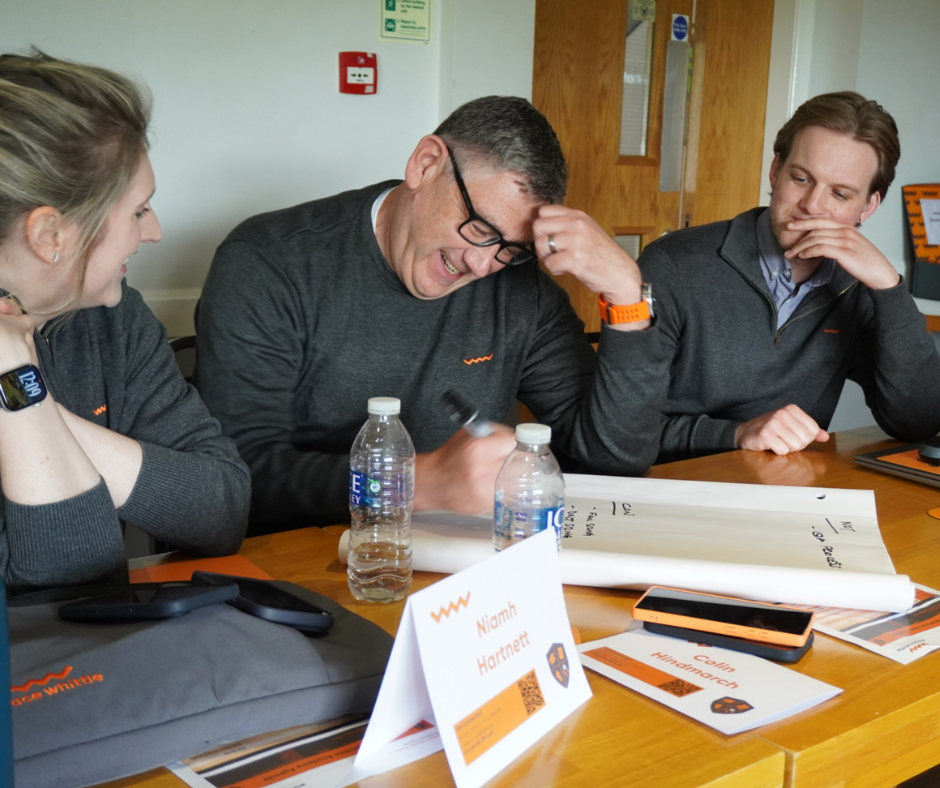
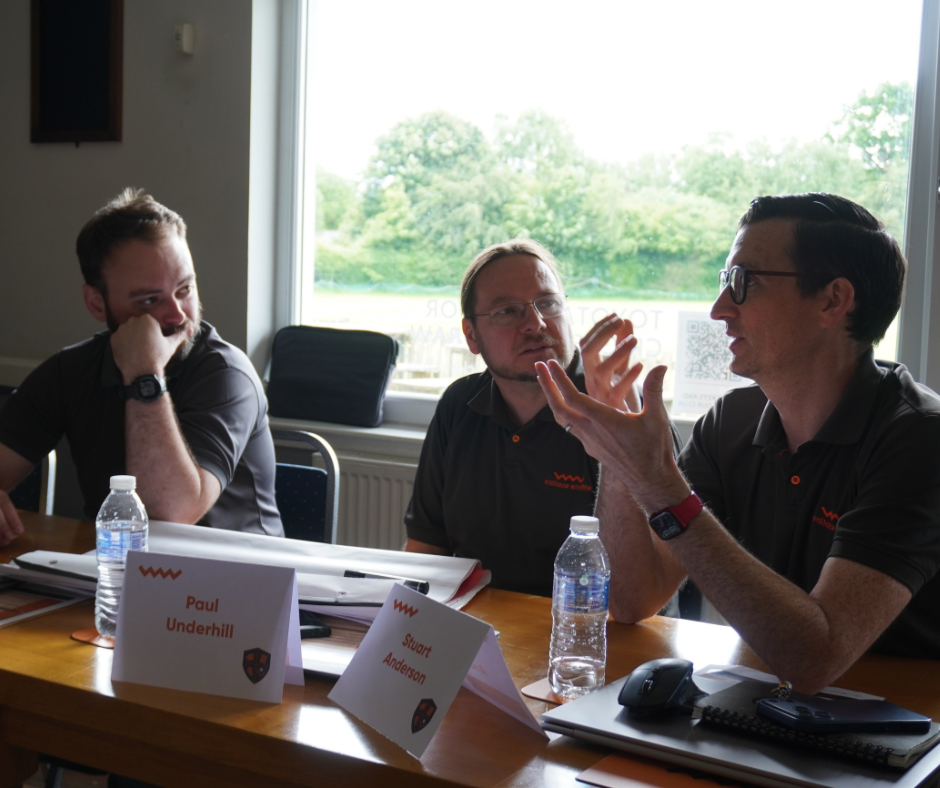
The Academy continues to play a vital role in developing our people at every stage of their careers. By creating opportunities to connect, collaborate and learn, we are not only strengthening individual capabilities but building a more aligned and forward-thinking community.
If you’re interested in being part of a business that invests in its people, you can explore our current opportunities on our careers page.

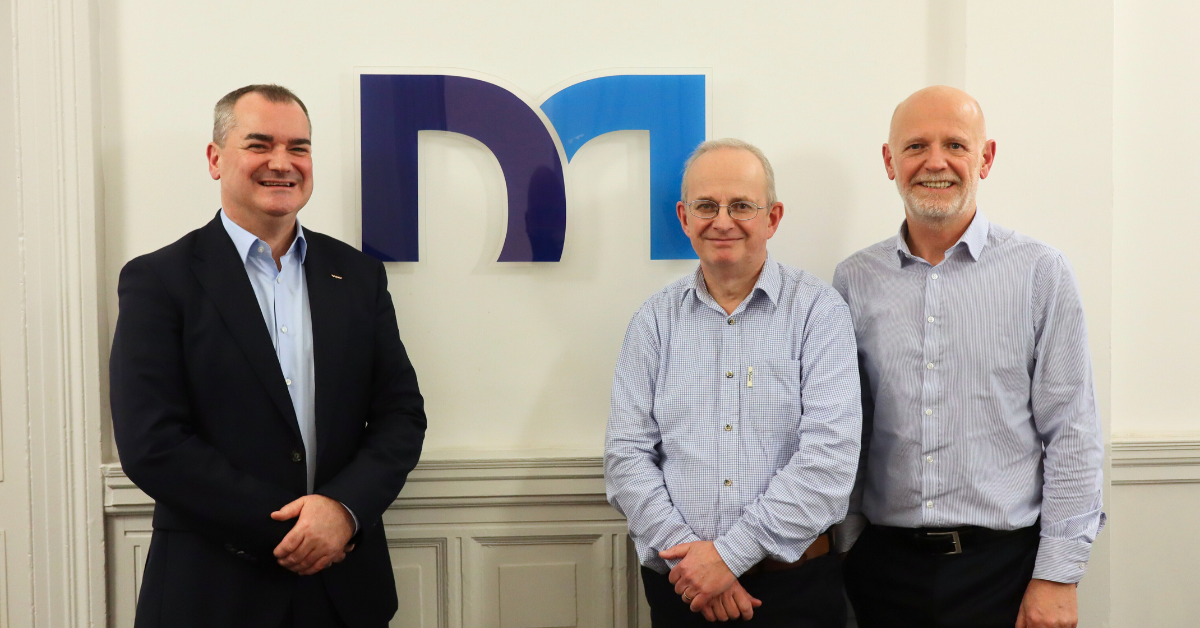
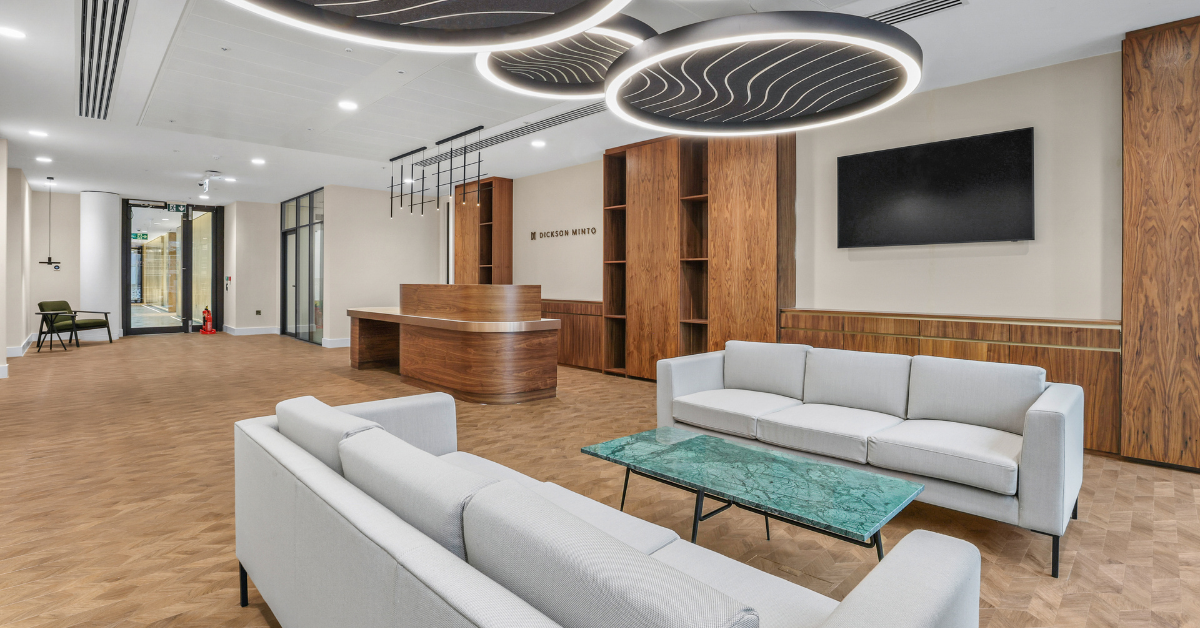
5 Years. 25 Fit-Outs. 500,000ft2. One Growing Edinburgh Team
In five years, a lot can change…
What began as a small team of three in our Edinburgh office has grown into a team of more than thirty, delivering over 25 commercial fit-outs and transforming over half a million square feet of workspace across the city, and the country.
Since Wallace Whittle’s management buyout, this growth has been shaped not just by scale, but by a shift in how workplaces are designed, delivered and experienced. Today, our Edinburgh team creates spaces that balance performance, sustainability and the needs of the people who use them every day.

Over the past five years, the Edinburgh team has delivered over 25 fit-outs across the city, with commercial office space emerging as a defining area of expertise. These projects span a diverse client base but share a common goal: creating workplaces that support performance, wellbeing and long-term adaptability. From contemporary financial offices to sustainability-led headquarters, each project reflects a tailored approach, underpinned by strong technical delivery and close collaboration with clients and design teams.
“The expectations of commercial workspace have shifted significantly over the past five years. Clients are no longer just looking for functional offices, they want environments that support wellbeing, attract talent and align with their sustainability ambitions. Our role is to bring all of that together, delivering spaces that perform technically while genuinely enhancing the day-to-day experience of the people using them.” Stephen Osborne, Edinburgh Director, shared with us.
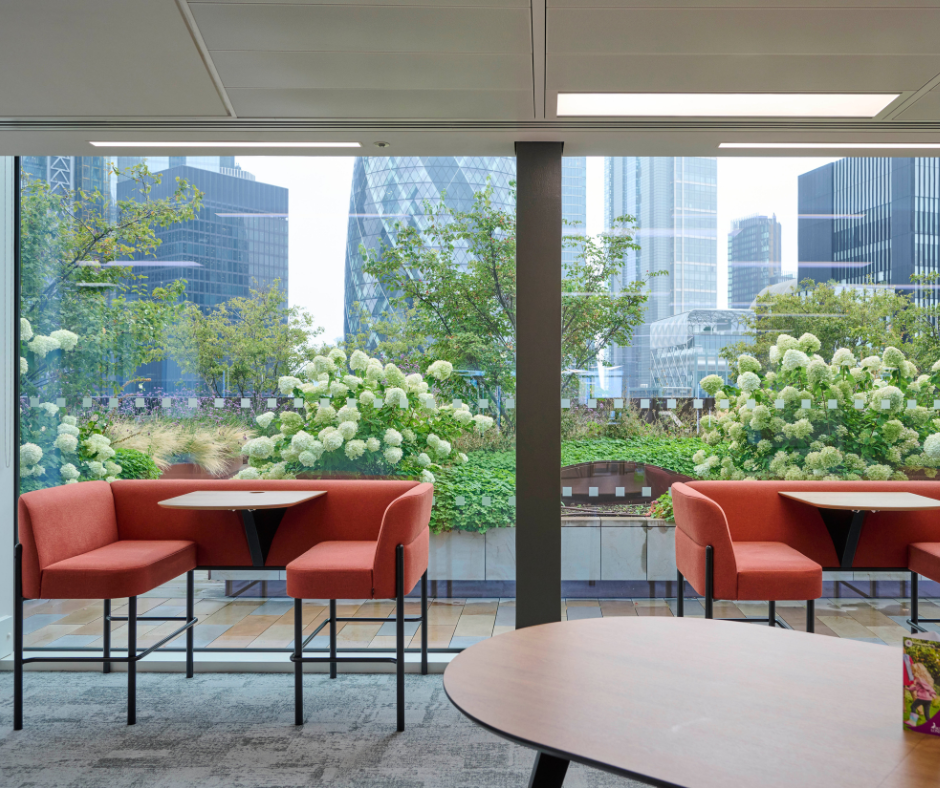
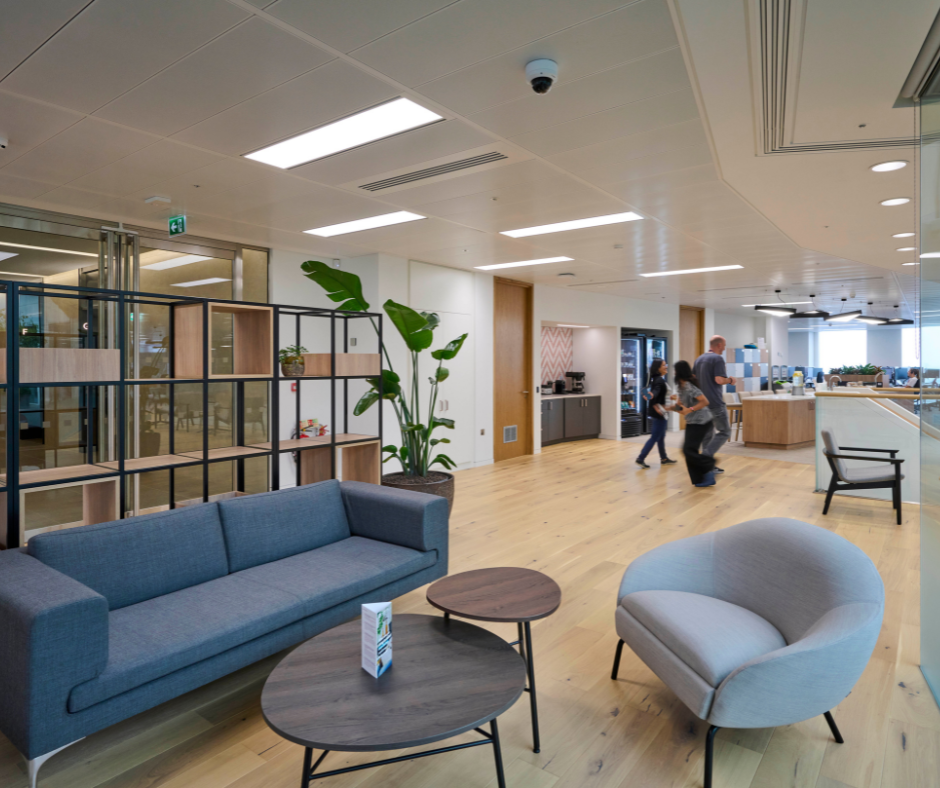
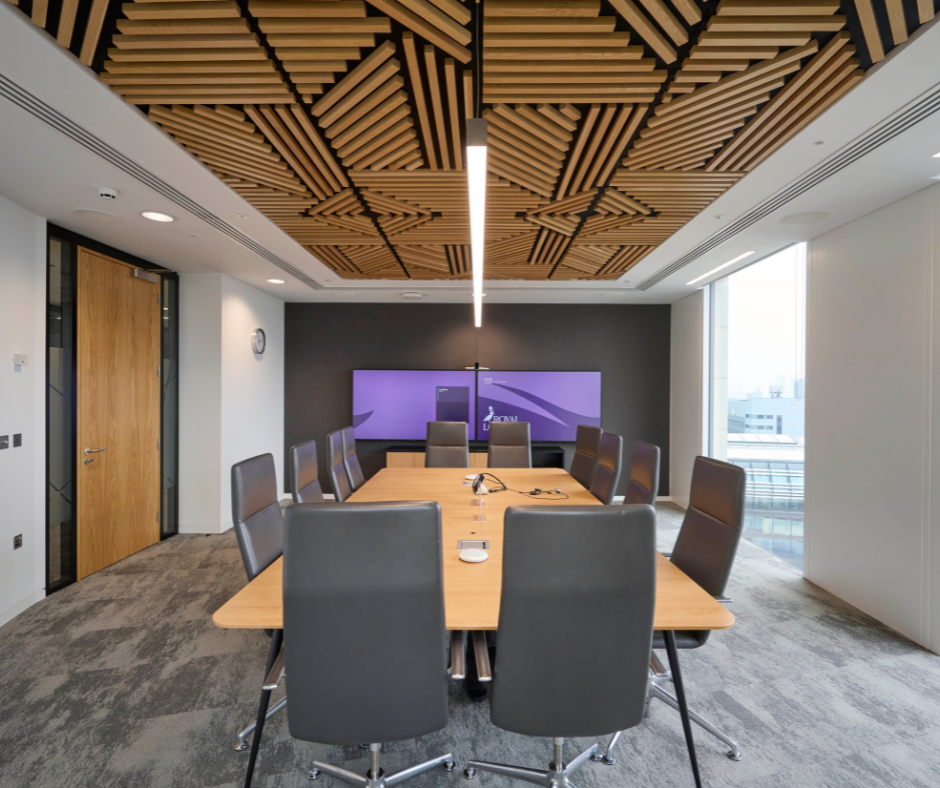
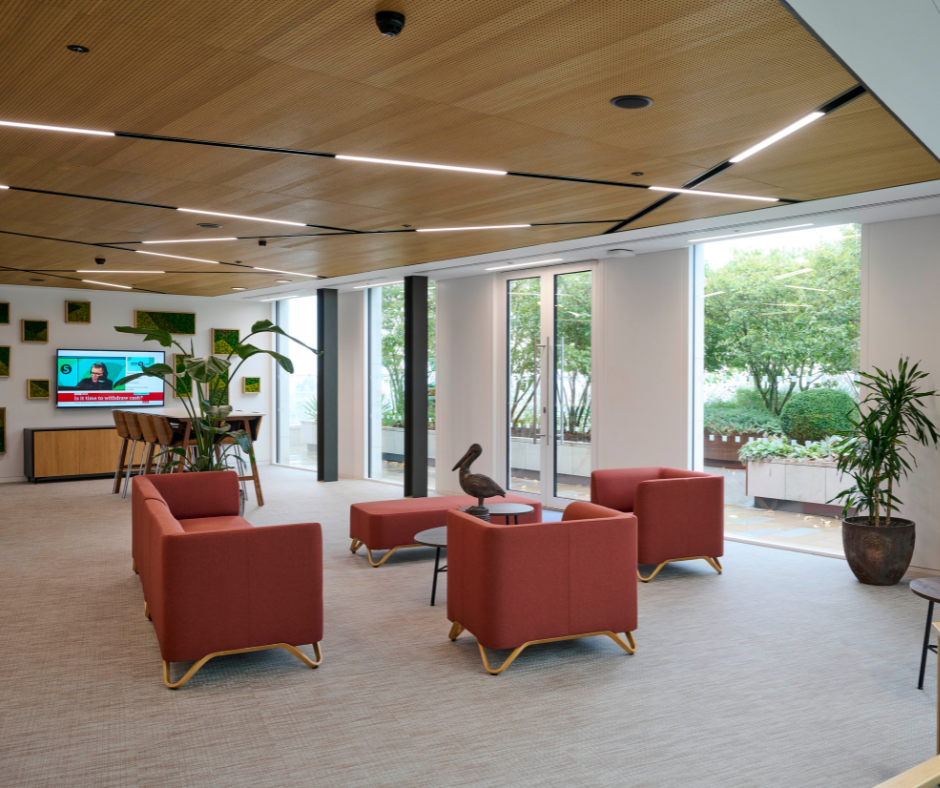
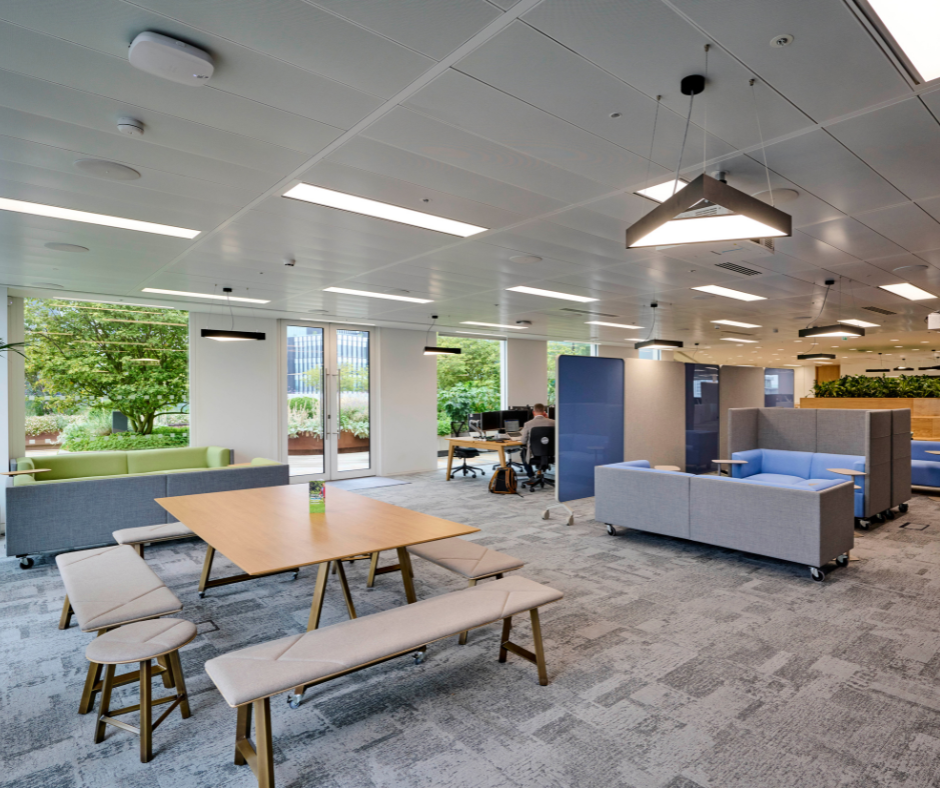
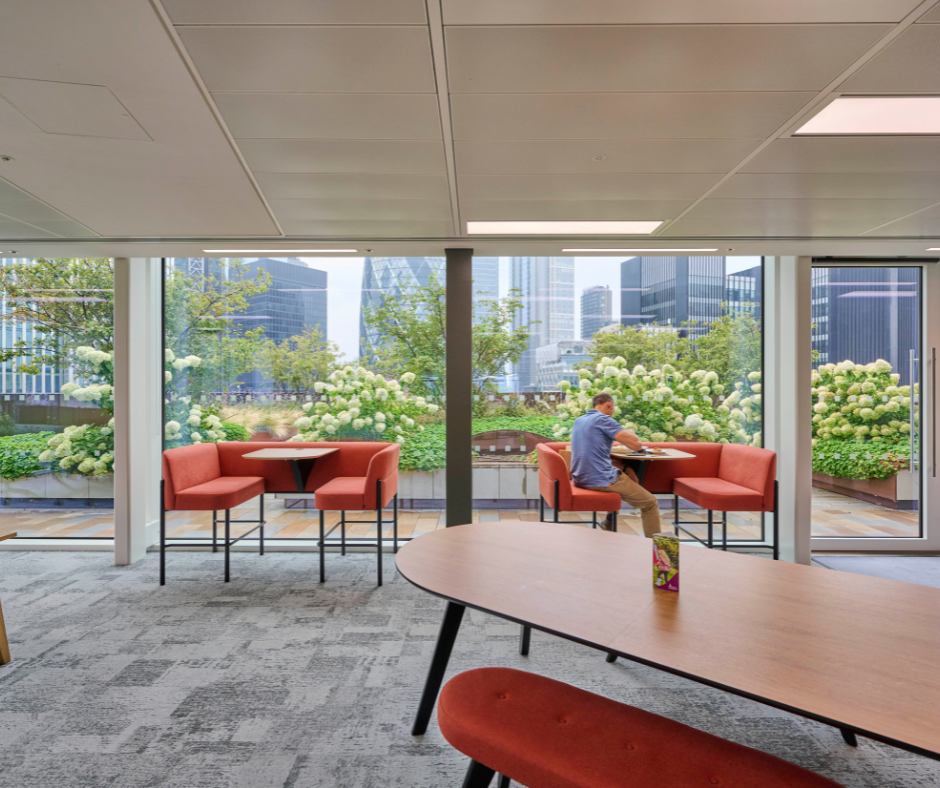
Royal London, saw the transformation of the top five floors at 80 Fenchurch Street in London into a high-quality, future-focused workplace. The space brings together staff offices, breakout areas, meeting suites and a dedicated client environment, all designed to support both day-to-day operations and wider business engagement.
Through the integration of advanced building services and alignment with BREEAM and WELL standards, the project prioritises environmental performance, air quality and user experience. Achieving an EPC rating of ‘A’ and WELL Platinum, the development reflects a holistic, sustainability-led design approach. You can read more about Royal London’s Fenchurch Street office here.
The success of the project has led to continued collaboration with Royal London, including further work within their Edinburgh office portfolio.
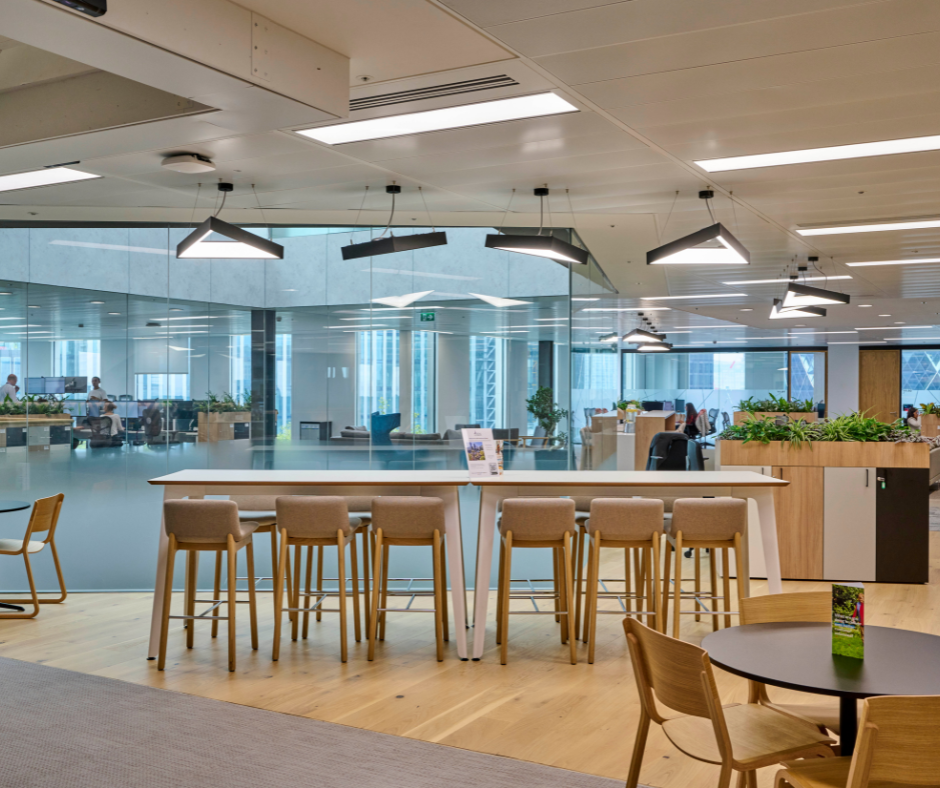

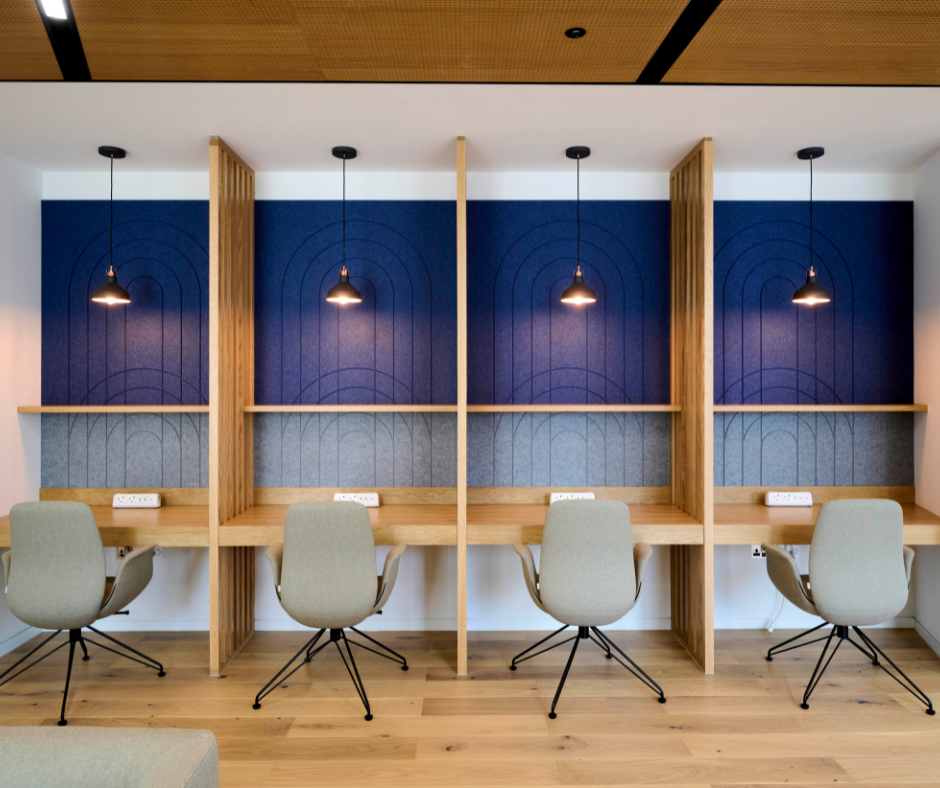
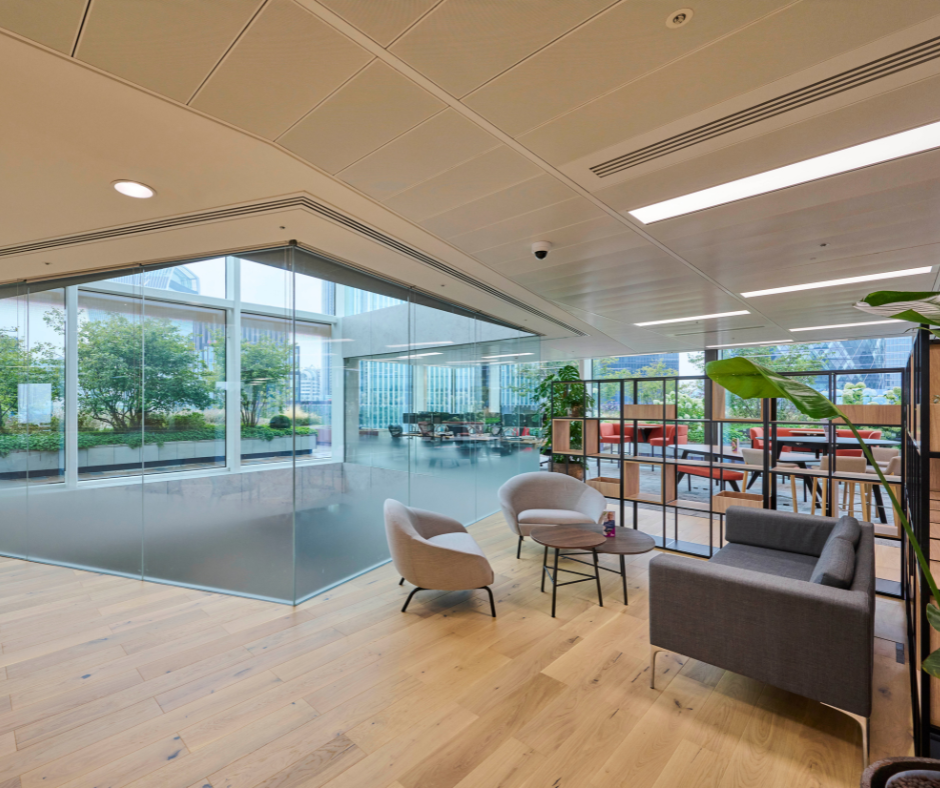
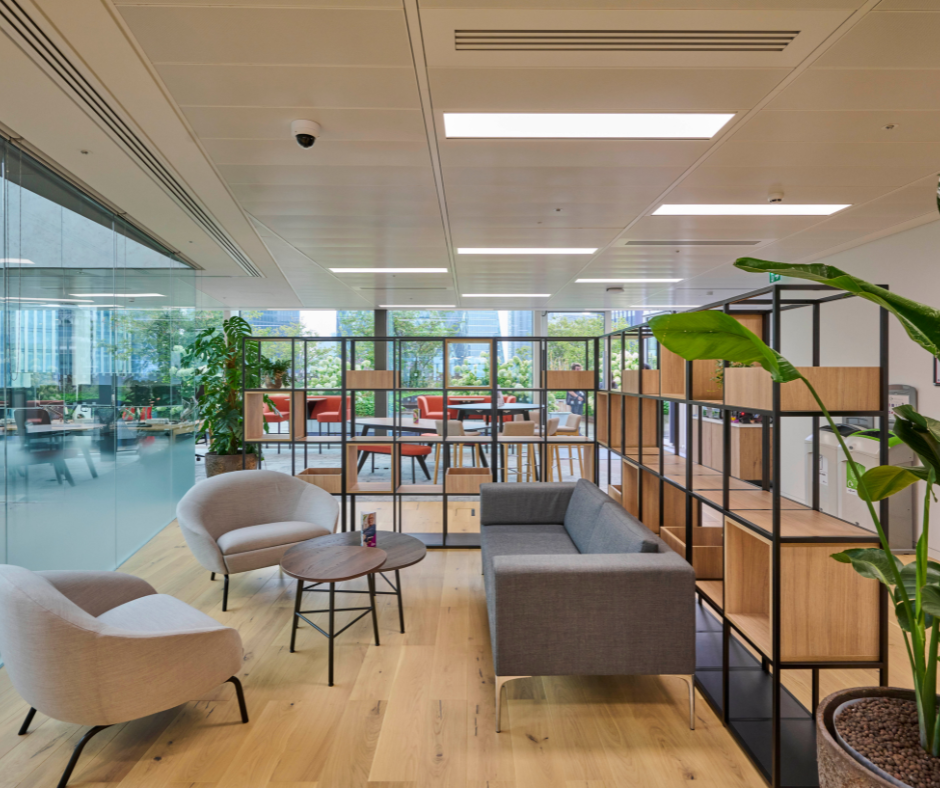
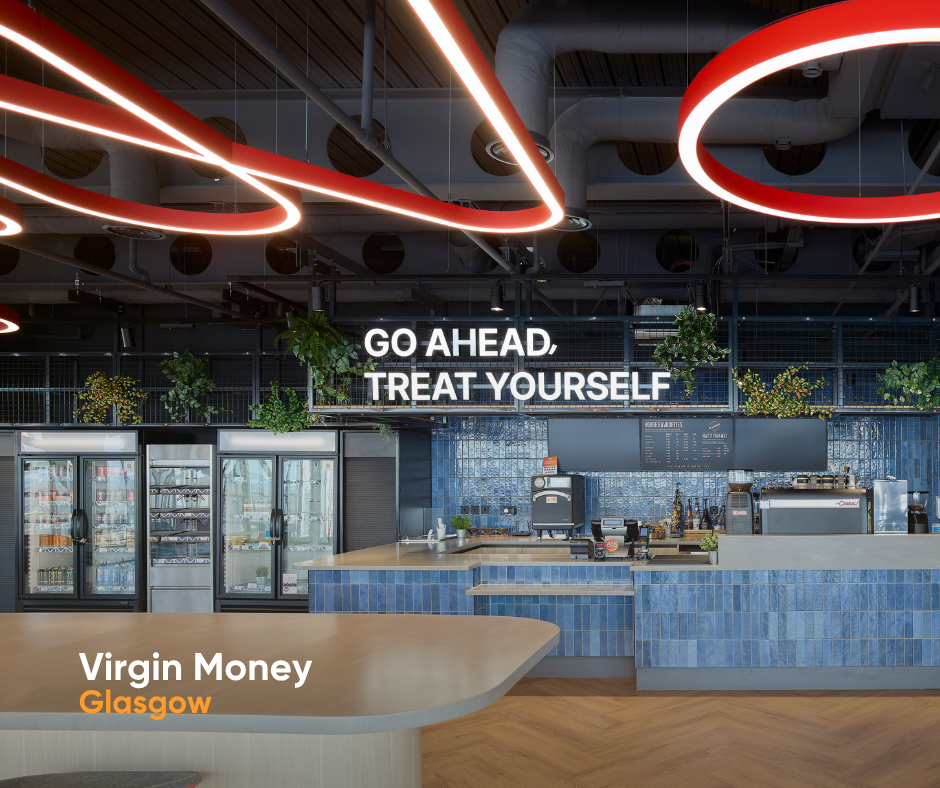
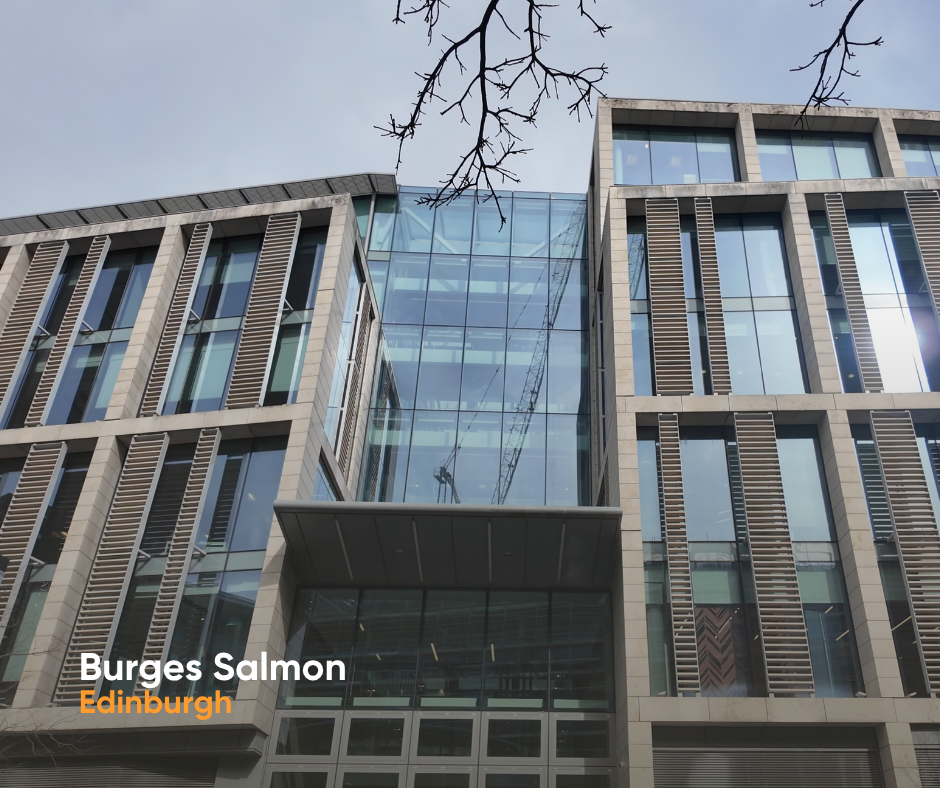
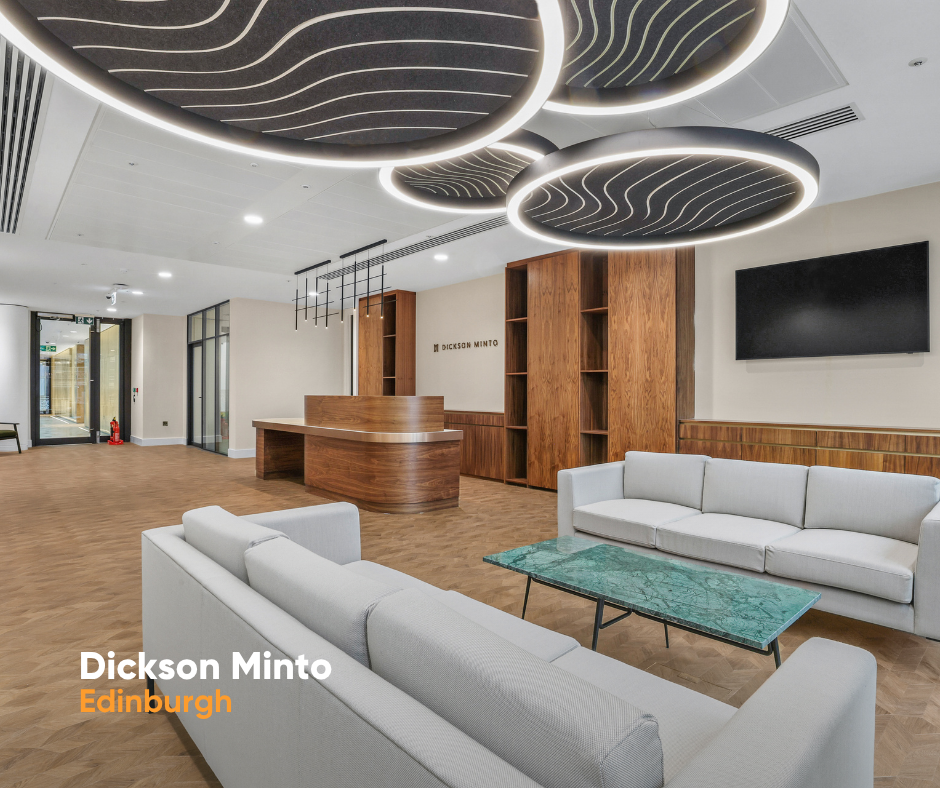
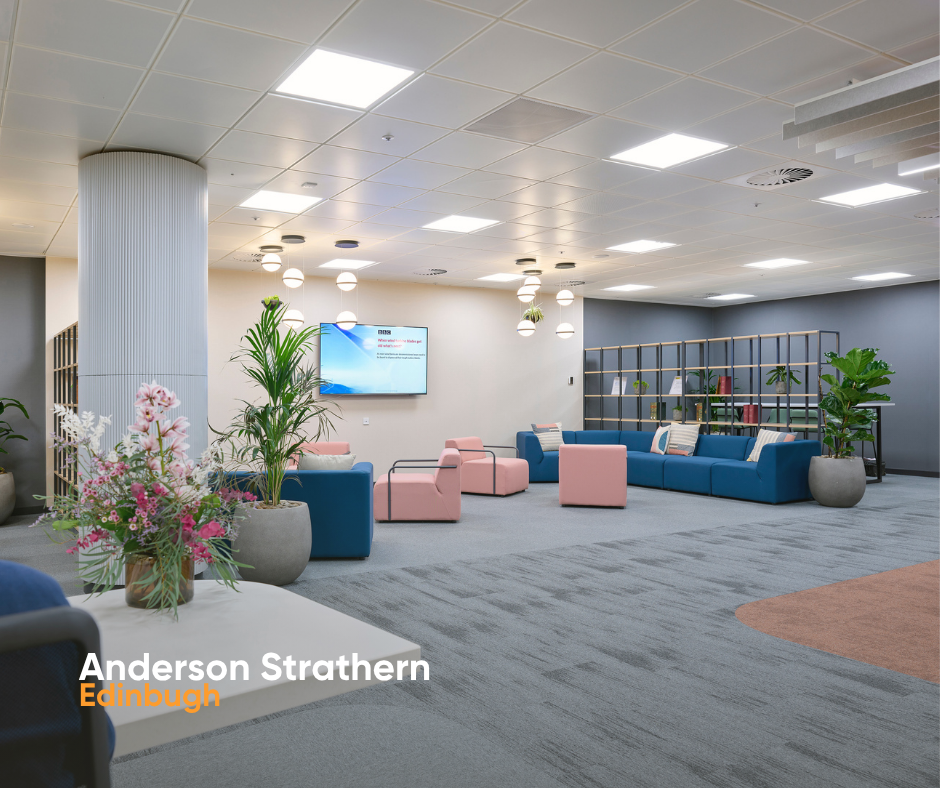
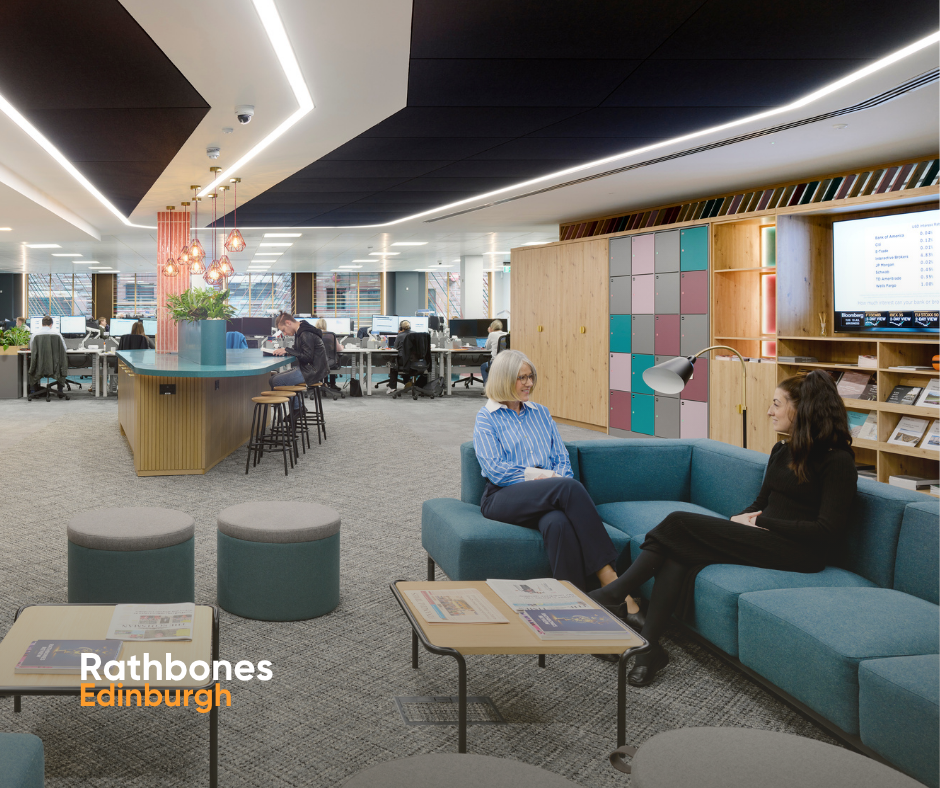
Alongside landmark projects such as Royal London 80 Fenchurch Street, our Edinburgh team has delivered a wide range of commercial fit-outs across the UK, each tailored to meet our clients’ specific needs while maintaining a consistent focus on quality, performance and sustainability. Such as:
- Virgin Money, Glasgow
- Burges Salmon, Edinburgh & London
- Rathbones, Edinburgh & Glasgow
- Edinburgh Fringe HQ
- Dickson Minto
- Anderson Strathern
- and many more…

Five Years On
Reflecting on the past five years, the growth of our Edinburgh office has been shaped not only by the number of projects delivered, but by the strength of the relationships built along the way. From early commissions to repeat collaborations, our work across the commercial sector has allowed us to develop a deep understanding of what our clients need from their spaces, both now and in the future.
Operating from Thistle Street has positioned the team at the heart of Edinburgh’s commercial landscape, supporting a wide range of organisations in delivering high-quality, future-ready workplaces. The 25 fit-outs completed during this period reflect that journey, each contributing to the evolving fabric of the city and reinforcing our reputation for technical excellence and collaborative delivery.
Alongside this, the continued growth of the team will play a key role in shaping what comes next, bringing new skills, perspectives and energy that will support the delivery of increasingly complex and ambitious projects.
“What’s been most rewarding over the past five years is seeing how the Edinburgh team has grown in both size and capability. We’ve built a really strong, well-rounded group here, and that’s allowed us to take on more complex commercial projects with confidence. The quality of work coming out of the office now is a real reflection of the people delivering it.”
With a strong pipeline of work and an expanding team, we look ahead with confidence to the next chapter.
To learn more about our Edinburgh team and our commercial fit-out capabilities, please get in touch at [email protected] or reach out directly to Stephen at [email protected]
We’d be happy to discuss how we can support your next project.

Whole Life Carbon Assessment: Turning Carbon Data into Better Design Decisions
WWith growing pressure to reduce carbon across the full lifecyle of buildings, Whole Life Carbon Assessments (WLCA) have shifted from being a post-design specialist add-on exercise to a fundamental design tool which directly informs design decisions, material choices and construction strategies. We spoke to Collin Campbell, Senior Sustainability Consultant, about some of the barriers holding back the adoption of WLCA.
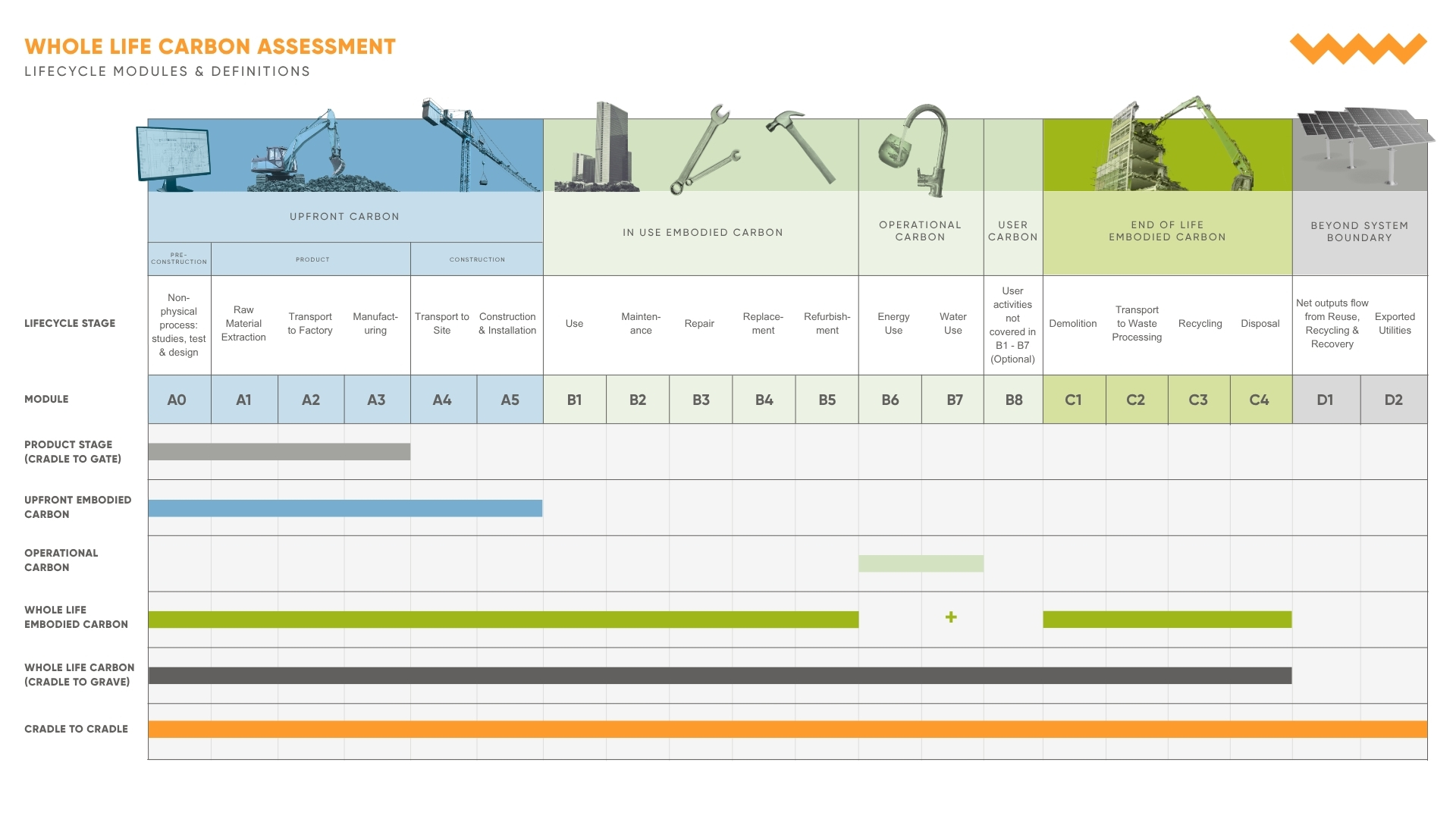
As the built environment comes under increasing pressure to meet ambitious net-zero targets, understanding the full carbon impact of buildings and their construction is essential. Whilst much of the industry has traditionally focused on operational emissions, attention and concern is shifting towards the carbon associated with materials, construction, maintenance and the end-of-life. This is where Whole Life Carbon Assessments play a critical role.
WLCA is a methodology used to measure the total carbon emissions of a building across its entire Lifecycle, from the extraction and manufacturing of materials, through to the construction and operation, to the eventual demolition and disposal.
“As Sustainability Consultants, we’re experts at assessing carbon and driving evidence-based decision making. We’ve undertaken Whole Life Carbon Assessments for complex residential, commercial, education and healthcare projects, supporting engineers and design teams to achieve measurable, long‑term carbon reductions.” Collin shared.
Why WLC Matters Now
While awareness of carbon in the built environment has grown significantly, the scale of the challenge is still often underestimated. The sector is responsible for approximately 25% of the UK’s total greenhouse gas emissions (UKGBC), making it critical that we tackle this and focus on the transition to net zero. Addressing both operational and embodied carbon, is essential in meeting the UK’s climate targets, including those set out in the Climate Change Act, and the 2050 net-zero commitment.
In response, government and industry have made it clear that partial approaches to carbon are no longer sufficient, and reducing carbon across the full lifecycle of buildings is critical to credible net zero delivery. Initiatives such as the Construction 2025 strategy have highlighted the need to tackle emissions across the construction sector, while organisations including RIBA and the UK Green Building Council continue to emphasise the importance of embodied carbon within a building’s overall impact.
Despite this, embodied carbon is still often less understood, less prioritised, and less consistently measured than operational emissions. WLCA is still inconsistently applied across projects and treated as more of a compliance exercise rather than a design benefit. As a result, key opportunities to reduce carbon can be missed, especially when decisions are made later in the design process. This is where Whole Life Carbon Assessments become increasingly important, as they provide insight needed to understand where emissions occur and enable more proactive and informed decisions from the get-go.
WLCA at WW
Wallace Whittle supported Royal London in the transformation of its Edinburgh headquarters at 1 Thistle Street, delivering a robust RIBA Stage 3 and 4 embodied carbon assessment to inform an ambitious sustainability strategy. The scheme sensitively combines refurbishment with new-build elements to create a high-quality, future-ready workplace, while reducing overall environmental impact.
Through detailed carbon modelling and close collaboration with the wider design team, the development is on track to achieve a low upfront embodied carbon figure, demonstrating that strong sustainability outcomes can be delivered alongside commercial and operational performance.
How WLCA Works in Practice
While Whole Life Carbon Assessment provides a picture of a building’s carbon impact, its real value lies in how it is applied throughout the design process. Rather than acting as a retrospective calculation, WLCA is most effective when embedded early, ideally at concept stage, as this is where it can meaningfully influence decisions.
At its core, WLCA brings together data from across a building’s lifecycle, allowing the carbon impact of different materials, systems and construction approaches to be assessed. Applied with the same rigour as any other engineering discipline, it provides robust, data-driven insights to guide design decisions. This enables meaningful comparisons between design options, helping to identify where emissions are highest and where reductions can be made. This allows for comparisons between design options and identifies where emissions are highest and where reductions can be made.
In practice, this is often realised through a hierarchy of design decisions; prioritising the reuse of existing assets where possible, optimising structural design, selecting lower carbon materials, and improving construction efficiency. These decisions, again, are most impactful when made early, where there is greater flexibility to shape the design without significant cost or programme implications.
WLCA can also help to highlight trade-offs. For example, the lowest embodied carbon option is not always the most effective over the full lifecycle of a building, and a whole life approach ensures that decisions are balanced across both embodied and operational performance.
What’s Holding WLCA Back?
The adoption of Whole Life Carbon Assessments across the industry has been relatively slow. While awareness is increasing, there continues to be several barriers that limit its widespread application.
“One of the most significant challenges is the mindset, particularly the industry’s continued focus on short-term costs over long-term value. Whole life carbon considers the performance of a building over its entire lifecycle, often spanning 60 years or more. While this approach can deliver both carbon and cost savings over time, decisions are still frequently driven by upfront capital expenditure, making it more difficult to prioritise longer-term outcomes.”
There is also the challenge of navigating an increasingly complex and crowded sustainability landscape. With a growing volume of guidance, tools, and competing narratives, it can be difficult for clients and design teams to identify clear, reliable approaches. This is further complicated by the presence of greenwashing, which can undermine confidence and make it harder to distinguish between meaningful carbon reduction strategies and those that offer limited real impact.
“Focusing solely on reducing embodied carbon does not always lead to the best overall outcome, and without a whole life perspective, there is a risk of overlooking important trade-offs across a building’s lifecycle.” Collin shared.
Together, these challenges highlight that while the industry is moving in the right direction, there is still work to be done to embed Whole Life Carbon Assessment as a standard part of the design and decision-making process.

As the industry continues to navigate the transition to net zero, a more holistic approach to carbon assessment is no longer optional. Whole Life Carbon Assessment provides the insight needed to move beyond isolated decisions and instead consider the full impact of a building across its entire lifecycle.
However, the value of WLCA is only fully visible when it is embedded early in the design process. By considering carbon from the outset, project teams are better positioned to influence key decisions around materials, systems, and construction methods.
At Wallace Whittle, whole life carbon thinking is becoming an integral part of how we approach projects, from PBSA developments to residential schemes. By engaging early, we support clients and design teams to make informed, balanced decisions that reduce carbon. Early sustainability engagement can also have benefits for cost and performance. Through a collaborative and practical approach, we aim to simplify complexity and turn carbon ambition into tangible, measurable outcomes.
If you’d like to learn more about Whole Life Carbon Assessment or explore how our sustainability team can support your project, we’d be happy to hear from you. Get in touch at [email protected]
BSI. (2023). PAS 2080:2023 Carbon Management in Infrastructure. [online] Available at: https://www.bsigroup.com/en-GB/insights-and-media/insights/brochures/carbon-management-in-buildings-and-infrastructure/.
RICS (2024). Unlocking sustainability: exploring RICS’ whole life carbon assessment (WLCA) standard. [online] Available at: https://www.rics.org/profession-standards/rics-standards-and-guidance/sector-standards/construction-standards/whole-life-carbon-assessment/unlocking-sustainability-exploring-rics-whole-life-carbon-assessment-wlca-standard.
UKGBC (2023). Climate Change Mitigation. [online] UKGBC. Available at: https://ukgbc.org/our-work/climate-change-mitigation/
UK Net Zero Carbon Building Standard. (2026). [online] nzcbuildings.co.uk. Available at: https://8f2d86b0-7c72-4129-a02b-72f5adfae419.filesusr.com/ugd/790941_f53e6b4b6dc04fd3aeb4b122a1b95b15.pdf.
Whole life carbon assessment for the built environment. (2024). [online] RICS Professional Standard. Available at: https://www.rics.org/profession-standards/rics-standards-and-guidance/sector-standards/construction-standards/whole-life-carbon-assessment.
Whole Life Carbon Management Handbook for the Built Environment. (2026). [online] National Infrastructure & Service Transformation Authority. Available at: https://assets.publishing.service.gov.uk/media/69a81a47b9bd90e63a252292/NISTA_WLC_Management_Handbook_2026.pdf.

Collin Campbell
Senior Sustainability Consultant
Related Articles
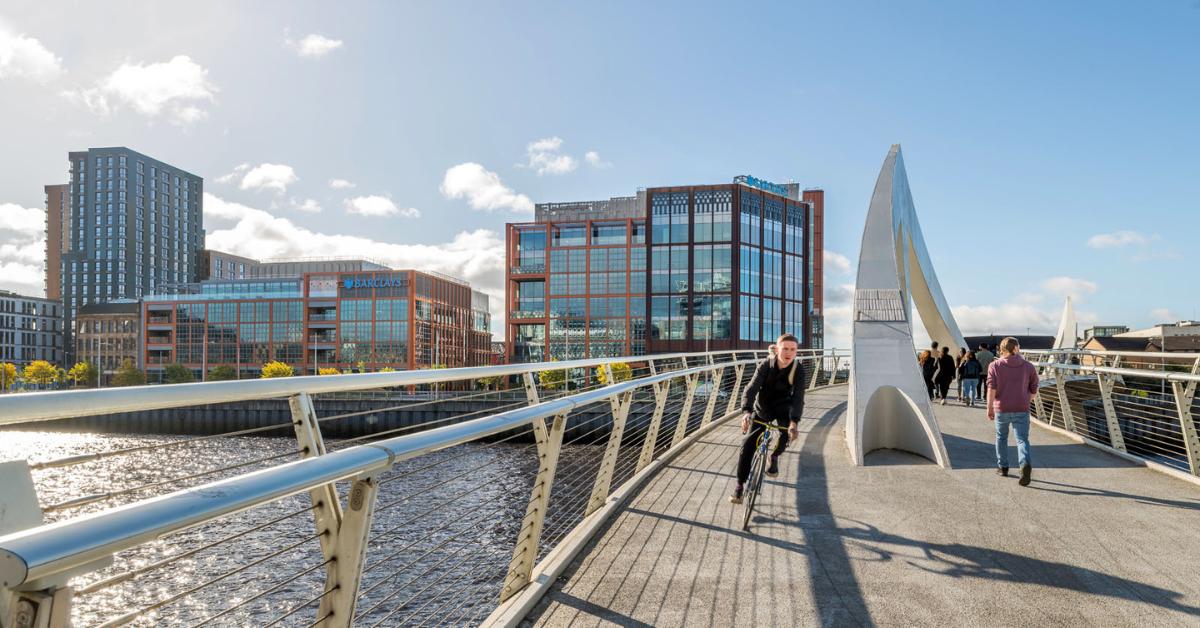

Can HTM‑Led Assurance Redefine Hospital Delivery? Lessons from Wallace Whittle’s UK-wide Experience
The landscape of hospital delivery is shifting rapidly. No longer can critical considerations like clinical risk, digital integration, and sustainability be treated as “add-ons” to be addressed at the end of a design; today, they must shape the brief from day one.
At Wallace Whittle, our UK-wide healthcare experience has shown us that HTM-led assurance has become the essential foundation for navigating these complexities. By treating Health Technical Memoranda (HTMs) as the living “backbone” of the engineering process rather than a mere administrative checklist, we ensure that safety, operational resilience, and net zero ambitions are woven into the very fabric of modern clinical environments.
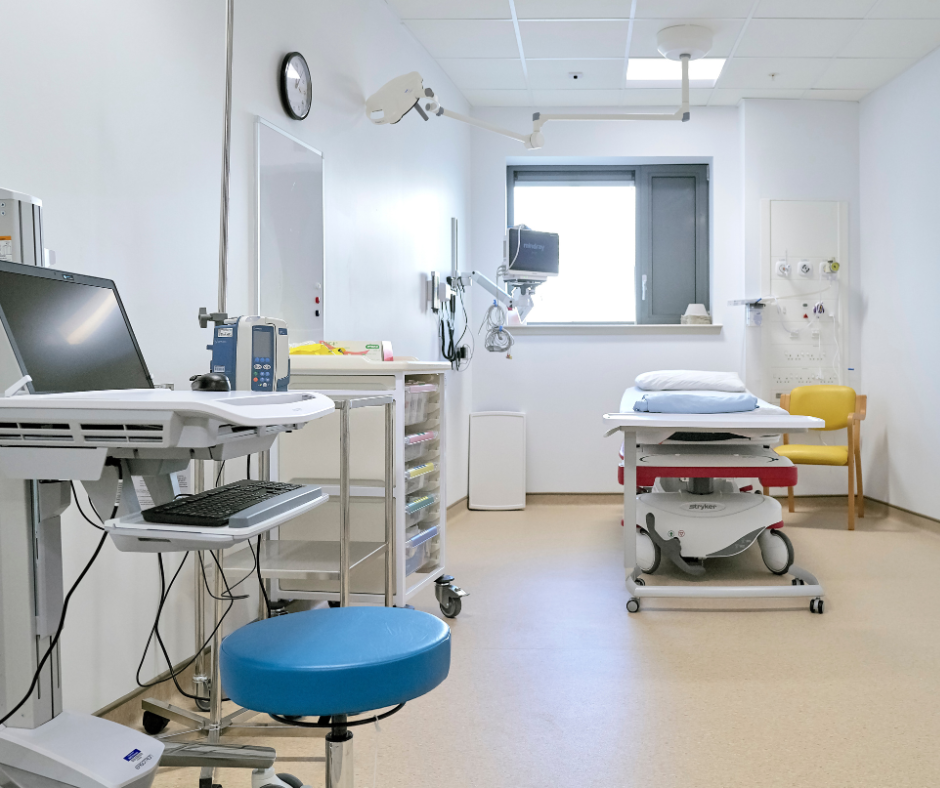
HTMs The backbone of how healthcare buildings are engineered
Health Technical Memoranda (HTMs) form the foundation of how healthcare environments are designed, delivered and operated across the UK. Developed by NHS England, they represent the most comprehensive set of engineering guidance in the sector, setting out not just what systems are required, but how they should perform, integrate and be maintained over time.
They span every critical aspect of a hospital’s infrastructure, from ventilation and infection control to water safety, medical gases, electrical resilience, and fire strategy. Importantly, HTMs go beyond technical compliance. They embed clinical risk management into engineering design, ensuring that building systems actively support patient safety, staff wellbeing, and operational continuity.
At the same time, HTMs work in parallel with NHS England, aligning engineering performance with how clinical spaces are planned and used. This relationship is key. It ensures that infrastructure and environment are not designed in isolation, but as part of a coordinated, functional healthcare setting.
We treat HTMs as a living part of the design process rather than a static set of rules. Instead of applying them as a final compliance check, we bring them into projects from the earliest stages. This allows them to inform key decisions around system selection, spatial coordination, resilience strategies, and long-term maintenance.
By embedding HTMs early, we are able to identify risks sooner, reduce redesign later in the programme and create a clearer path through approvals and validation. It also ensures that by the time a project reaches commissioning, compliance is not something to be proven; it is something that has already been designed.
Why standardisation matters
HTMs work alongside the Health Building Notes programme to create a consistent framework for how clinical spaces are planned, engineered and operated. They ensure that while hospitals may differ in size, shape and function, the underlying systems that support patient care behave in a predictable, safe and repeatable way.
This consistency is critical in healthcare environments where reliability is non-negotiable. Standardisation reduces ambiguity in design decisions, aligns expectations across multidisciplinary teams, and helps ensure that engineering solutions are tested against recognised benchmarks from the outset of a project.
In practice, we see the benefits of this approach across every stage of delivery:
- Designs progress more smoothly with fewer late-stage changes
- Coordination between disciplines is more efficient and transparent
- Commissioning and validation are more structured and predictable
- Clinical teams experience familiar, dependable environments that support safe operation
Standardisation does not mean uniformity. It does not produce identical hospitals. Instead, it ensures that the most critical systems, the ones that directly impact safety, infection control and operational resilience, function in a way that clinicians can trust, regardless of location or project scale.
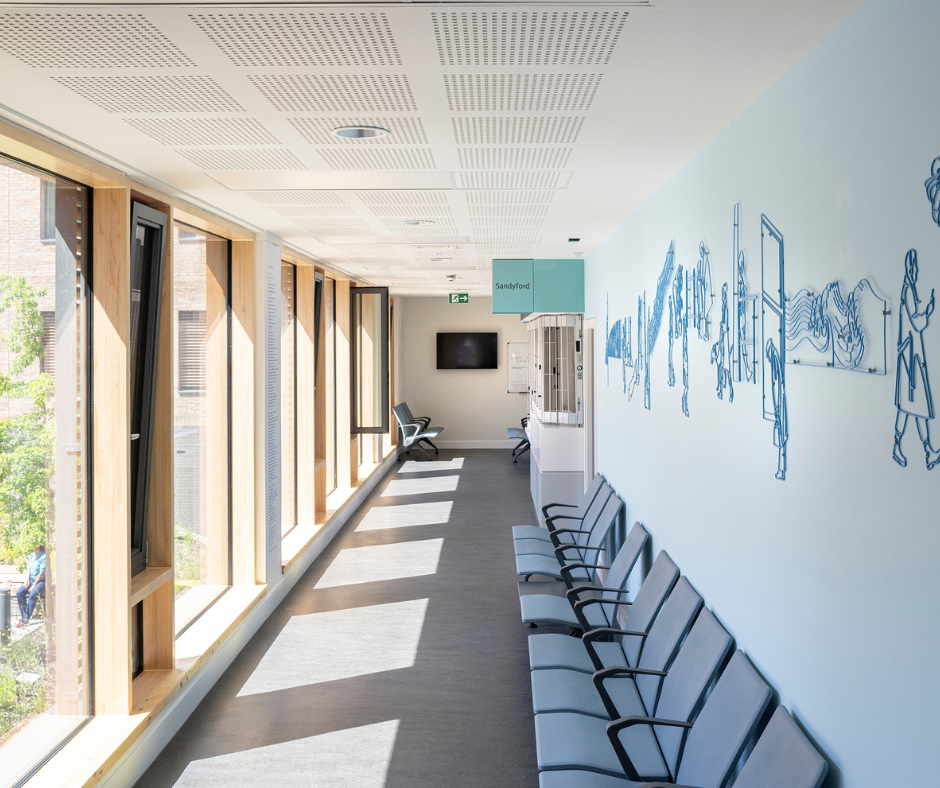
System-specific assurance where safety is embedded
Each HTM focuses on a specific aspect of healthcare infrastructure, providing detailed guidance that connects engineering performance directly to patient safety and clinical outcomes.
Key examples include:
- HTM 03-01 – ventilation and healthcare-associated infection control
- HTM 04-01 – water systems, including Legionella risk management
- HTM 02-01 – medical gas pipeline systems and critical life support infrastructure
- HTM 05 series – fire safety strategy and evacuation resilience in healthcare settings
- HTM 06-01 – electrical services supply and distribution
Rather than treating these as standalone documents, we integrate them into every stage of design development. They are embedded within technical reviews, coordination workshops, commissioning strategies, and validation processes. This ensures that compliance is not only achieved but fully understood and demonstrated at every stage of delivery.
Example in practice
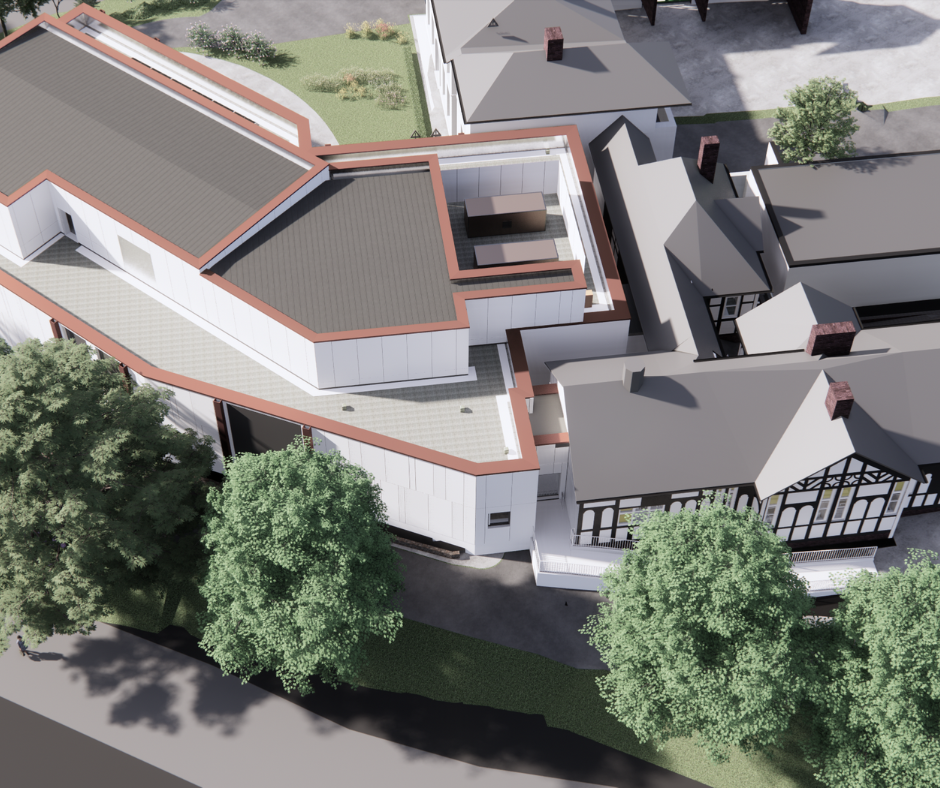
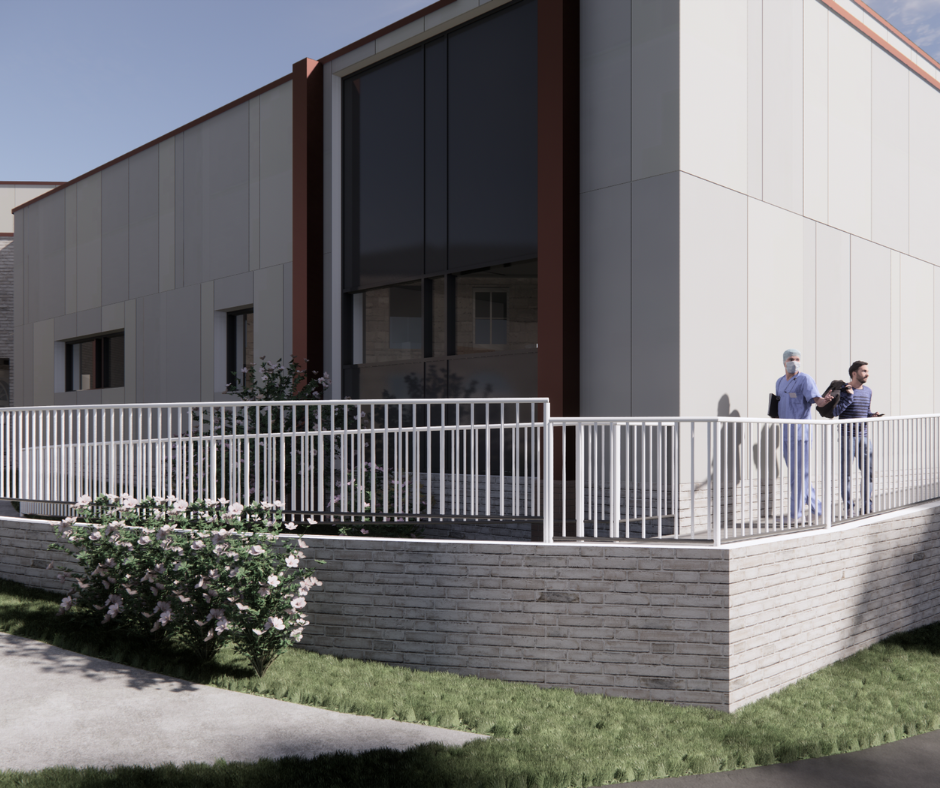
A strong example of this approach can be seen in our recent work on Victoria Infirmary, where early-stage HTM alignment significantly influenced both system design and delivery sequencing.
By applying HTM requirements at the concept stage, particularly around ventilation performance (HTM 03-01), HTM 06-01 electrical services and water safety (HTM 04-01), key engineering decisions were resolved before detailed design began. This reduced late-stage redesign, improved coordination between mechanical and electrical systems, and streamlined the commissioning process.
Crucially, it also gave the clinical team confidence that critical safety systems had been considered from the outset, not retrospectively validated at handover.
This early alignment meant that when the project reached commissioning, the focus shifted from resolving compliance issues to verifying performance, accelerating practical completion, and improving overall delivery confidence.
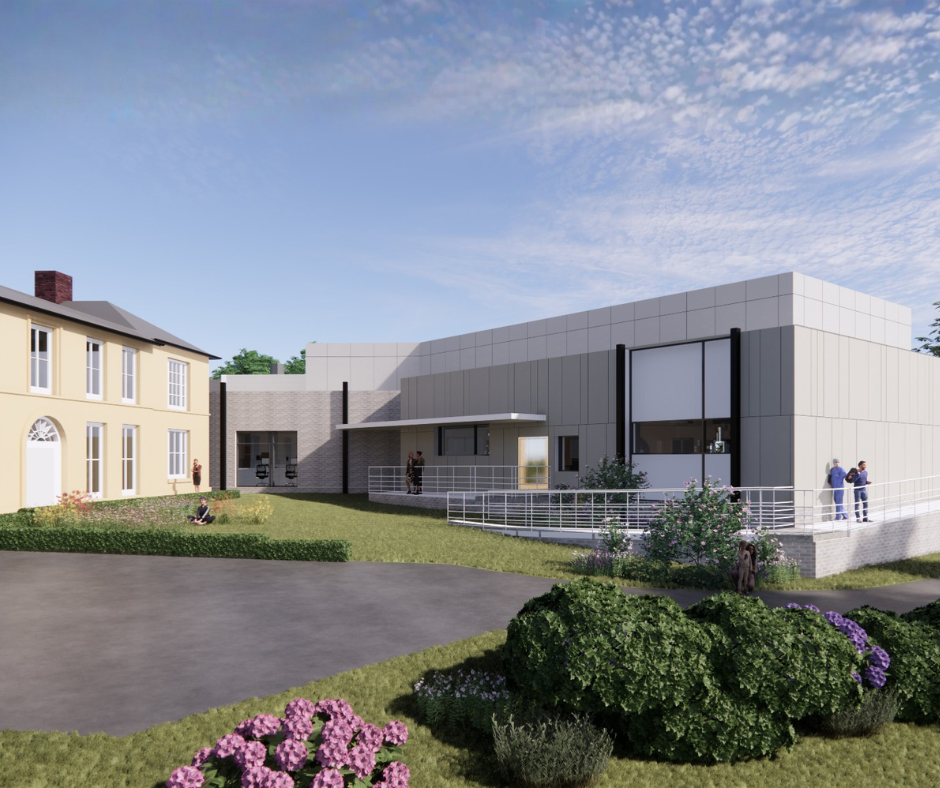
Net zero and sustainable design within an HTM framework
As healthcare design evolves, HTMs are no longer viewed solely through the lens of safety and compliance. They are increasingly shaping how hospitals respond to wider national priorities, particularly the drive towards net-zero carbon within the NHS.
Rather than sitting alongside sustainability targets, HTM requirements directly influence the parameters within which low-carbon design must operate. Factors such as ventilation performance, energy efficiency, thermal comfort, and system resilience must all be achieved without compromising the clinical safety standards set out in HTM guidance.
This creates a clear design challenge: delivering high-performing, low-carbon buildings while maintaining strict technical and operational requirements. It is within this balance that the role of engineering becomes critical.
Our approach is to integrate sustainability modelling and carbon reduction strategies from the earliest stages of design, ensuring they are developed in parallel with HTM compliance rather than introduced afterwards. This allows net-zero ambitions to be embedded in system selection, plant strategies, and spatial planning from the outset, rather than retrofitted later in the process.
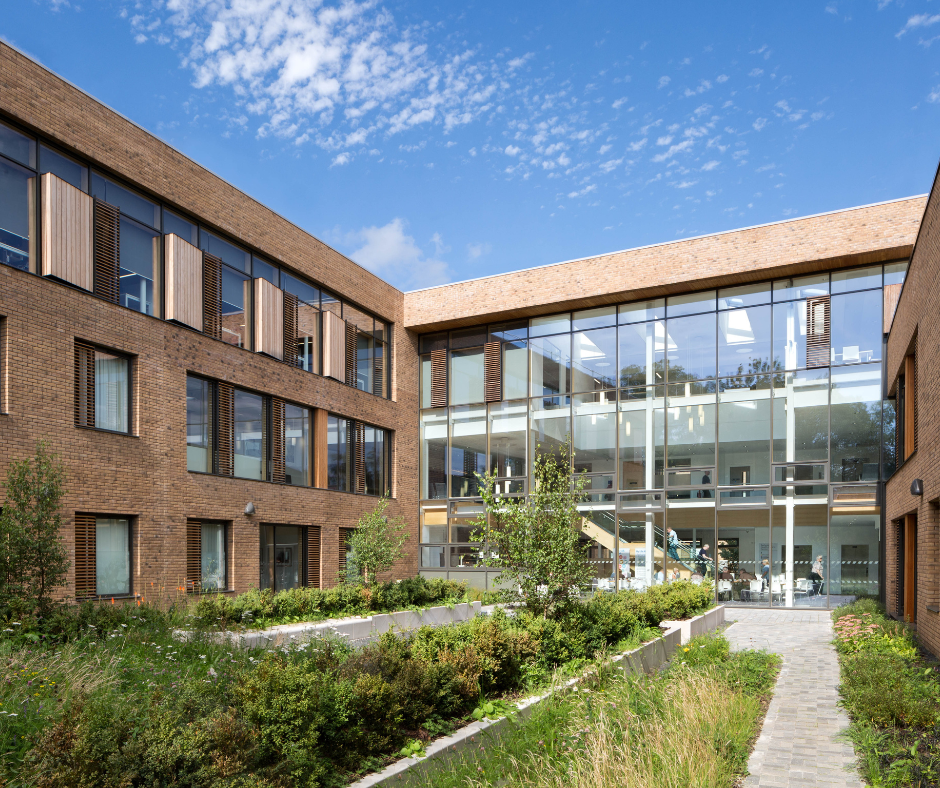
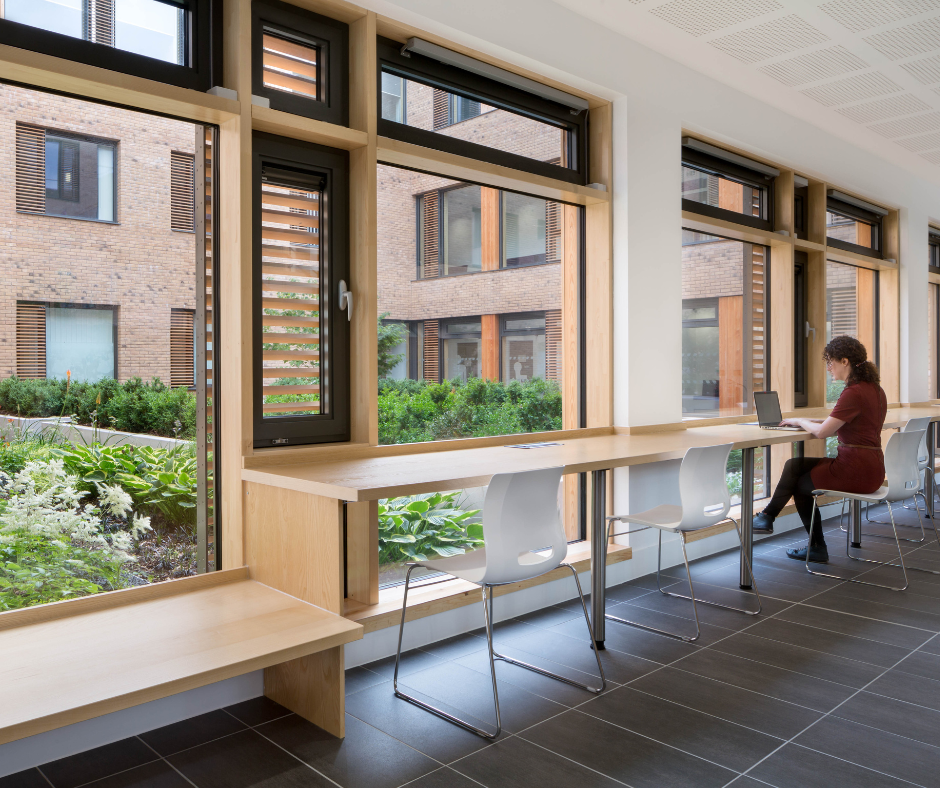
Delivering this balance requires more than technical compliance. It depends on a deep understanding of how healthcare environments function in practice, and how engineering decisions directly affect clinical outcomes.
Across our UK offices, our healthcare engineers bring that understanding to a wide range of environments, including community healthcare settings, elective care facilities, acute hospitals, mental health units and complex surgical environments.
This breadth of experience informs how we approach every project, with a focus on quality, resilience and long-term performance, as well as the practical realities of how spaces are used day to day.
As the New Hospital Programme moves forward, HTM-led assurance will be central to delivering hospitals that are safe, sustainable and built for the future.
We’re keen to connect with others shaping this next phase of healthcare delivery. Reach out to our Healthcare Team today at [email protected]

Paul Cooper
Director, Healthcare Lead Scotland & Ireland

Jonathan Blackhurst
Associate Director, Healthcare Lead England
Related Articles

Future Homes Standard: What It Means for Your Programme, Budget & Design Strategy
The incoming Future Homes Standard is anticipated to fundamentally change how residential schemes are designed, costed and delivered, going beyond the requirements of the current Building Regulations.
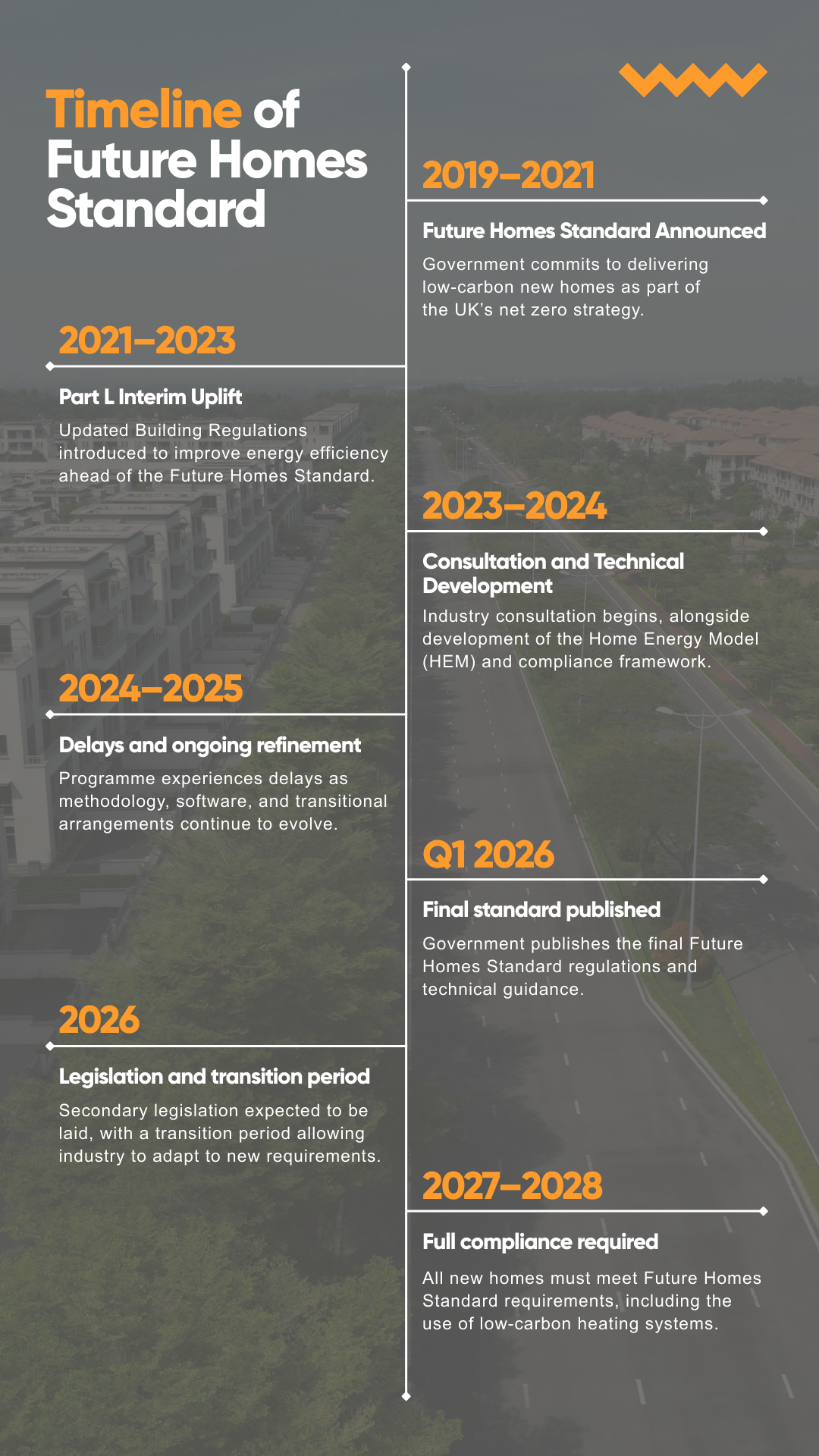
From 2025, new homes are expected to produce around 75–80% fewer carbon emissions than homes built to the 2013 Part L Building Regulations baseline, largely attributed to utilising low-carbon heating as a default, an improvement in building fabric energy efficiency, and a new, more complex energy modelling methodology through the introduction of the Home Energy Model (HEM).
For developers and project teams, the Home Energy Model ensures that the assessment of building energy performance is no longer just a compliance exercise, as it will now require and consider a more in-depth look into:
- Heating strategies and plant space
- Electrical infrastructure and grid capacity
- Design coordination between architecture and MEP
- Programme sequencing and early-stage decision-making
- Capital cost and long-term asset performance
The direction of travel is clear, but the question is: Is your current project pipeline aligned with it.
Projects that treat the Future Homes Standard as a late-stage regulatory hurdle increase the risk of redesign, delay , and avoidable cost uplift. Those clients and developers seeking to incorporate the requirements early in the design can plan for greater compliance margins, an increase in project viability, and improved energy performance from the outset.

What is the Future Homes Standard?
The Future Homes Standard (FHS) is a set of mandatory regulations designed to significantly reduce carbon emissions from new homes in England. Its primary goal is ambitious, but by 2025, all new homes should emit 75–80% less carbon, and equivalent emissions than homes built under the current regulations. The standard represents a major step in the UK’s journey toward net-zero housing, supporting the decarbonisation of domestic energy use by utilising the rapidly increasing number of renewable energy systems coming online to the UK national electricity grid.
The FHS is part of a broader strategy to tackle climate change while maintaining practicality and affordability for developers and homeowners. It does this by mandating high-performance building fabric energy efficiency, installation of low-carbon heating systems, and increasing the requirement for provision of renewable energy. Unlike previous updates to Building Regulations, the FHS also introduces a new approach to compliance and modelling through the Home Energy Model (HEM), which allows for more detailed, dynamic, and realistic assessments of a building’s energy performance.
While the goals are clear, the rollout of FHS has not been without challenges. The programme has experienced delays with arrangements still being finalised, including ongoing questions around training, accreditation, and the impact on project costs and timelines.
What are the key changes?
For developers, designers, and consultants, the key changes go beyond compliance and will influence decisions much earlier in the project lifecycle.
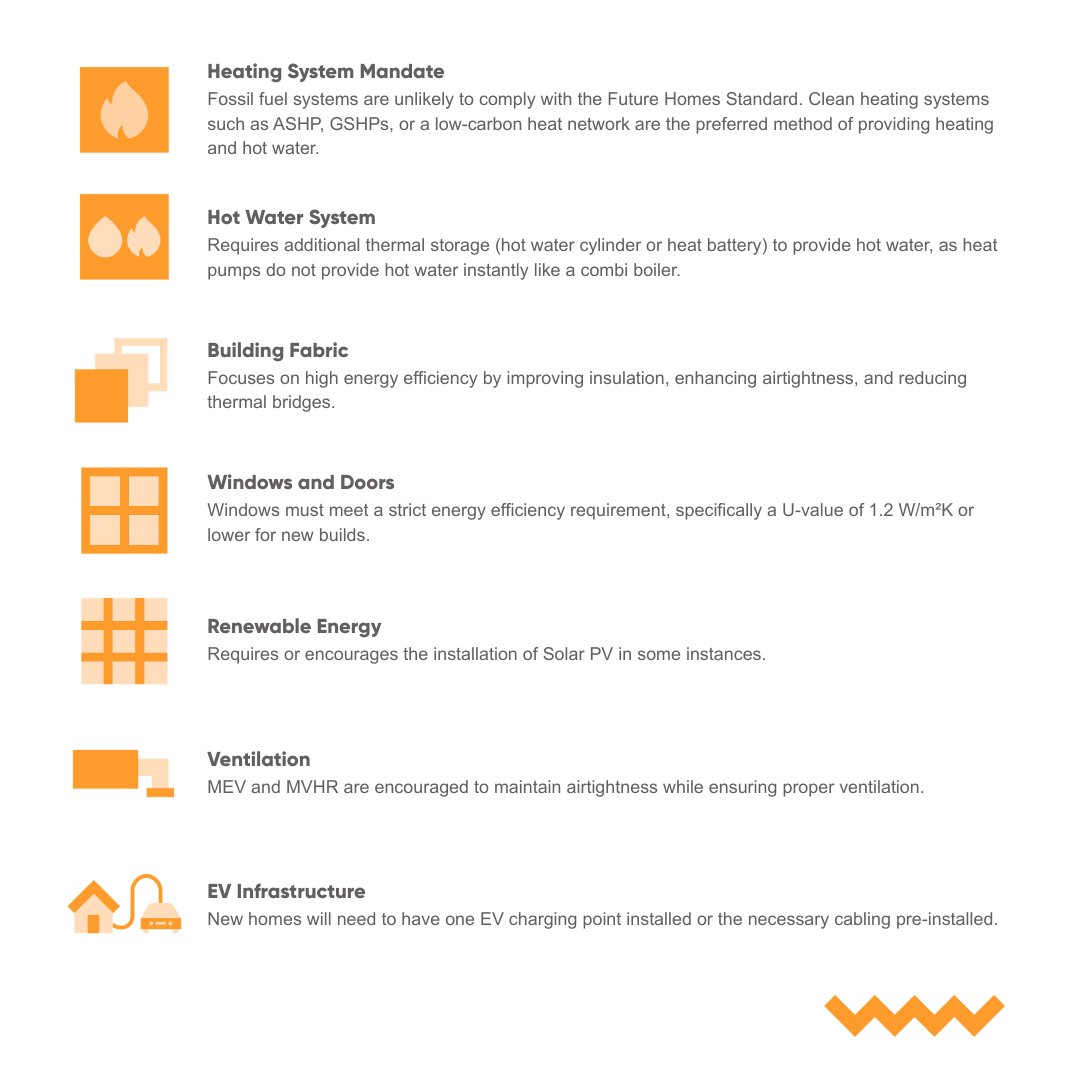
Under the FHS, fossil fuel boilers will no longer be permitted in new homes. Instead, developments will be expected to adopt low-carbon heating solutions such as:
- Air source heat pumps (ASHPs)
- Ground source heat pumps (GSHPs)
- Connection to low-carbon district heat networks
This marks a major cultural and technical shift for the sector, requiring heating strategies to be considered from the very earliest design stages.
The FHS places greater emphasis on the “fabric first” approach, meaning:
- Improved insulation standards
- Enhanced airtightness targets
- Reduced thermal bridging
- Better-performing windows and doors
The intention is to reduce overall energy demand before relying on technology to offset performance.
With HEM requiring a greater number of inputs in more detail, project teams will need to:
- Confirm heating strategies earlier
- Lock in fabric performance sooner
- Coordinate MEP and architectural decisions more closely
Late-stage design changes are likely to become more costly and difficult to accommodate.
With HEM requiring a greater number of inputs in more detail, project teams will need to:
- Confirm heating strategies earlier
- Lock in fabric performance sooner
- Coordinate MEP and architectural decisions more closely
Late-stage design changes are likely to become more costly and difficult to accommodate.
With more sophisticated modelling comes an expectation of:
- Additional detailed technical submissions for a range of servicing equipment
- Greater scrutiny at compliance stage
- Increased coordination between disciplines
This will have implications for workloads across the design team, assessors, and building control.
Together, these changes are intended to drive better-performing homes that are lower-carbon, more resilient, and cheaper to run over their lifetime. However, they also demand a higher level of coordination, earlier engagement, and stronger technical understanding across project teams.
Modelling, Skills, and Workload
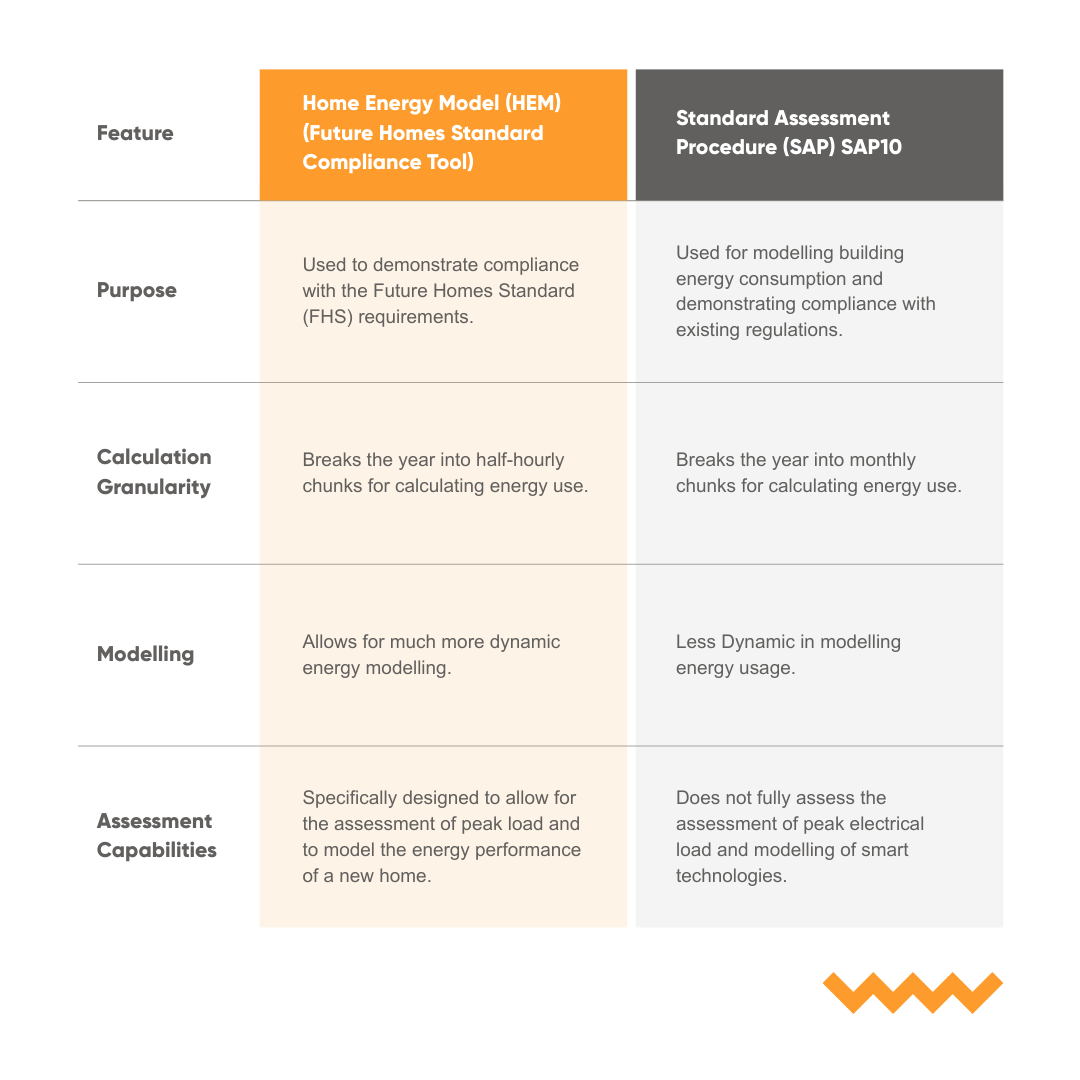
One of the most significant changes introduced by the Future Homes Standard is the transition away from the Standard Assessment Procedure (SAP) as the primary compliance tool. In its place, the Home Energy Model (HEM) will provide a more detailed approach to assessing energy performance.
While both tools aim to demonstrate regulatory compliance, the methodology, level of detail, and practical implications for design teams differ quite considerably. The table below outlines the key distinctions between SAP and HEM, and what they mean in practice.
Market Impact & Opportunities
As the industry prepares for the transition, many organisations are already reviewing design strategies, heating specifications and development programmes to understand how the Future Homes Standard may affect current and upcoming schemes. Craig Robertson, our Director for England shared with us:
“The Future Homes Standard brings a much-needed sense of direction and alignment across the residential sector in England. While the initial cost implications can feel daunting, many developers are already embracing the shift and recognising the long-term benefits of improved building performance and electrification.
At Wallace Whittle, we are fully engaging with initiatives such as the Future Homes Hub to stay ahead of the transition. Early decisions at client brief stage, particularly around heating strategy and energy performance, are now critical to managing cost and programme risk.
We also hope to see continued alignment between the Future Homes Standard and Section 6 requirements in Scotland, helping to create greater consistency across the UK market.”

Challenges, Uncertainty and the Journey Ahead
However, delays to publication, uncertainty around transitional arrangements, and concerns over software readiness have created some hesitation across the industry.
Developers may face a slight increase in upfront capital costs, tighter design coordination, and longer modelling processes. Design teams must commit to key decisions earlier in the project lifecycle, while assessors and local authorities prepare for higher workloads.
There are also broader questions surrounding affordability, viability, and embodied carbon regulation, which remains outside the scope of national Building Regulations for now. For some, it feels ambitious; for others, it is long overdue.
While some elements of the FHS are still to be finalised, the direction is sufficiently clear to begin meaningful early-stage assessments. With SAP 10.3 expected to be released alongside the FHS, and HEM to follow shortly after, there will be a defined transition period being SAP is fully retired, likely no earlier than Summer 2029.
What Developers Should Be Thinking About Now
The transition to the Future Homes Standard will require changes across the entire residential delivery process, from early design decisions through to construction and compliance assessment.
For developers and housing providers, one of the most important steps is ensuring design teams are prepared for the shift in how domestic energy performance will be modelled and assessed. The introduction of the Home Energy Model represents a significant change from the established SAP methodology, and the industry will need time to develop the necessary skills and processes.
Skills gaps and design team readiness are already emerging as potential challenges. Responding to regulatory change is never straightforward, and with the Future Homes Standard introducing new modelling approaches and performance expectations, many project teams will need to adapt their design strategies and technical understanding.
At the same time, uncertainty around final regulatory details and implementation timelines presents a further risk for developers progressing schemes in the near term. Clients may be working to specifications and cost assumptions based on current regulations, which may not fully align with the final Future Homes Standard requirements.
Early engagement and informed decision-making will therefore be critical. Considering energy strategy, heating systems and building performance at the earliest stages of project development can help reduce the risk of late design changes or additional costs as the new standards are implemented.
Wallace Whittle works with developers, housing providers and contractors to help navigate the transition to new regulations and standards.
Our sustainability specialists are actively engaged in residential low-carbon design and assessment, working closely with accreditation partners and industry bodies to monitor developments around the Future Homes Standard. This allows us to provide clients with early insight into likely requirements and the potential impact on design, specification and programme.
Through early-stage energy strategy, compliance modelling and heating strategy optioneering, we help clients understand both the risks and opportunities associated with the transition. Our focus is on ensuring that development plans remain viable, while aligning projects with the evolving regulatory landscape.
With a long track record in the residential sector and strong industry partnerships, we are well positioned to support developers in managing this transition and preparing schemes for the Future Homes Standard.
Our specialists are supporting clients in navigating the transition to low-carbon compliance. From early-stage feasibility through to detailed modelling and delivery, we can help ensure your project is ready for what’s ahead. Get it touch with our team at [email protected]
Elmhurst Energy. (2025). Future Homes Standard 2025 Round-Up: SAP, HEM and What’s Coming Next – Elmhurst Energy. [online] Available at: https://www.elmhurstenergy.co.uk/blog/2025/12/10/future-homes-standard-2025-round-up-sap-hem-and-whats-coming-next/.
Jones, V. (2022). Changes to Approved Document L and the Future Homes and Buildings Standard – Structural Timber Association. [online] Structural Timber Association. Available at: https://www.structuraltimber.co.uk/news/changes-to-approved-document-part-l-and-the-future-homes-and-buildings-standard [Accessed 6 Mar. 2026].
Kensa. (2025). Future Homes Standard & Building Regulations & Changes 2025 | Kensa. [online] Available at: https://kensa.co.uk/housing-developments/future-homes-standard.
Norrsken Company Ltd. (2025). The Future Homes Standard 2025 explained. [online] Available at: https://www.norrsken.co.uk/blogs/regulations/the-future-homes-standard-2025-explained.
Sunamp Global. (2024). Future Homes Standard 2025: How low carbon technologies will transform the built environment. [online] Available at: https://sunamp.com/blog/future-homes-standard/.
Related Articles


Andrew Smith Joins Wallace Whittle to Lead Leeds Growth
WWe have strengthened our presence in Leeds and the wider North of England with the appointment of Andrew Smith as Location Director, supporting our continued growth across Yorkshire and the region.
Andrew joins us with more than 30 years of experience across the built environment. His appointment reflects increasing demand for our engineering and sustainability expertise across the region, as we continue to support a growing portfolio of residential, commercial, mixed-use, healthcare, life sciences, data centres, education and industrial projects.

Based in Leeds, Andrew will lead the development of the local team while working closely with clients and the wider company. The city’s strong connectivity and established development pipeline make it a key base for supporting projects across the North.
With a background spanning senior leadership roles and the successful growth of his own consultancies, Andrew brings a blend of technical expertise and entrepreneurial insight. He is known for building high-performing teams and delivering complex projects, with a strong focus on collaboration and long-term value, traits we value at Wallace Whittle.
A key priority for Andrew will be the organic growth of Wallace Whittle’s Leeds presence. With investment in people and talent development at the heart of our approach, he aims to source and nurture talent. Mentoring the next generation of engineers and contributing to projects that leave a lasting legacy across the UK.

Commenting on his appointment, Andrew shared:
“Leeds feels like the right place at the right time, both for Wallace Whittle and for me. Leeds is a central hub, well connected by rail and road, which allows us to support clients across Yorkshire and the wider North in a very practical and efficient way.
“What really stood out to me about Wallace Whittle is its culture. In an industry facing a real shortage of talented and aspiring engineers at every level, building and retaining strong teams matters now more than ever. My priority is to grow the Leeds office in the right way, investing in people’s professional development and choosing projects where we can make a meaningful, long-term impact. Being part of a business with a clear growth plan and strong values is incredibly exciting”
Andrew’s appointment also builds on Wallace Whittle’s recent success across the region, including involvement in the Hungate development in York and the Dyecoats scheme in Leeds, a project that features towers and medium-rise blocks with ground-floor amenity areas and plant spaces. We also played a key role in this project achieving Gateway 2 Building Control Approval.

Allan McGill, our Managing Director added:
“As Andrew steps into lead our Leeds office, strengthening our presence is a key move in delivering our continued growth across England. Andrew brings a rare combination of technical expertise and entrepreneurial experience that will help drive our regional expansion. His vision for building a strong team, focused on quality, culture and long-term relationships, aligns perfectly with our approach at Wallace Whittle.”
With Andrew leading the Leeds team, we are well-positioned to continue our regional growth, delivering innovative engineering and sustainability solutions across Yorkshire and the North East whilst investing in the next generation of talent.
Reach out to our England team to discuss your next project and be part of this growth.
Andrew Smith, Leeds Location Director – [email protected]
Carl Saxon, Regional Director South England – [email protected]
Colin Preston, Business Development Director, South England – [email protected]
Peter Kirk, London Location Director – [email protected]
Darren Wright, Birmingham Location Director – [email protected]