
The UK‘s approach to building performance is changing. As new standards reshape how we measure energy efficiency, heating, ventilation and occupant wellbeing, what does this mean for projects being designed today?
The countdown to 2030 is already underway. Over the next five years, a series of regulatory changes will reshape how buildings across the UK are designed, assessed and operated. From the introduction of a new multi-metric approach to Energy Performance Certificates (EPCs) and the Future Homes Standard, to growing requirements around indoor air quality and occupant wellbeing, the focus is shifting beyond simply meeting minimum energy efficiency requirements.
For developers, architects, engineers, and building owners, this means decisions made today could have a significant impact on a building’s ability to meet tomorrow’s standards. The challenge is no longer simply how to achieve compliance, but how to deliver buildings that demonstrate better long-term performance.

So, what exactly is changing?
The road to 2030 isn’t defined by a single piece of legislation. Instead, the built environment is facing a period of significant regulatory change, with updates to building regulations, energy performance assessments, and minimum efficiency standards all expected over the coming years.
Among the changes published updates to Parts L and F of the Building Regulations, potential revisions to Part O, the planned transition from SAP to the Home Energy Model (HEM), and changes to the Minimum Energy Efficiency Standards (MEES).
“The scale of change makes it difficult to identify a single defining development. However, the proposed tightening of Minimum Energy Efficiency Standards for privately rented properties could have the most significant and widespread impact. The direction of travel is clear.” Steven Carroll, Senior Sustainability Consultant, shared with us.

Rethinking the EPC
One of the most visible changes will be the reform of EPCs. In England and Wales, the proposed introduction of the Home Energy Model will replace the current SAP methodology for domestic assessments, alongside a new multi-metric approach to EPCs.
Rather than reducing building performance to a single energy efficiency rating, the proposed EPC framework provides a more nuanced assessment by separately reporting fabric performance, heating system efficiency, smart readiness, and energy cost. This could provide developers, building owners, and project teams with a more balanced picture of where a building performs well and where improvements may be needed.
“The proposed multi-metric EPC framework should provide a more balanced assessment of building performance,considering fabric efficiency, energy costs and heating-system performance separately, while helping to highlight potential trade-offs that can exist between operational costs and decarbonisation objectives.” Steven shared.
However, it’s important to distinguish between improved modelling and actual building performance. As Steven notes, EPCs will remain modelled assessments rather than measurements of how a building performs in use.
“EPCs will remain modelled assessments rather than measures of actual building performance,” he explained.
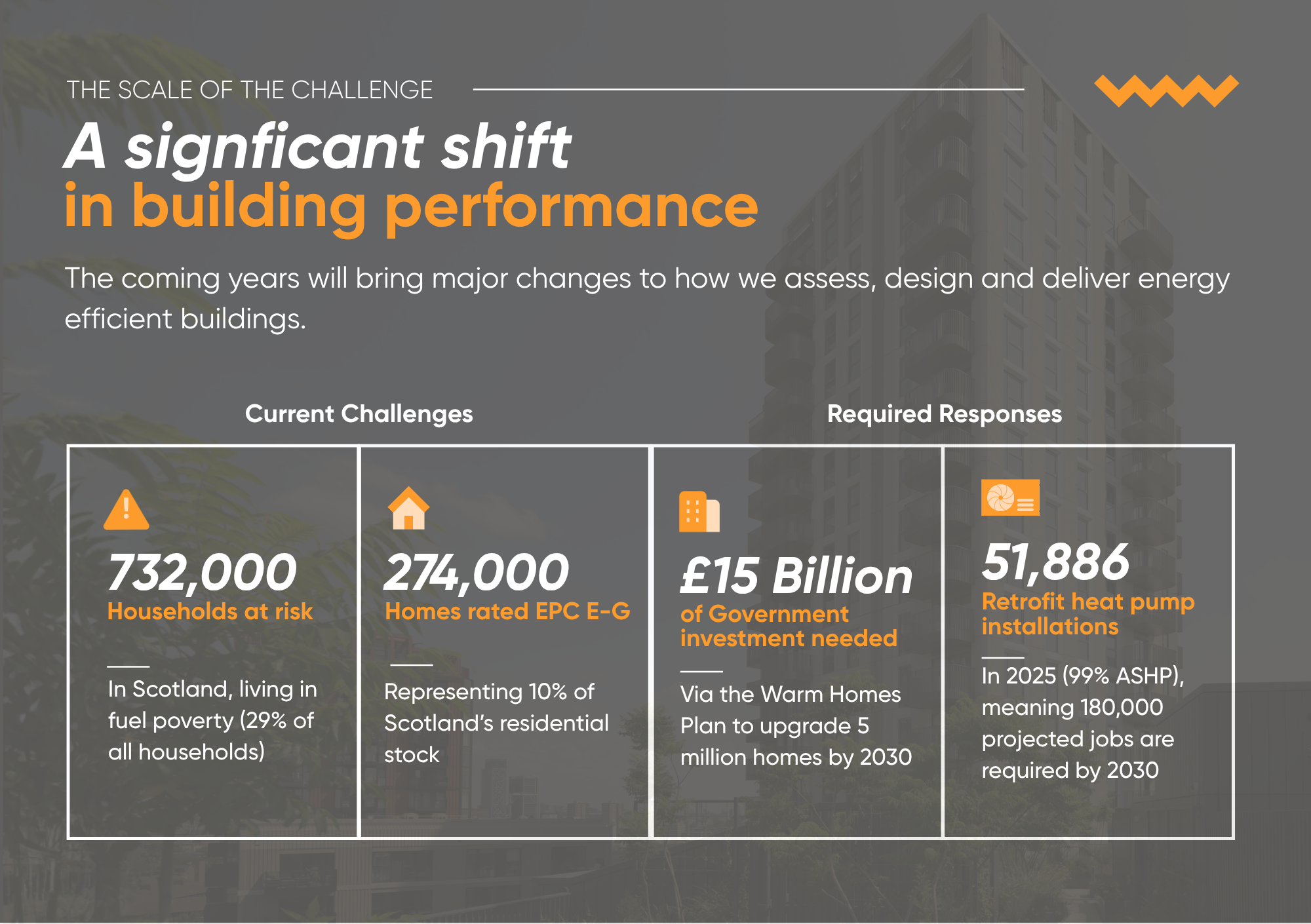
The transition will not look identical across the UK, either. While England and Wales are proposing a shift towards an Energy Cost Metric based on annual fuel costs, the Scottish Government has indicated an intention to retain an A–G style rating alongside its equivalent energy cost metric. So, for organisations working across multiple UK markets, understanding these differences will be important when planning projects and assessing future compliance.
A fabric-first approach
The changes to EPCs are only one part of the picture. Meeting future performance standards will also require project teams to think differently about how buildings are designed from the outset.
A fabric-first approach — reducing energy demand through measures such as improved insulation, airtightness and thermal-bridge mitigation — will remain fundamental. But as buildings become more efficient, simply adding further fabric improvements can deliver diminishing returns.
“There are diminishing returns from fabric enhancements. Beyond a certain point, further improvement can become increasingly cost-ineffective.” shared Steven.
This makes the relationship between the building fabric and its services increasingly important. Rather than treating them as separate considerations, projects need to balance fabric performance with ventilation, heating, thermal comfort, and efficient operation.
The challenge for project teams is to find the right balance between reducing energy demand and designing building services that can operate efficiently, maintain comfortable internal conditions and support good indoor air quality.
This means MEP considerations need to be brought into the conversation early — rather than being treated as a solution to be added once the building fabric has already been defined.
Designing for low-carbon heating and effective ventilation
A fabric-first approach can reduce a building’s energy demand, but it is only part of the picture. As buildings become more airtight and heating systems move away from fossil fuels, the relationship between building fabric, heating and ventilation becomes increasingly important.
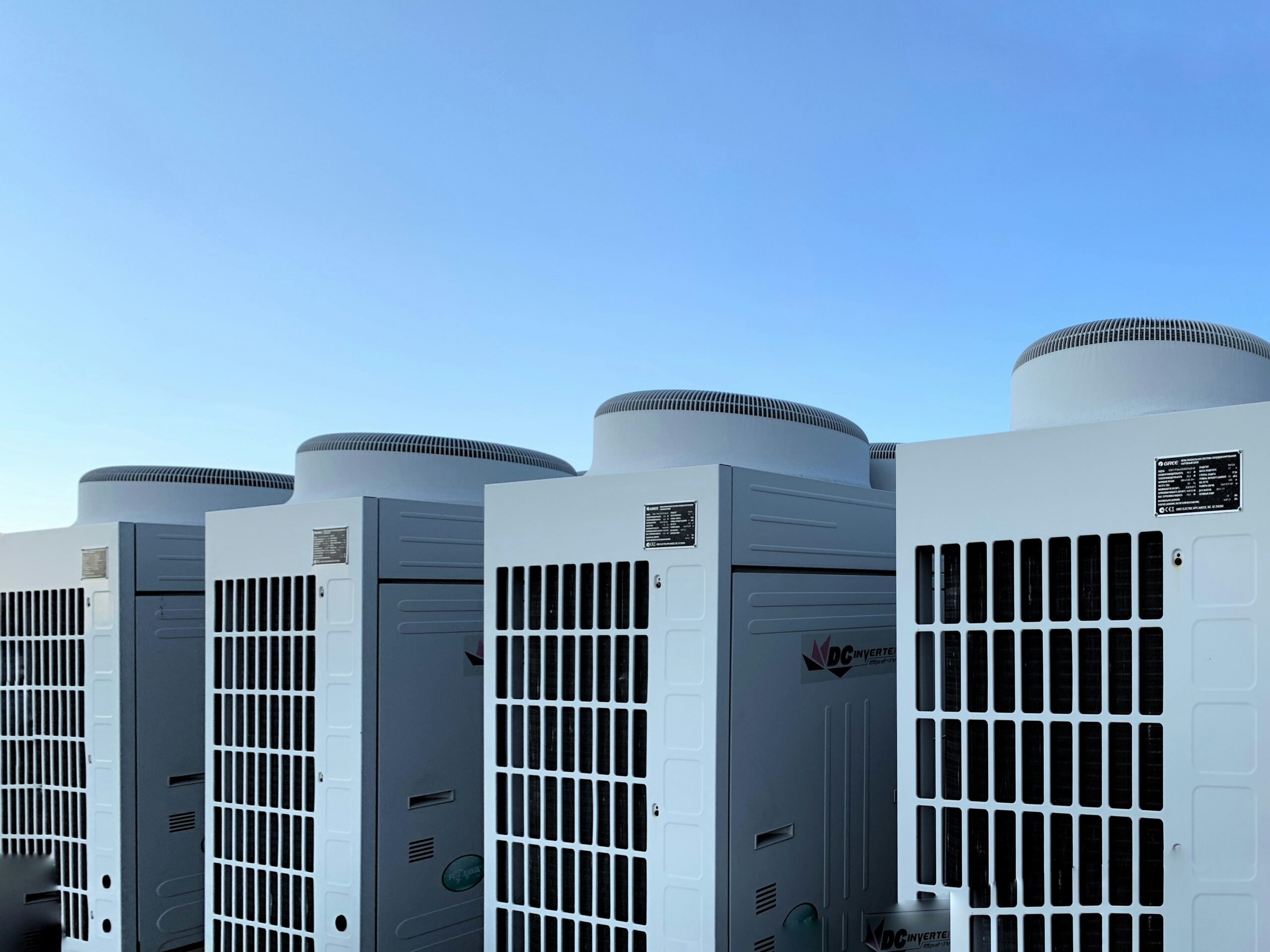
Heat pumps are expected to play a much greater role in meeting future heating requirements, making it increasingly important to minimise heat demand through effective insulation, airtightness, and thermal-bridge mitigation. At the same time, well-designed ventilation is essential to maintain good indoor air quality, manage moisture, and provide comfortable internal conditions.
Steven also shared that “as heat pumps become the norm, reducing heat demand becomes increasingly important.”
This is where the principle of “build tight, ventilate right” comes into play. Improving airtightness can reduce unwanted heat loss, but it needs to be supported by an effective ventilation strategy. For project teams, this reinforces the importance of considering fabric and MEP design together from the outset, rather than treating building services as a separate consideration.
Building performance and occupant wellbeing
Alongside energy performance, increasing emphasis is being placed on the health and wellbeing of building occupants. Issues such as damp, mould, overheating and indoor air quality are becoming increasingly prominent within policy, regulation and industry guidance.
The introduction of Awaab’s Law, together with a growing focus on healthy indoor environments, reinforces the importance of designing buildings that not only operate efficiently but also provide safe, comfortable and resilient places to live and work. As buildings become increasingly airtight and energy efficient, achieving appropriate levels of ventilation, moisture control and thermal comfort will be essential to balancing building performance with occupant wellbeing.
What should projects do now?
With many of these changes still developing, project teams do not need to wait for every detail to be finalised before taking action. The direction of travel is clear: buildings will need to be more energy efficient, better prepared for low-carbon heating and capable of delivering good performance in practice.
For projects being designed today, this means looking beyond current minimum standards and considering enhanced fabric performance, airtightness, overheating mitigation, robust ventilation, heat pump or heat network readiness, and viable opportunities for solar PV from the outset.
“The objective should be to deliver buildings that are resilient, cost-effective and future proof, rather than simply compliant with current requirements.”
The key milestones below highlight the pace of change and the deadlines project teams should have on their radar as we move towards 2030 and beyond.
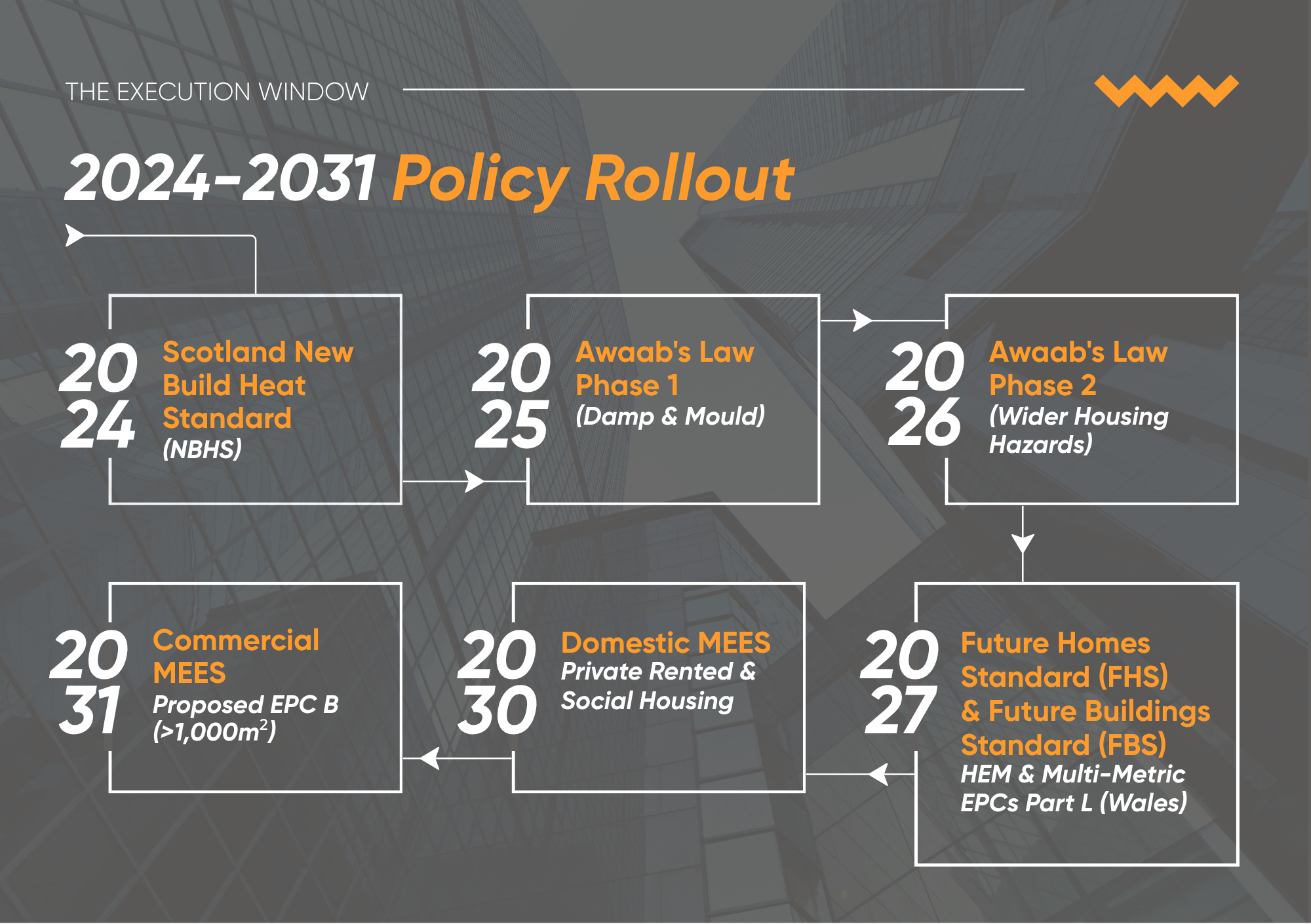
Preparing for these changes is ultimately about more than meeting the next regulatory requirement. By considering building performance holistically and making informed decisions early, project teams can create buildings that are better equipped to respond to changing regulations, energy costs and occupant needs over their lifetime.
The regulatory landscape is changing quickly, and understanding what these changes mean for individual projects will be key to making informed decisions today.
We can help you navigate the evolving requirements, identify opportunities to improve building performance and develop strategies that are designed to go beyond compliance.
Get in touch with our Sustainability team to discuss how we can help prepare your project for 2030 – [email protected]

Steven Carroll
Senior Sustainability Consultant